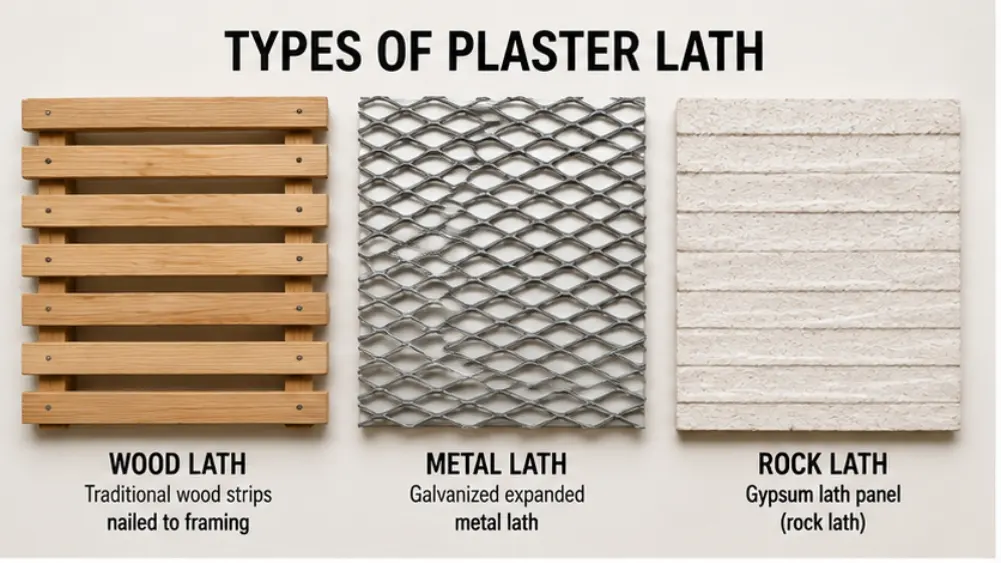
Wood Lath
Plaster lath is one of the most important parts of a traditional plaster wall. Most people notice the finished plaster, but the real strength comes from what's hidden underneath. Whether it's wood strips in a 100-year-old home or metal lath in a new stucco system, the lath gives plaster something to grab onto and helps create a strong, long-lasting wall.
If you're restoring an older house, planning a plaster repair, or simply trying to understand how plaster systems work, knowing the different types of plaster lath will help you make better decisions.
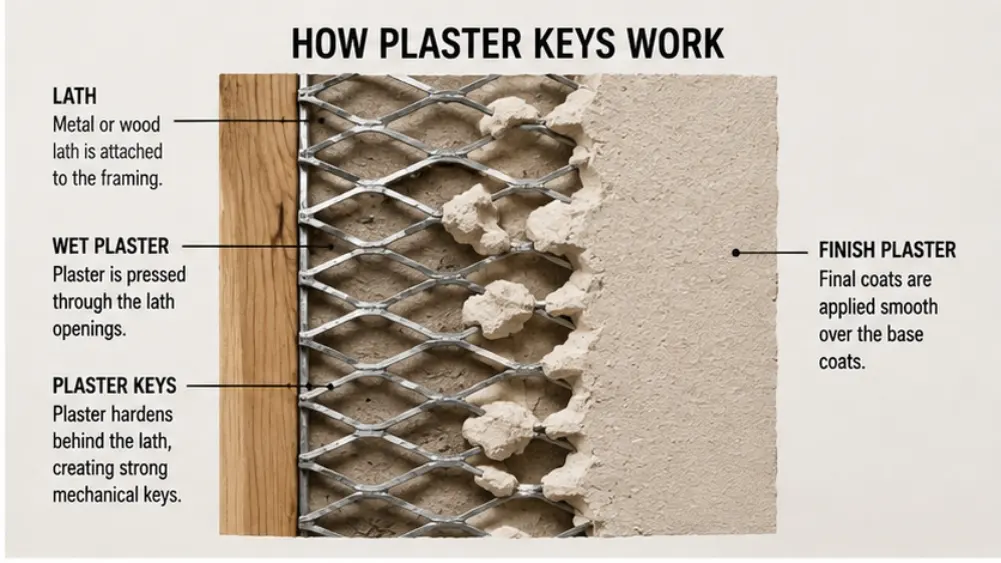
Plaster lath is the base material installed behind plaster. Its main job is to support wet plaster while allowing it to lock itself in place.
When the first coat of plaster is pushed through the openings in the lath, it forms "keys" behind the material. These hardened plaster keys are what hold the plaster firmly to the wall or ceiling.
Without a properly installed lath system, plaster has nothing to grip and will eventually crack, separate, or fall away.
For hundreds of years, wood lath was the standard for plaster walls. Builders nailed thin strips of wood across wall studs with small gaps between each strip.
Plaster was then applied over these strips. As the wet plaster squeezed through the gaps, it hardened into plaster keys that mechanically locked the wall together.
By the early 1900s, metal lath began replacing wood in many commercial and fire-rated buildings because it was stronger, more consistent, and resisted moisture damage better.
Later, gypsum rock lath offered contractors a faster way to build smooth plaster walls while reducing labor.
Today, wood lath is mostly found in historic homes, while metal lath remains the standard for stucco, stone veneer, and many specialty plaster applications.
Wood lath consists of narrow strips of lumber nailed horizontally across framing.
Wood lath remains the preferred option when restoring historic buildings because it preserves the original construction methods.
Metal lath is made from expanded galvanized steel.
The diamond-shaped openings allow plaster or stucco to pass through while the raised metal surface creates excellent mechanical bonding.
Its strength makes it ideal for both interior and exterior applications.
Rock lath became popular during the mid-1900s.
Instead of individual wood strips, contractors installed sheets of gypsum board specifically designed for plaster finishes.
The surface paper bonded well with finish plaster while speeding up installation.
Rock lath bridged the gap between traditional plaster and today's drywall construction.
Although it's no longer manufactured in most areas, many homes built between the 1930s and 1950s still contain rock lath walls.
Self-furring lath includes raised dimples or V-grooves that automatically hold the metal away from the framing.
This spacing allows plaster to completely surround the metal, creating a much stronger bond.
The strength of plaster comes from more than just the plaster itself.
The first coat called the scratch coat is pressed firmly into the lath.
As plaster passes through the openings, it forms hardened keys behind the lath.
These keys act like hundreds of tiny anchors holding the plaster securely in place.
This mechanical bond is one reason properly installed plaster walls can last well over 100 years.
Each layer serves a purpose. Skipping one often leads to cracking or poor performance.
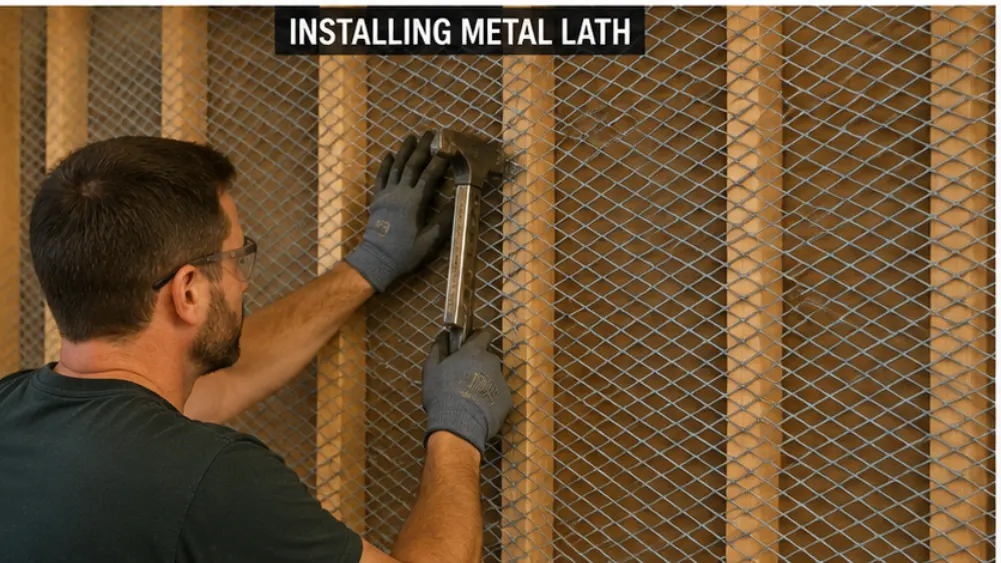
The lath must be securely fastened while remaining flat across the surface.
Wood lath is installed with consistent spacing to allow plaster keys to form.
Metal lath is attached using corrosion-resistant fasteners and installed with the cups facing outward so the plaster grips properly.
Corners receive corner bead or reinforcing accessories before plastering begins.
Finally, plaster is applied in multiple coats, allowing each coat to cure before the next is installed.
Taking time during installation greatly improves the finished wall's durability.
These mistakes often result in cracks, delamination, or loose plaster.
Not every damaged plaster wall needs to be replaced.
Small repairs may involve reattaching loose plaster, rebuilding broken plaster keys, or replacing damaged sections of lath.
However, extensive water damage, insect damage, or rotten wood lath usually requires removing the affected area and rebuilding the plaster system from the framing outward.
Matching the original materials is especially important in historic homes.
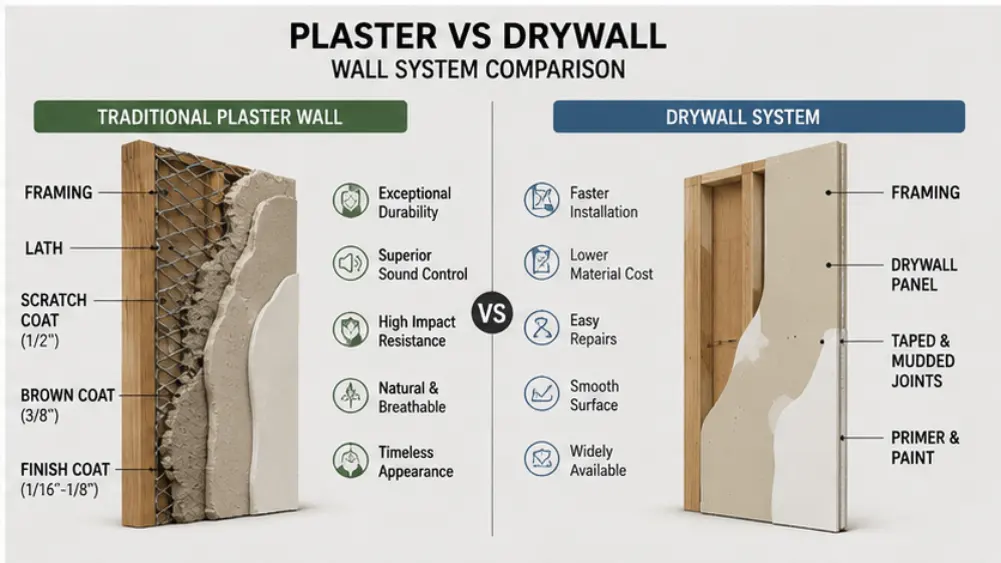
Today's construction relies primarily on drywall instead of traditional plaster lath.
Drywall installs faster, costs less, and requires fewer specialized skills.
For restoration projects, plaster remains the best choice because it preserves the original appearance and performance of older buildings.
Plaster lath is the material installed behind plaster that allows the plaster to mechanically bond to the wall or ceiling.
Yes, mainly for historic restoration projects where maintaining the original construction is important.
Metal lath is commonly used for stucco, stone veneer, cement plaster, and commercial plaster systems.
Some veneer plaster systems are designed for special gypsum panels, but traditional three-coat plaster still requires an appropriate base.
Most often, the plaster keys break over time due to vibration, moisture, structural movement, or age.
Yes. Traditional multi-coat plaster is generally harder, more impact resistant, and offers better sound control than standard drywall.
When installed correctly and kept dry, plaster lath systems can last well over 100 years.
Plaster lath is the foundation of every traditional plaster system. Whether it's wood lath in a century-old home, metal lath supporting modern stucco, or rock lath found in mid-century construction, each type plays a vital role in creating durable, long-lasting walls.
Understanding how these systems work helps homeowners make informed repair decisions and allows contractors to choose the right materials for each project. While drywall has become the standard for new construction, properly installed plaster remains one of the strongest, quietest, and longest-lasting wall systems available.