Water Damage Restoration: The First 48 Hours, the Costs, and the Flood-Policy Deadline
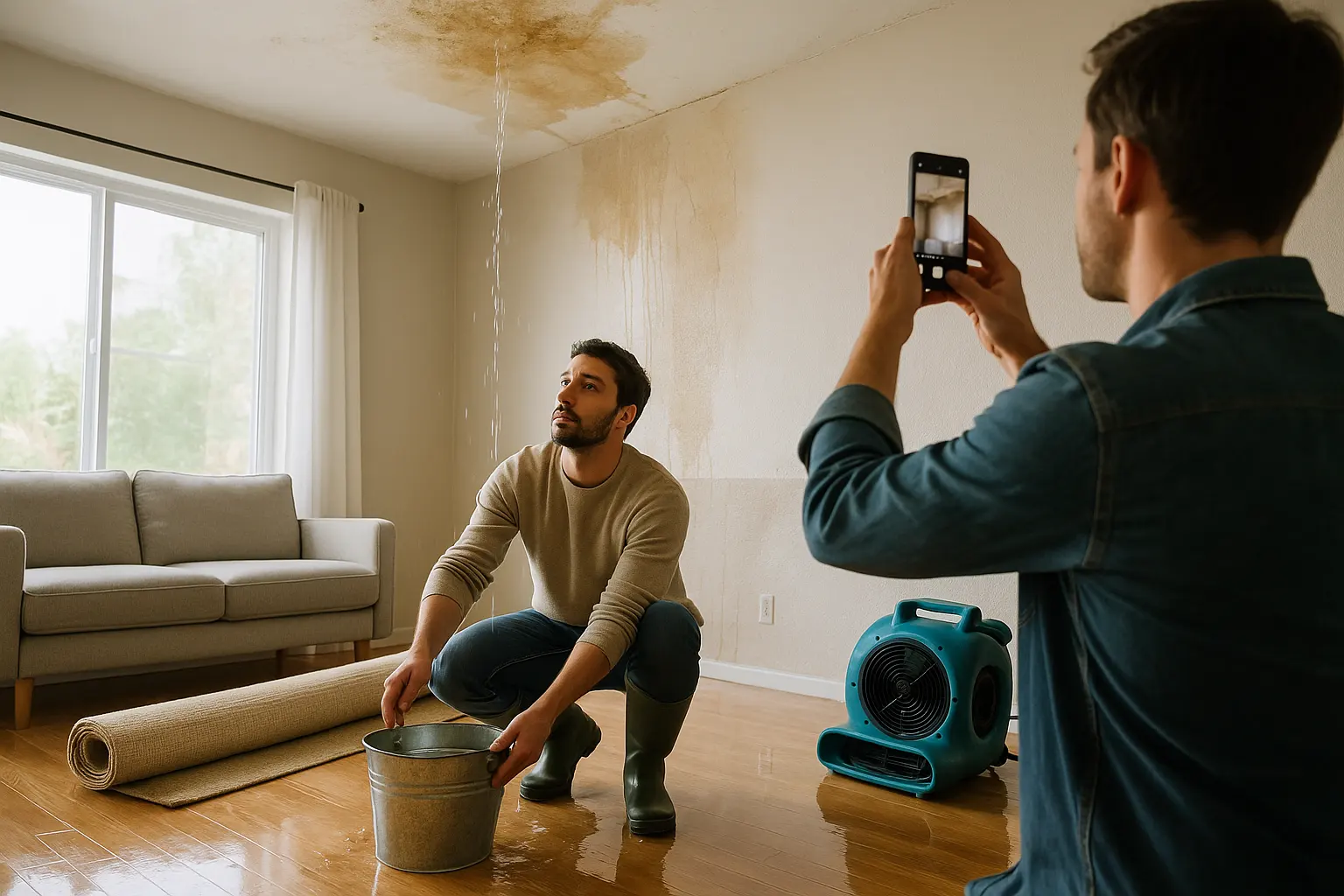
What to do when water gets into your house and why waiting is the most expensive move you can make
By Jason Lebeau • MrWalls Drywall & Painting, Chicopee, MA • Blog draft for review
When water gets into a house, the clock starts right then not when you get around to calling somebody. A burst pipe, a toilet that overflowed, a water heater that let go: the water does not care what caused it. What matters is how fast you dry things out.
Get wet materials dry within 24 to 48 hours, or mold starts. That is the guidance from the EPA. The CDC puts it plainly too: a building that stays wet more than 48 hours after a major flood will generally support mold growth. Two days. That is the window you are working in.
Make it safe, stop the water, and document everything
Before you grab a mop, work through these steps in order:
- Make it safe. Do not touch the power while you are standing in water. Never switch power on or off that way. If you are not sure it is safe, stay out of the water until it is.
- Stop the source. If the water is coming from inside the house, close the main water valve. No sense drying a room that is still getting wet.
- Photograph everything. Take photos of everything before anything moves rooms, furniture, flooring, the source of the water if you can see it. Once cleanup starts, that evidence is gone.
- Call your insurer. Get them on the phone, start the claim, and write the claim number down where you can find it later.
None of that is complicated. It just has to happen first, while the drying clock is already running.
Dry it out : and pull what can't be saved
Drying is not opening a window and hoping. It means getting the standing water out with extraction, then running fans and dehumidifiers until moisture readings say the materials are dry. Not until the floor feels dry to your hand until the readings say so. Wood and drywall can feel fine on the surface and still be wet underneath.
Some things do not get saved, and pulling them early is part of drying the house, not giving up on it:
- Soaked carpet pad : it holds water and will not dry out in place.
- Wet insulation : once it is wet through, it has to come out.
- Drywall that wicked water up : drywall drinks water upward from the floor. The wet section needs to go so the wall cavity can dry.
Leaving wet material in place to "see if it dries" is how a water job turns into a mold job.
Mitigation stops the damage. Restoration puts it back.
People use "water damage restoration" for the whole job, but it is really two jobs:
- Mitigation is stopping the damage from getting worse : extraction, drying, and removing what can't be saved.
- Restoration is the repair work that puts the house back : drywall, flooring, cabinets, trim, and paint.
That order matters. Never close a wall over wet framing. Studs and sheathing need moisture readings before insulation goes back in. Cover wet framing and you have sealed the problem inside the wall, where it keeps doing damage out of sight. I do the repair side of this work in occupied homes, and the jobs that go right are the ones where nobody rushed that step.
What it costs nationally and how I price it
Every water job is different, so take these for what they are: national averages from published roundups, not a quote for your house.
| Source | National range |
|---|---|
| HomeGuide : most water damage jobs | $2,000 to $6,000 |
| Angi : typical range (average $3,822) | $1,361 to $6,282 |
| Forbes Home : mitigation | $1,300 to $5,200 |
Where a job lands in that range depends on how much water, how long it sat, what materials got wet, and how much has to come out and go back in. That is why I price each job after a look, based on what is actually there and I never charge for the estimate. If you are in western Massachusetts and dealing with water damage, call and I will come look and give you a real number for your house, not a national average.
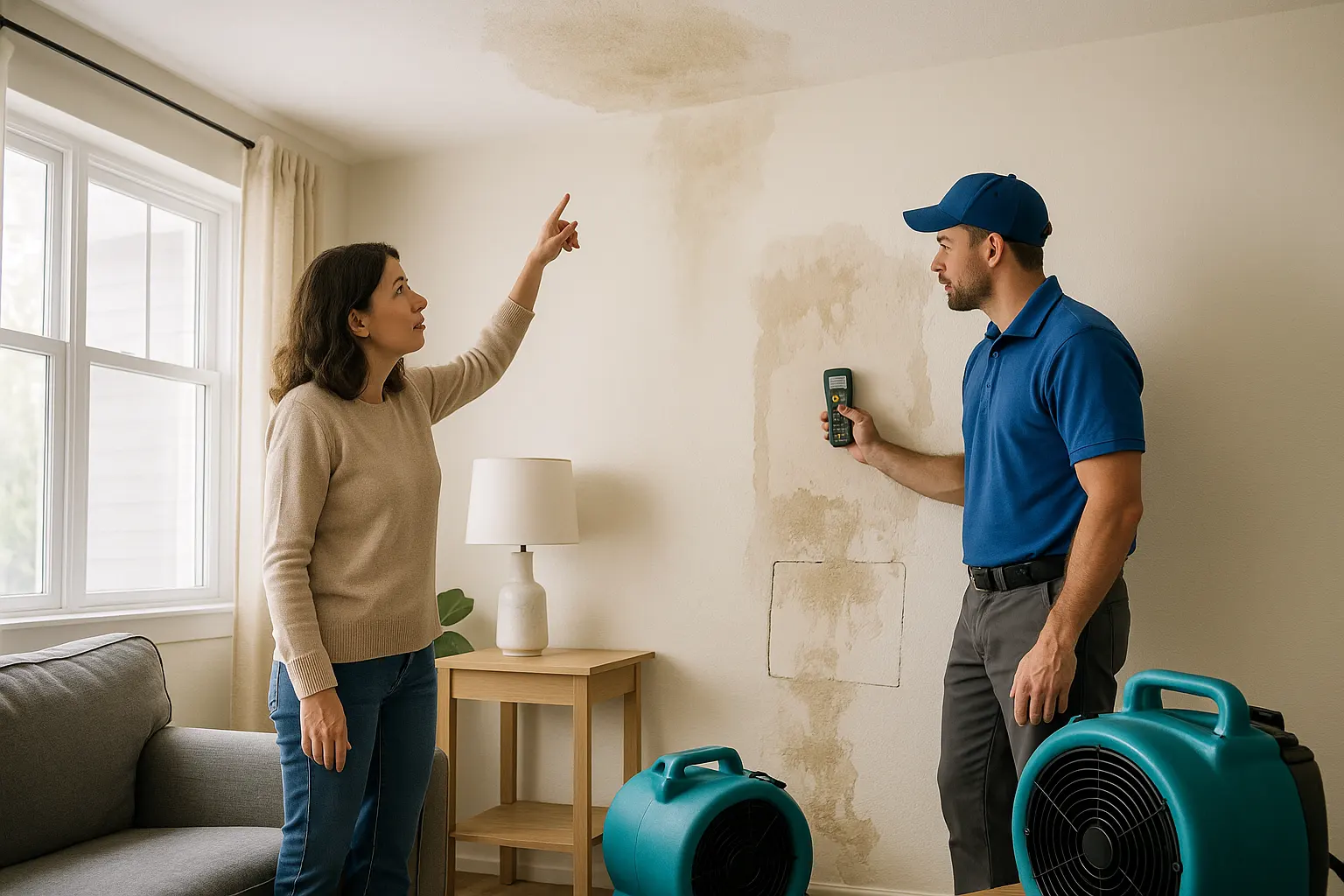
A burst pipe and floodwater are covered differently
Here is the part that catches people off guard. Homeowners insurance may cover water that comes from inside the house, like a burst pipe. Floodwater is a different story that needs a separate flood policy. They are not the same coverage, and one does not stand in for the other.
And flood coverage is not something you buy when a storm is on the way. A new flood policy usually has a 30-day waiting period before it takes effect.
There is a deadline worth knowing about right now: federal flood insurance authority runs only through midnight December 12, 2026. During the last lapse, no new federal flood policies were sold or renewed. If flood coverage is something you have been meaning to sort out, do not assume it will just be there whenever you get to it.
If you have flood damage, the Proof of Loss deadline is real
If you do file a flood claim, a Proof of Loss is due within 60 days of the date of loss. File it on time even if you disagree with the adjuster's estimate missed items can be added later with a supplemental claim. Get the paperwork in, then work out the disagreement.
If water gets in, act today
Most of the damage I see on water jobs was not done by the water itself. It was done by the days the water sat there. Make it safe, shut the water off, take the photos, call the insurer, and get drying started in that order, and inside the first 48 hours.
If you are in western Massachusetts and you need the repair side handled drywall, plaster, and painting after a water loss, in a home you are living in that is the work I do.
MrWalls Drywall & Painting • (413) 302-0640 • mrwalls.net
Source
This post is based on: Water Damage Restoration Jazzy Construction guide
Cost figures above are the national averages reported in that source (HomeGuide, Angi, and Forbes Home). They are not MrWalls prices.