Learn how a 1-hour fire rated drywall partition works, why tested wall assemblies matter, and when to call a contractor or inspector.
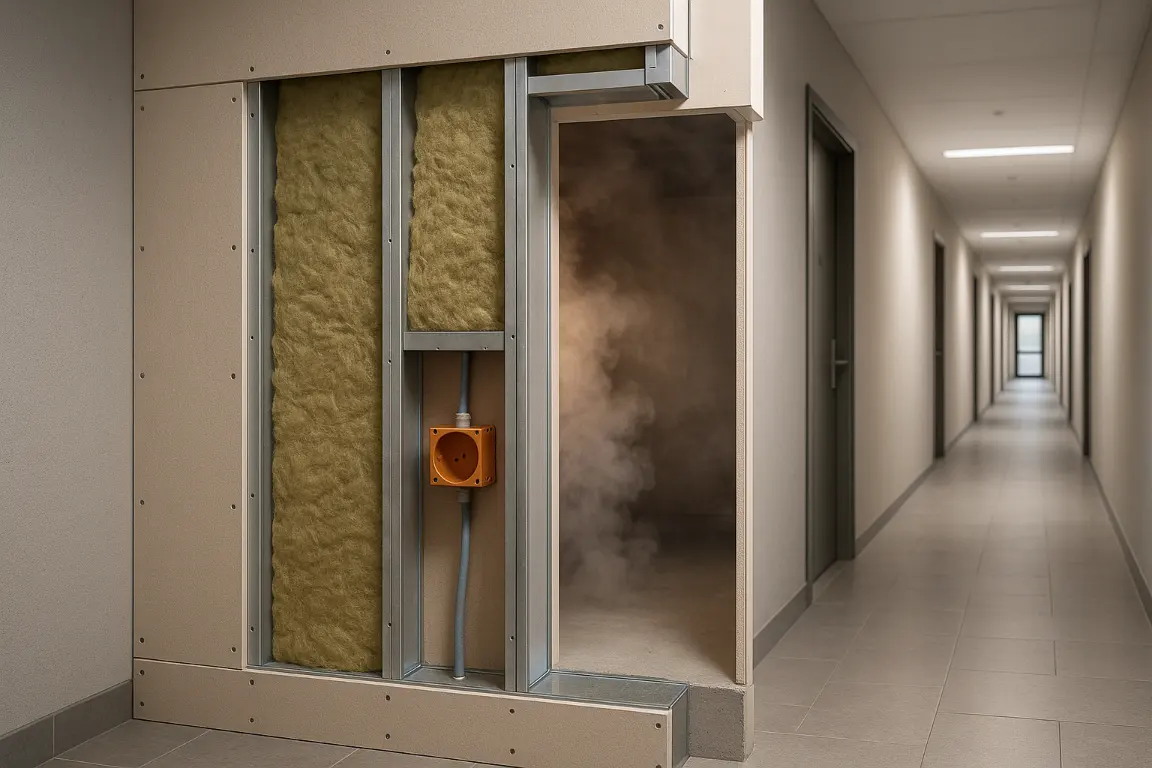
A 1 hour fire rated drywall partition can slow the spread of fire, but its performance is never as simple as fastening Type X drywall or Sheetrock to steel stud studs. The wall must be built with materials and technique matching the one of the UL approved designs or a design from the Gypsum Association Design Manuel. A credible fire-resistance rating depends on a tested wall assembly: specified gypsum panel layers on each side, the proper tape and coat at joints, rock wool insulation, fasteners, and the exact details that enable materials to perform as a system. Within a building, these rated walls, including fire partitions, a fire-rated wall, a fire wall, and fire walls, are designed to provide measured fire protection between rooms, corridors, and floor levels. Whether you are planning DIY drywall partitions or reviewing a contractor’s scope, rely on documented 1 hour wall assemblies from UL type listings or USG guidance, and verify that every panel, gypsum component, and installation detail supports the required fire rating and fire resistance. USG has UL approved designs from 1 hour fire rating to 4 hour rating designs.
A 1-hour fire-rated drywall partition is a tested wall assembly, not simply Type X drywall or steel studs. Its 60-minute rating relies on specified board layers, framing, insulation, fasteners, joints, perimeter details, and approved penetrations. Homeowners should identify the listed assembly before drywall repairs or renovations, since improper patches, wiring, plumbing, or water-damage repairs can compromise fire separation and code compliance.
A 1 hour fire rated drywall partition is an interior wall assembly designed to maintain fire resistance for at least 60 minutes when tested as a complete system. Its fire-resistance rating is not defined by drywall alone; it depends on an approved combination of gypsum board type and thickness, steel stud framing, insulation fiber, fasteners, tape, joint treatment, penetrations, and the wall’s connection to the floor, ceiling, and surrounding construction.
In practical terms, fire-rated wall assemblies help compartmentalize a building, giving occupants valuable time to exit while slowing the movement of fire and smoke between suites, corridors, garages, utility spaces, and other code-designated areas. These rated walls, including certain fire partitions and drywall partitions, are often required in multifamily properties, commercial interiors, and renovation projects where an existing separation must be restored after water damage or other repairs.
“One-hour” describes a laboratory-tested wall assembly under standardized fire exposure; it is not a guarantee that every wall finished with Type X sheetrock or a gypsum panel on each side of studs will qualify. The approved details for a ul type or usg system may specify a particular panel, coat, and compatible materials for electrical boxes, pipes, ducts, access panels, and other openings. Damaged drywall can also compromise fire protection. A fire wall is a separate, more robust code-defined element, and not all fire-rated partitions are fire walls. At MrWalls Drywall & Painting, we assess the full system so repairs and new work preserve the fire rating your building requires.
It is easy to assume that Type X drywall over a steel stud automatically creates a fire-rated wall. In practice, fire resistance belongs to the tested assembly, not to an individual gypsum panel, stud, or brand of sheetrock. Type X gypsum contains reinforcing fiber and is designed to remain intact longer under heat than standard drywall, while steel studs are noncombustible materials. Those qualities matter, but they are only part of the system.
A rated partition depends on precise construction: panel thickness, number of layers, approved fastener spacing, joint treatment, insulation where specified, stud size and gauge, and whether rated gypsum is installed on each side. A wall can lose its intended performance when a crew substitutes a thinner panel, changes the screw pattern, leaves gaps at the perimeter, or creates openings for electrical boxes and plumbing without an approved detail.
This distinction is especially important during drywall repair after water damage or a remodel in an older home. MrWalls Drywall & Painting evaluates the existing wall before replacing materials, because a clean-looking patch is not necessarily equivalent to the original rated construction. Where fire separation is required, the repair must restore the complete assembly rather than simply add a piece of Type X drywall over steel studs.
| Assembly element | Why it affects fire performance | What to verify during repair or remodeling |
|---|---|---|
| Gypsum panel thickness and layers | Fire resistance depends on the specified panel thickness and number of gypsum layers, not simply on using Type X drywall. | Match the original panel thickness, Type X requirement, and number of layers. |
| Gypsum installation on each side | A rated partition may require rated gypsum on both sides of the stud wall. | Confirm whether the original assembly requires gypsum board on each side. |
| Fasteners and screw spacing | Approved fastener spacing is part of the tested wall construction; changing the screw pattern can reduce intended performance. | Use the required fasteners and match the approved screw spacing. |
| Joints and joint treatment | Joint treatment is one of the construction details that supports the complete rated assembly. | Restore joint treatment consistent with the original wall assembly. |
| Insulation | Insulation may be specified as part of the rated partition system. | Verify whether insulation is required and restore it where specified. |
| Steel stud size and gauge | Steel studs are noncombustible, but their size and gauge are still part of the tested assembly. | Match the specified stud size and gauge rather than assuming any steel stud will perform the same. |
| Perimeter conditions | Gaps at the wall perimeter can cause the wall to lose its intended fire performance. | Check for and address gaps at perimeter locations using an approved detail. |
| Electrical boxes and plumbing openings | Unapproved openings or cutouts can interrupt the fire-resistive wall system. | Use an approved detail for electrical boxes, plumbing, and other penetrations. |
A complete wall assembly is far more than drywall over studs. It is a designed system, with framing, insulation, gypsum panel selection, fasteners, tape, joint compound, penetrations, and perimeter details specified to work in concert. In a commercial building, that coordination shapes acoustic control, moisture resilience, durability, and fire protection, not simply a flawless painted finish. For rated drywall partitions, whether a 1 hour fire rated drywall partition, a fire-rated wall, or other rated walls, the applicable ul type, usg, or comparable tested design establishes the fire rating and fire-resistance rating for the system. It defines the number and thickness of each panel, layers on each side, steel stud spacing, insulation type, approved openings, and connections to the floor and ceiling structure. Fire partitions, fire walls, and a fire wall demand disciplined adherence to tested materials and installation details; casual substitutions can compromise intended fire resistance.
At MrWalls Drywall & Painting, we evaluate wall assemblies through a practical, field-informed lens: what lies behind the finish, what has been damaged, and what is necessary to restore the wall assembly correctly. A water event can affect insulation, bottom plates, fiber components, tape, and the finish coat even when visible sheetrock damage appears modest. Equally, a durable repair requires matching existing drywall partitions and their underlying system, rather than merely patching a hole. Whether we are repairing walls, removing a textured ceiling, or preparing a room for a refined new finish, we treat every gypsum surface with respect for the construction behind it, and for the performance the finished panel is expected to deliver.
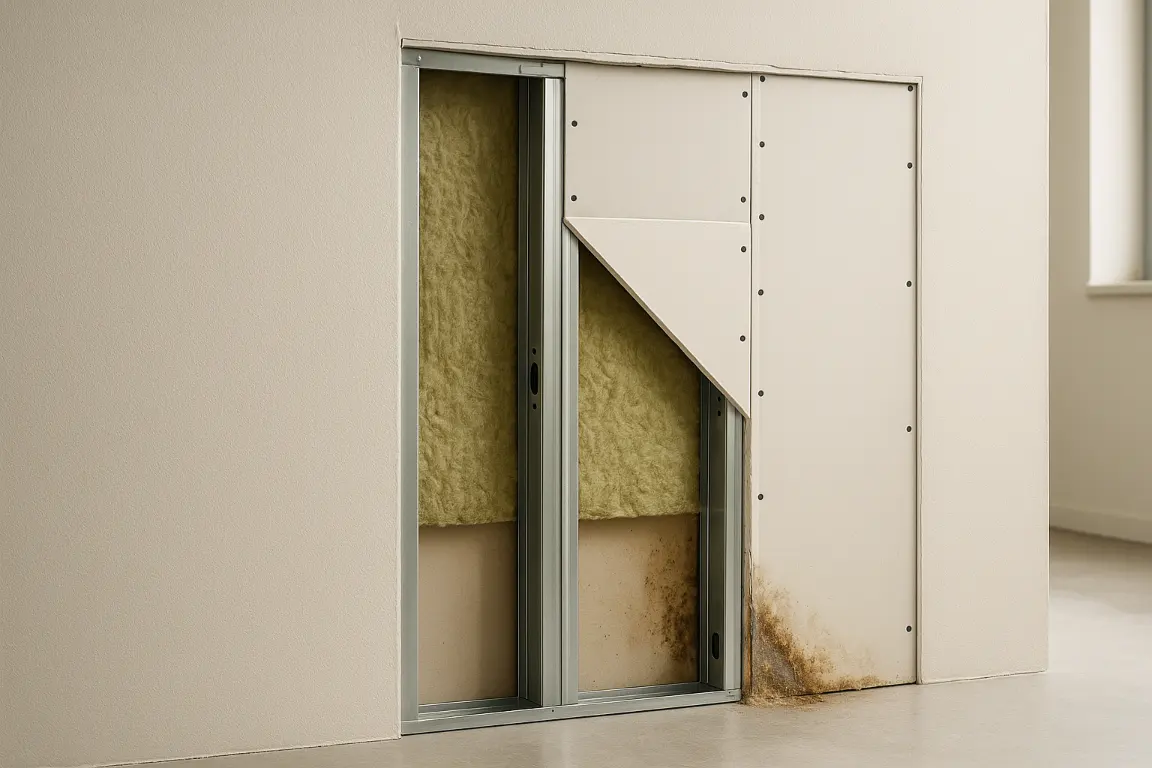
In restoration and repair work, terminology around rated walls is often used casually, but the construction is never interchangeable. A fire wall is a rigorously regulated, structurally independent separation designed to contain fire spread between areas of a building; fire walls require a degree of continuity and support that sets them apart from other wall assemblies. Fire partitions, drywall partitions, and a 1 hour fire rated drywall partition serve different roles, each with its own fire rating, fire-resistance rating, continuity requirements, and allowable penetrations. Treating every fire-rated wall alike can obscure the details that determine whether the system will perform as intended.
For MrWalls Drywall & Painting, the priority is to preserve the tested wall assembly, not merely replace damaged drywall, sheetrock, or a gypsum panel. A gypsum panel may be specified within a particular ul type or usg assembly, installed over a steel stud frame with prescribed studs, layers on each side, insulation, fasteners, tape, and joint coat. Water damage, new wiring, plumbing access, recessed boxes, ductwork, and even one unsealed joint can compromise fire resistance. The panel, fiber reinforcement, approved materials, screw pattern, and firestop treatment may each be integral to the rated construction.
A proper repair begins by confirming what the existing walls were designed to be and where their rating must remain continuous: from the floor to the deck, at intersecting walls, above ceilings, around openings, and through service penetrations. Fire protection is particularly vulnerable at these transitions, where a polished drywall patch can hide a fractured barrier. Before closing the wall assembly, document the conditions, select materials compatible with the required rating, and coordinate with the applicable building official or design professional when the original system cannot be verified.
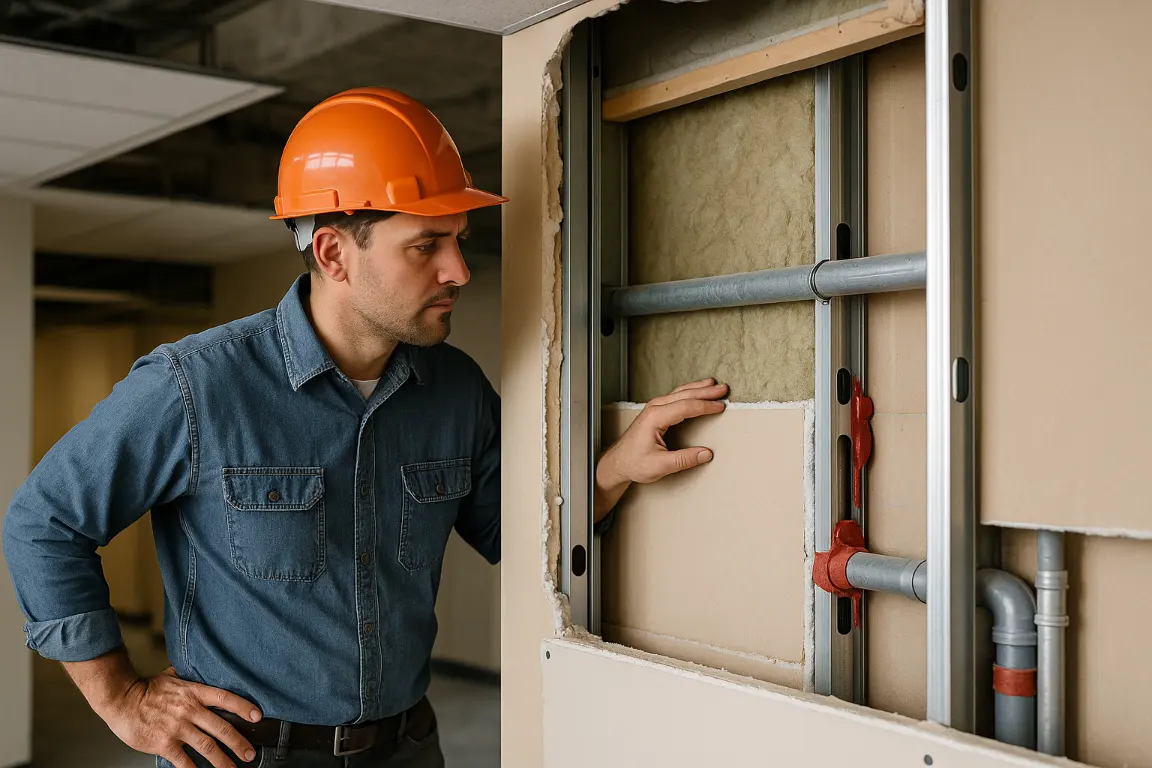
A fire-rated wall is never simply thicker drywall; its fire rating and fire-resistance rating are earned through a tested, listed system. Every wall assembly relies on an exact combination of framing, gypsum panel or sheetrock layers, panel thickness, fasteners, insulation, tape, joint treatment, and penetrations. Start with the ul type designation or another recognized listing appropriate to the wall’s purpose, whether it separates a garage from living space, creates fire partitions between units, or encloses a utility area. A 1 hour fire rated drywall partition, for instance, may be designed for wood studs or a steel stud configuration, with distinct requirements for each side, floor connections, coat application, and installation details. Before ordering materials, verify that the proposed system suits the existing building conditions: altering screw spacing, substituting a gypsum product, or selecting a seemingly similar fiber board can weaken fire resistance and invalidate the rated assembly. A capable DIYer may be a sound fit for a small, straightforward repair when the existing wall assemblies are documented and the work does not affect fire protection. For new drywall partitions, significant water damage, uncertain framing, or walls with electrical and plumbing openings, a contractor offers the more dependable path. MrWalls Drywall & Painting can evaluate the existing drywall assembly, identify compatible usg materials, and complete repairs with the precision required for rated walls, fire walls, and any fire wall designed to perform exactly as listed.
A 1 hour fire rated drywall partition is defined by far more than the board on its face. Its fire-resistance rating depends on a tested wall assembly: the specified gypsum panel or gypsum panel, proper thickness, steel stud framing and studs, fasteners, tape, joint treatment, penetrations, and perimeter details. Whether a building contains drywall partitions, fire partitions, rated walls, a fire wall, or fire walls, its fire rating relies on the complete system and approved materials often a listed UL type or USG design, rather than sheetrock alone. For that reason, repairs to a fire-rated wall demand a more exacting approach than a conventional drywall patch. Homeowners and property managers frequently ask whether a damaged section can be replaced, whether standard compound is appropriate, or whether a new coat of paint affects the rating. The answer depends on the original wall assemblies, the size and location of the opening, and whether protection is required on each side of the walls. MrWalls Drywall & Painting assesses visible damage as well as concealed conditions that can affect fire resistance and fire protection, including electrical boxes, mechanical openings, shared floor lines, and water-damaged fiber components. In many instances, a carefully matched repair retains the designed performance; in others, incomplete documentation or compromised conditions call for a more comprehensive upgrade. A refined finish matters, but never more than the assembly’s intended protection.
A 1-hour rating applies to a complete tested wall assembly that resists standardized fire exposure for at least 60 minutes. The rating may depend on gypsum board type and layers, framing, insulation, fasteners, joint treatment, perimeter connections, and approved penetration details.
No. Type X drywall is often part of a rated assembly, but installing it alone does not create a 1-hour wall. The board thickness, number of layers, stud type, screw spacing, insulation, and installation details must match a listed assembly.
Often, yes, when the original assembly is identified and the repair restores its required materials and details. A patch must address any damaged board, insulation, framing, joints, firestopping, and openings, not only the visible surface damage.
Yes. Service penetrations and openings can weaken a fire-resistance barrier unless they follow an approved detail. Electrical boxes, piping, ductwork, access panels, and gaps around services may require compatible firestop materials or specific installation methods.
Look for the UL design number or another recognized tested listing in building documents, plans, or inspection records. The listing identifies the required framing, gypsum layers, fasteners, insulation, and permitted details. When documentation is unavailable, consult a qualified contractor, design professional, or local building official.
A typical paint finish generally does not change the rating when applied over an intact, properly constructed assembly. However, paint cannot restore a compromised wall, cover unsealed penetrations, or replace required gypsum board, joint treatment, or firestop work.
A fire wall is a more robust, code-defined separation with specific structural and continuity requirements. A fire-rated partition may also limit fire spread, but its purpose, rating, construction, and permitted openings can differ. The terms should not be used interchangeably.