A ceiling patch can make a damaged spot disappear, but the right repair starts with finding out why it happened. Water stains, cracks, and sagging drywall may point to a leak or structural issue. Once the cause is handled, choose a patch method that matches the size and type of damage, or call a pro when safety is a concern.
Choose a ceiling patch based on the damage’s cause, size, and safety risks, not just its appearance. Check first for leaks, wiring, structural issues, lead paint, and safe attic access. Small holes and cracks may be DIY-friendly with proper PPE, tape, joint compound, sanding, primer, and paint. Recurring cracks, sagging, water damage, texture matching, or building-system issues often require a qualified professional.
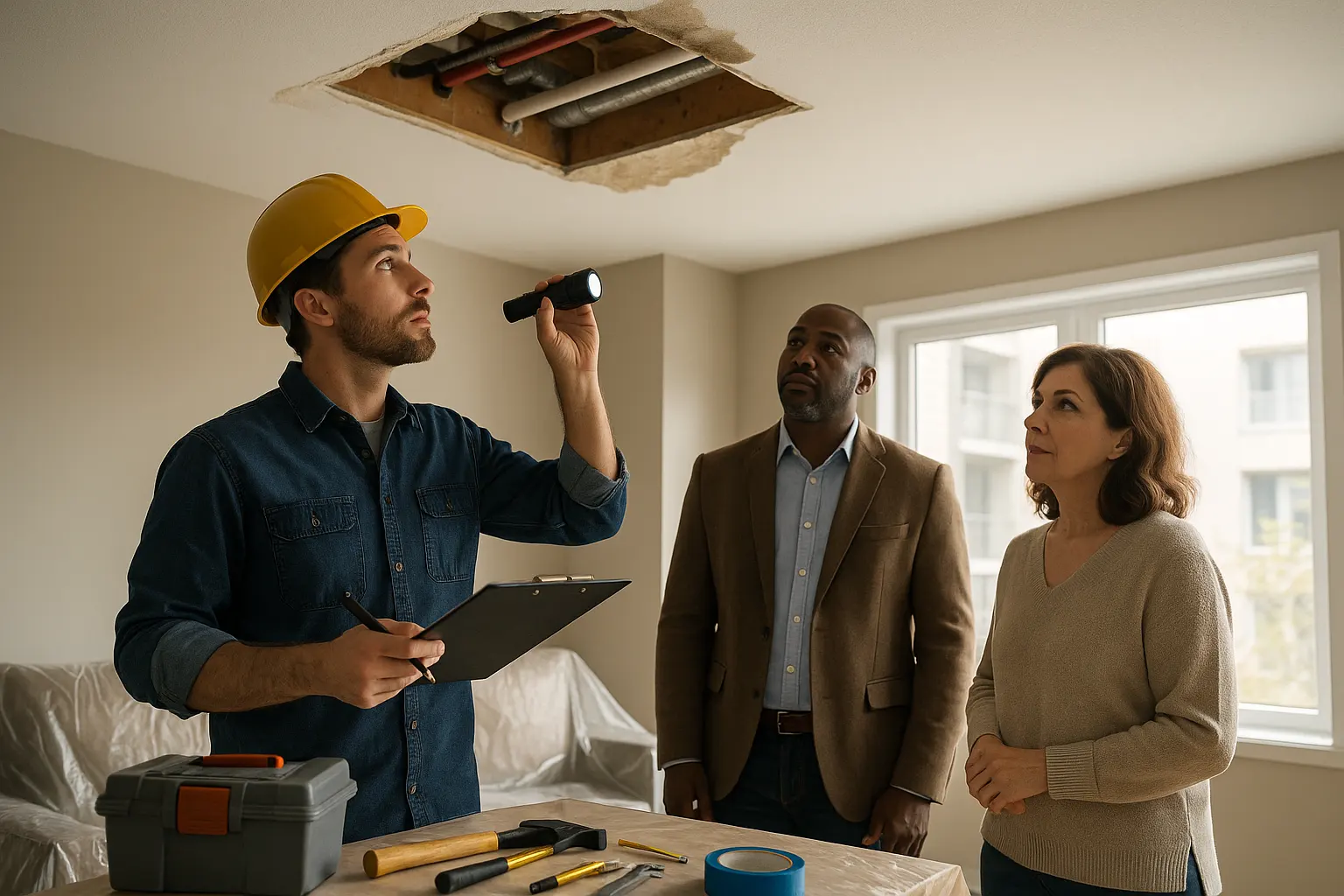
Before I begin any ceiling patch, I look beyond the damaged area. A lasting repair starts with finding the cause, checking the ceiling structure, and making sure the work can be done safely.
Water stains, cracks, and sagging can hide wiring, plumbing leaks, or framing trouble. Turn off power to nearby fixtures before opening the ceiling, and never cut into an area if you are unsure what runs above it. In older homes, paint layers may contain lead, so have them tested before sanding or scraping. I also check whether there is safe attic access and enough room to inspect the building above the damage. If access is limited or the source is unclear, hire a contractor before starting the repair.
A small ceiling patch can be a practical DIY drywall repair, but the right choice depends on the damage, its cause, and your comfort with overhead work. At MrWalls Drywall & Painting, we help homeowners decide before a repair becomes larger.
Most cosmetic ceiling repair work, such as patching a small drywall hole, does not require a permit. Rules can change when the damage involves a building system. If water damage came from plumbing, a roof leak, or an electrical issue, the underlying problem may require a licensed trade professional before the ceiling is closed.
I also recommend checking local requirements when a repair involves fire-rated drywall, multifamily buildings, or a large section of ceiling. Condo associations and property managers may have their own approval process. A qualified contractor can identify the correct materials and restore the ceiling without compromising the building’s required protection.
| Repair situation | Why it may need review | Who to check with |
|---|---|---|
| Small cosmetic drywall hole | Cosmetic patching typically does not require a permit. | Usually no approval needed; verify local rules if unsure. |
| Water damage caused by plumbing | The plumbing issue behind the damage may require work by a licensed trade professional before the ceiling is closed. | Local building authority and a licensed plumbing professional. |
| Water damage caused by a roof leak | The underlying roof problem may need to be corrected before the ceiling repair is completed. | Local building authority and a qualified contractor. |
| Damage related to an electrical issue | The electrical problem may require a licensed trade professional before closing the ceiling. | Local building authority and a licensed electrical professional. |
| Repair involving fire-rated drywall | Required fire protection can be affected if incorrect materials or methods are used. | Local building authority and a qualified contractor. |
| Repair in a multifamily building | Building rules or required protections may apply. | Local building authority, property manager, or condo association. |
| Large section of ceiling repair | Local requirements may apply because of the scope of the repair. | Local building authority and a qualified contractor. |
A clean, durable ceiling drywall repair starts with the right basic gear. At MrWalls Drywall & Painting, I keep materials simple: matching drywall, tape, fasteners, reliable sanding tools, and the right joint compound for each coat.
For any drywall repair, I wear safety glasses, a NIOSH-approved N95 mask, and gloves before cutting or sanding. Ceiling work puts dust directly overhead, so eye protection matters as much as a good mask. If insulation is exposed, I add long sleeves and cover my skin before moving it. Fiberglass particles can irritate your eyes, lungs, and skin. Homeowners should also lay down plastic sheeting and keep children and pets out of the work area until cleanup is complete. If the repair involves older materials or suspicious texture, stop and have it tested before disturbing it.
As a ceiling repair contractor, I tell homeowners that small damage is often manageable with careful prep and the right materials. For a nail hole or shallow crack, start by removing loose paint and dust from the damaged area. Apply a thin ceiling patch or drywall patch, pressing it firmly into the opening. For cracks, I usually widen the line slightly first, then add fiberglass tape so the repair has support. Cover the tape and any patch with joint compound, using a wide knife to feather the edges beyond the repair. Let each coat dry fully, then sand lightly and apply another thin coat if needed. Once the surface feels smooth, prime and paint the ceiling. If the crack keeps returning, the ceiling sags, or texture must match, MrWalls Drywall & Painting can patch ceilings and walls in one visit.
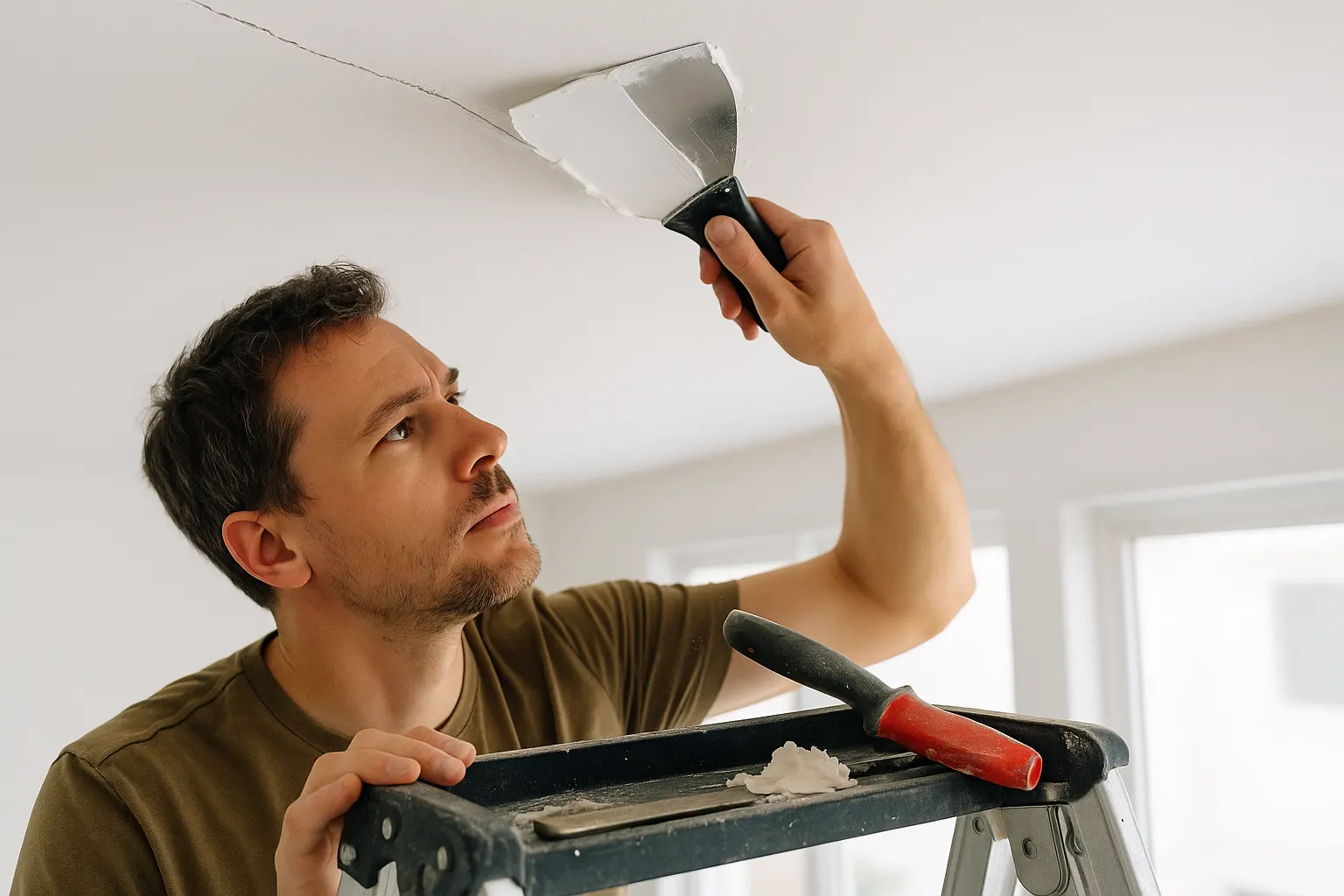
At MrWalls Drywall & Painting, I make a seamless drywall patch by blending the repaired-area texture into the surrounding texture. The goal is simple: your wall or ceiling should read as one continuous surface.
For a textured ceiling, texture matching starts before I open a bucket or spray can. I study the size, spacing, and direction of the existing pattern under good light. Orange peel needs a light, even spray and time to set. Knockdown needs a heavier application, followed by a clean knockdown pass with the right knife angle. I always test the texture on scrap drywall first, then feather it beyond the drywall patch. Once it is dry, primer and ceiling paint help unify the sheen. Homeowners can handle small repairs, but larger patches are often worth hiring out.
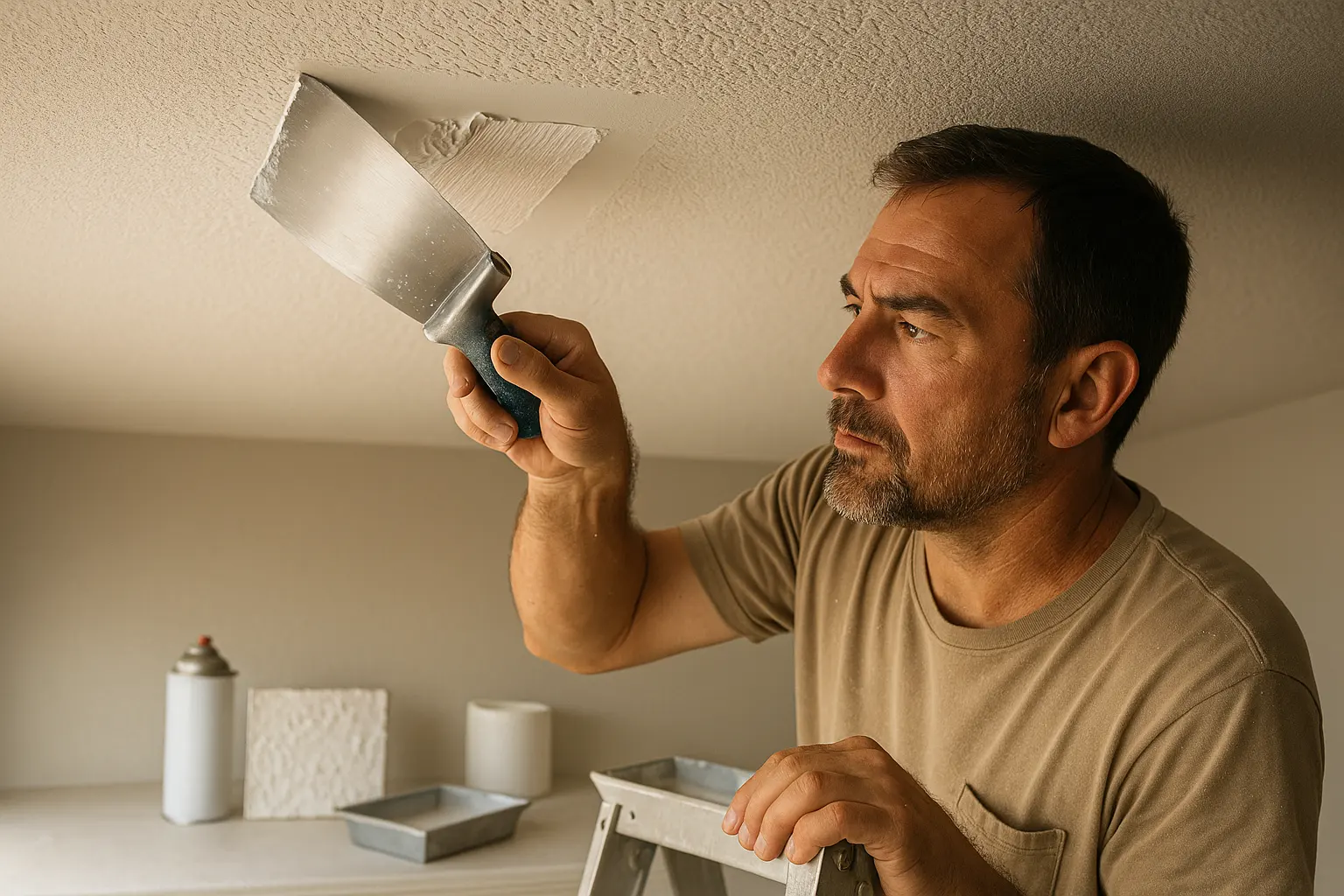
Popcorn ceiling repair requires extra care. If your textured ceiling was installed before the 1980s, do not scrape, sand, or disturb it until a qualified lab has tested it for asbestos. Even newer popcorn can create a dusty, uneven mess when handled dry. After the area is confirmed safe, I protect the room, repair and tape the damaged spot, then seal the patch with primer. For texture matching, I use a sample board to adjust the spray pattern and material thickness before touching the ceiling. A small mismatch can stand out, so broad feathering and a full repaint often give the cleanest result.
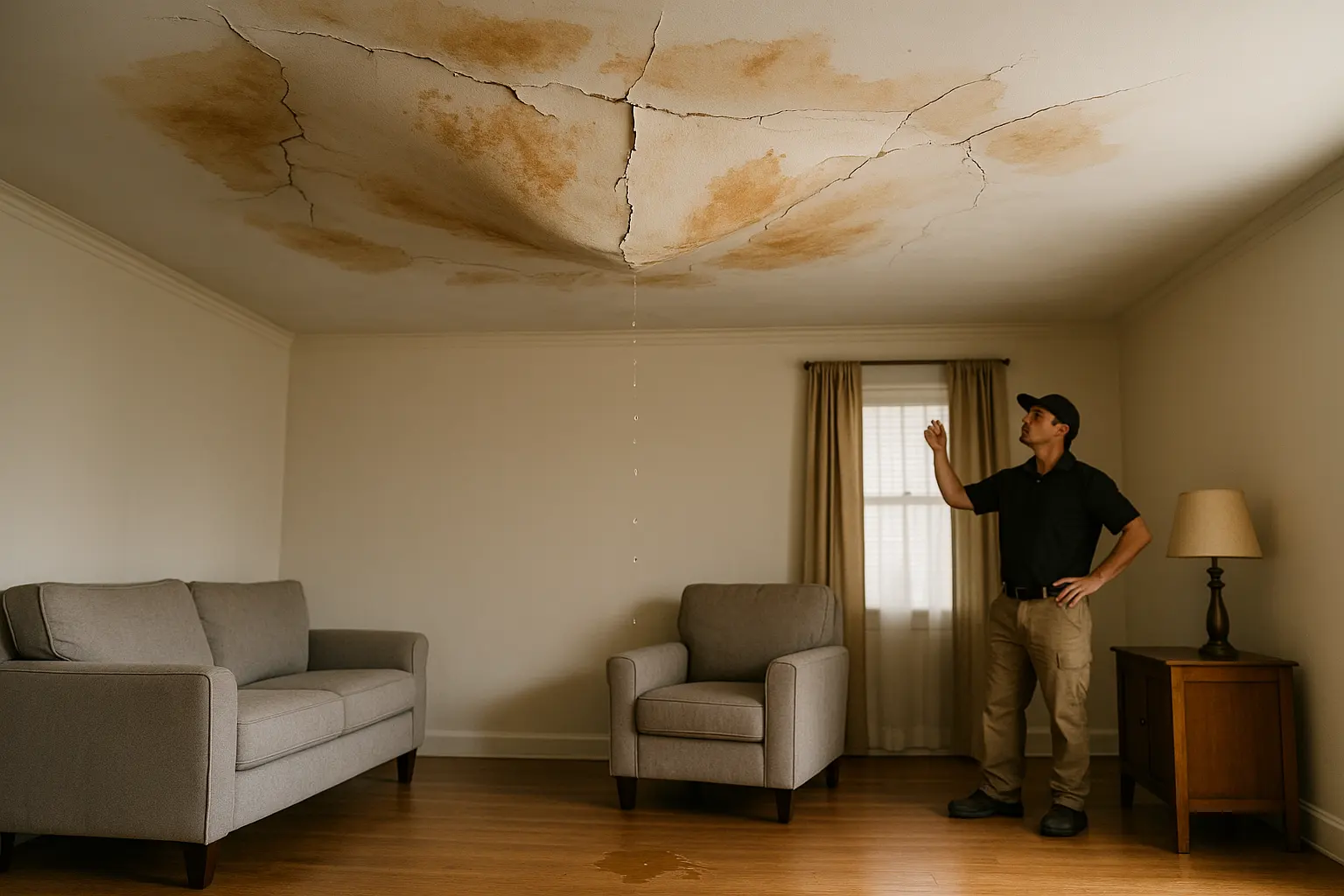
Before any drywall repair, I find and stop the source of water damage. A lasting ceiling patch depends on dry, stable ceiling drywall; otherwise stains, soft spots, and sagging can return after the work is done.
A ceiling that bows, sags, feels soft, or shows widening cracks needs prompt attention. Wet ceiling drywall gets heavy quickly, and the drywall fasteners may no longer hold it safely in place. If you see a bulge, dripping, loose tape, or a large stained area, keep people and furniture away from that section of the ceiling. Do not push on it or try a cosmetic repair first. I inspect the moisture source, framing, and damaged drywall before recommending a safe repair or replacement.
Some ceiling repair jobs are manageable for handy homeowners, but larger drywall repair issues need trained eyes. At MrWalls Drywall & Painting, we handle the repair work that calls for sound diagnosis, clean texture matching, and lasting results.
I recommend hiring a contractor when a ceiling patch follows a leak, sagging drywall, cracks, or recurring stains. We first identify whether moisture or framing movement caused the damage; covering it without correcting the source is not a real repair. Pricing depends on access, patch size, drying time, drywall repair needs, and the existing finish. A small patch may take one visit plus a return trip for sanding and paint, while larger repairs can require several days for drying between coats. Before scheduling, ask for a clear scope that includes protection, texture, painting, cleanup, and any moisture-related limits.
As a ceiling repair contractor, I hear many of the same questions from homeowners: Can I make a ceiling patch myself? Will the repair show after painting? Is a drywall patch enough, or is there a bigger problem above the ceiling? Small dents, nail pops, and minor holes can often be repaired with the right materials and careful sanding. Water damage, sagging drywall, recurring cracks, or a damaged popcorn texture usually call for a closer inspection before any repair begins. At MrWalls Drywall & Painting, we help homeowners choose the practical route, clear guidance for a manageable DIY fix or skilled service when a seamless result matters. A proper ceiling repair addresses the cause of the damage, rebuilds the surface, and blends the finish so the patched area does not draw attention.
Check for active leaks, sagging drywall, stains, electrical fixtures, and recurring cracks before starting. Turn off power near the repair area and do not open the ceiling if you are unsure about wiring, plumbing, or structural damage above it. Repair the cause first, then patch the ceiling.
Yes, but only after the source of the leak has been fixed and the ceiling is completely dry. Replace drywall that is soft, swollen, moldy, or sagging rather than covering it with compound. Prime water stains with a stain-blocking primer before painting.
Hire a professional for large holes, extensive water damage, repeated cracks, sagging ceilings, difficult texture matching, or damage near electrical and plumbing systems. Professional help is also a wise choice for fire-rated ceilings, multifamily properties, and repairs requiring access above the ceiling.
Use setting-type compound for deeper fills or faster repairs, then use lightweight finishing compound for thin final coats and easier sanding. Apply several thin coats instead of one thick coat, feathering each layer wider than the previous one for a smooth blend.
Remove loose material, slightly widen the crack, and reinforce it with drywall tape before applying joint compound. Fiberglass tape can work well for small repairs, while paper tape is often preferred for flat seams. If a crack returns, movement, moisture, or framing issues may need attention.
Practice the texture on scrap drywall first, then blend the repaired area into the surrounding ceiling with the matching spray, roller, brush, or texture tool. Keep the patch edges wide and subtle. Prime the repair before painting so the sheen and color look more consistent.
A small cosmetic drywall patch usually does not need a permit. Requirements may change if the repair involves plumbing, electrical work, structural framing, fire-rated assemblies, or a condo or multifamily building. Check local rules and property requirements before closing the ceiling.