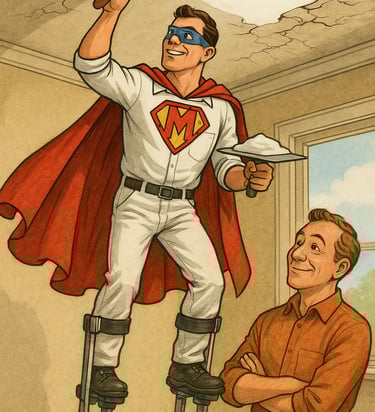
How to Fix Humpty Dumpty: Repairing Drywall Ceiling Seam Humps
Repairing Drywall Ceiling Seam Humps not flat ceiling too much drywall joint compound
COMMON QUESTIONSBAD TAPING JOB


Understanding Drywall Ceiling Seam Humps
When it comes to interior construction, achieving a flawless finish is crucial for aesthetic appeal. One common issue that homeowners face is the appearance of humps along drywall ceiling seams. These imperfections, often likened to speed bumps, can disrupt the visual flow of a room. Understanding how to fix drywall ceiling seam humps is essential to restoring the integrity of your ceilings.
Identifying the Cause of Drywall Joints Not Being Flat
Before you can effectively address the issue, you must identify what has caused your drywall joints to be anything but flat. Common causes include improper installation, settling of the building structure, or the application of joint compound not done correctly. It’s important to take a closer look and assess the situation prior to beginning any repair work.
Step-by-Step Guide to Fixing Drywall Ceiling Seam Humps
Once you've pinpointed the cause, you can follow these steps to correct the problem:
Gather Your Tools: You’ll need drywall compound, a utility knife, sandpaper or an electric sander, a putty knife, and a drywall taping knife.
Remove Paint and Finish: Start by scraping off any paint or texture that may be hindering your ability to see the seam. This will give you a better idea of the extent of the humps.
Apply Joint Compound: Use your putty knife to apply a layer of joint compound over the area where the seams have risen. Feather out the compound so that it tapers down to the surrounding ceiling.
Sand Smooth: Once the joint compound has fully dried, lightly sand it down with fine-grit sandpaper until it’s smooth. Be sure to blend it well with the adjacent surface to eliminate any visibility of the seam.
Repeat if Necessary: You may need to apply a second or third layer of compound, sanding between each application to achieve a flat surface.
Finish Up: After achieving a smooth finish, paint the area to match the rest of your ceiling. This will help in making the repair less noticeable.
Addressing drywall seams that are not flat may seem daunting, but with methodical steps and the right tools, you can eliminate those unsightly speed bumps. Remember that patience is key; rushing the process can lead to incomplete repairs. As you work, take your time to blend the repairs as closely as possible to the original ceiling.
Dimples in the Ceiling:
If you look at your ceiling when the sun hits it at a sharp angle, you might notice small, circular bumps or shallow craters. These are dimples. They usually show up in a straight line across your ceiling. Most people assume their house has a structural problem, but the reality is much simpler and less expensive.
What Is a Ceiling Dimple?
In the drywall trade, we call these screw pops. They happen when the drywall screw loses its grip on the wooden joist above it. When the screw moves, it pushes against the joint compound and paint, which creates a small mound or a crater on your ceiling.
Why It Happens in Western Mass
Our local weather is the main reason these pops show up. New England homes deal with massive swings in humidity between a damp July and a bone-dry February. The wooden framing in your ceiling expands and shrinks with the seasons, and that constant movement eventually works the screws loose. If your home is a new build, it might just be the "green" wood drying out for the first time.
Why You Shouldn't Just Mud Over Them
If you just slap some spackle over a dimple, it will come back in a few months. You haven't fixed the loose screw. The movement will just push the new mud right out of the hole.
To fix it correctly, we take these steps:
Drive a new screw an inch or two away from the pop to secure the rock.
Remove the loose material and the old screw if necessary.
Apply multiple thin coats of joint compound.
Sand and paint the area so it matches the rest of the ceiling.
Stop Chasing Shadows
Dimples are a nuisance that make a high-quality room look sloppy. If you have a ceiling that looks like a golf ball, give MrWalls a call. We will secure the drywall and make those spots disappear so you can stop staring at them.
Are the dimples in your ceiling appearing in a straight line or are they scattered?
In conclusion, by understanding the causes of drywall ceiling seam humps and following a careful approach to repair them, you can restore the beauty of your ceilings and create a polished finish in your home. Regular maintenance and inspections can help preempt these issues, ensuring your ceilings remain smooth and appealing for years to come.
Home | Contact | Offices | Faq | Service Area | Blog | Drywall Finishing | Drywall Taping | Drywall Repair | Plaster Repair | Ceiling Repair | Wall Repair | Drywall Installation | Drywall Hanging | Popcorn Ceiling Repair | Hole in Ceiling | Fix Hole In The Wall | Interior Painting | Knockdown Texture | Water Damage Repair | Drywall Bathroom | Drywall Ceiling | Soundboard | Drywall Patch | Ice Dam Roof Leak | Drywall over Plaster | Drywall Over Popcorn | Skim Coat Level 5 | Popcorn Texture Removal | Drywall Finish Levels | | Refund Policy | Privacy Policy | Terms and Conditions


600 East Main St Chicopee, MA, 01020
203 Circuit Ave n39, West Springfield, MA 01089