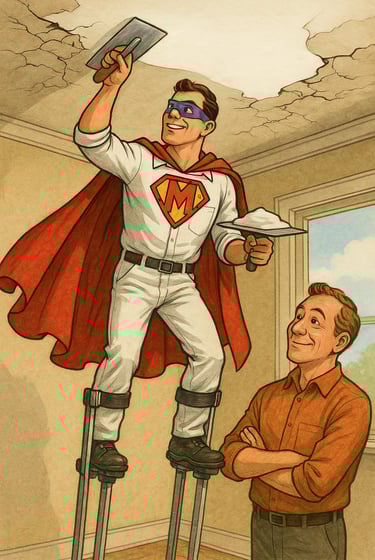


Fix a Hole In Drywall In Western MA
25 Years of Experience fixing holes in drywall walls and ceilings. We stand behind our work with a 3 year warranty
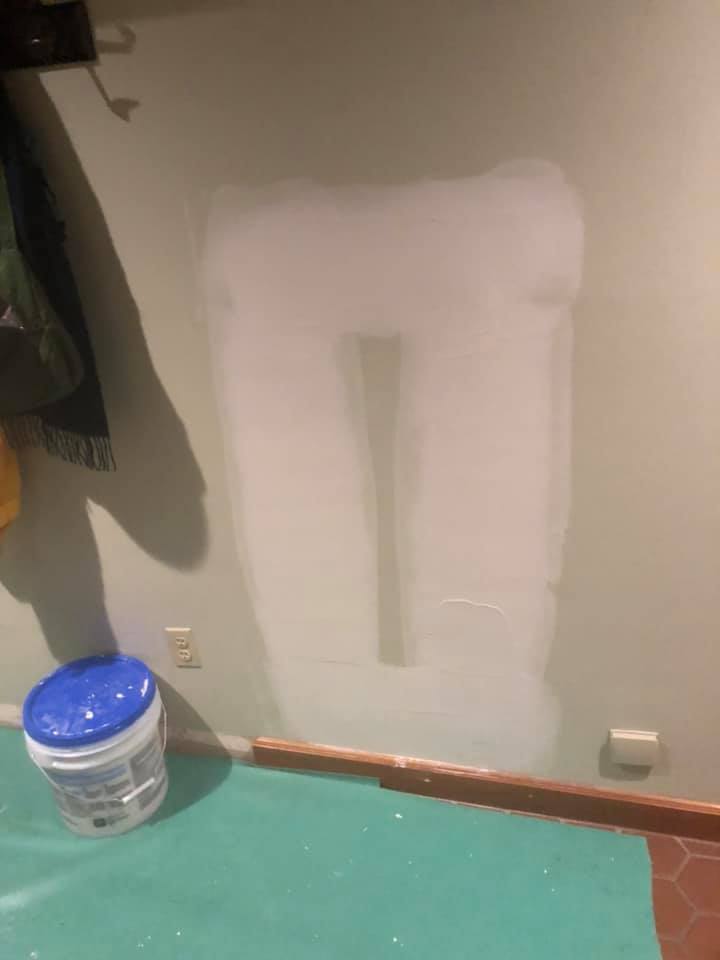
MrWalls Drywall & Painting - Western Massachusetts
We Fix Holes In Drywall From Plumbers and Electricians
A hole in the wall is one of the most common drywall repair calls in Western Massachusetts. Whether it is a doorknob impact, a plumbing access cut, or a fist-sized mystery from a move-in day, MrWalls fixes it correctly and finishes it so nobody can tell it was ever there.
·Springfield · Chicopee · Holyoke · Northampton & Beyond
A drywall hole is not just an eyesore. It is an unfinished wall, and in a home where everything else has been painted and cared for, it stands out every time someone walks past it. MrWalls patches drywall holes of every size throughout Western Massachusetts and finishes them to a standard that holds up under paint and under the scrutiny of anyone looking closely.
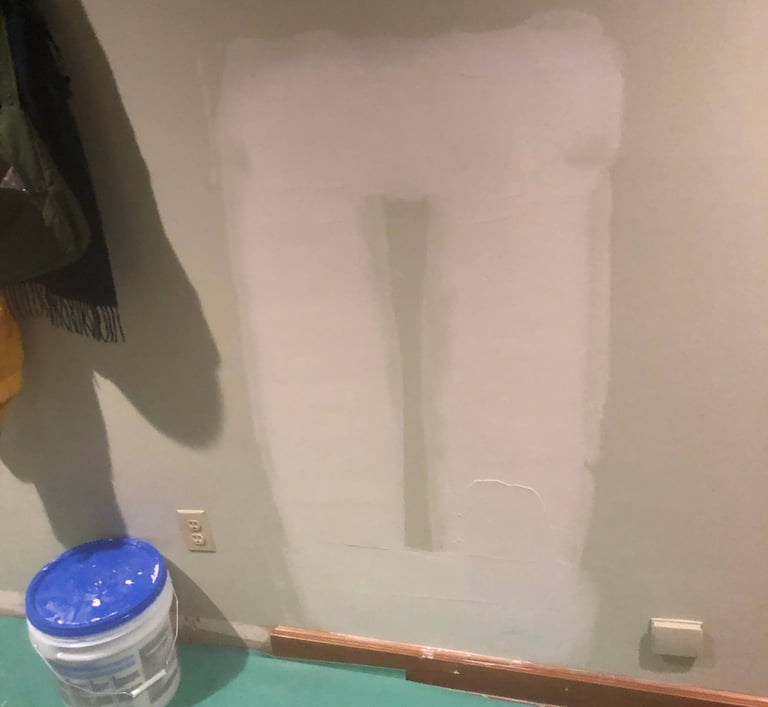
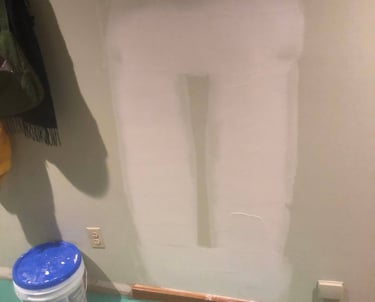
Drywall holes happen in every home. A doorknob swings too hard and punches through the wall. A plumber cuts an access panel and leaves the opening for you to deal with. Furniture gets moved and a corner catches the wall. An electrician runs a new circuit and leaves three or four access cuts behind. A previous tenant put something through the wall that you inherited along with the lease. Whatever the cause, the result is the same: a hole in a finished wall that needs to be repaired correctly before paint can make it disappear.
MrWalls Drywall and Painting repairs drywall holes throughout Western Massachusetts. We handle holes of every size, in walls and ceilings, in residential homes and commercial spaces, from Springfield and Chicopee to Northampton and Westfield. We patch correctly, finish to the right level for the room, and match the existing texture so the repair becomes part of the wall rather than a visible addition to it.
Not All Holes Are the Same
The size of a hole determines the repair method. The location determines the texture match required. The cause sometimes determines whether there is an underlying issue that needs to be addressed before the surface is closed. MrWalls assesses all of these before recommending an approach, because the correct repair for a pinhole nail pop is entirely different from the correct repair for a twelve-inch plumbing access cut, and treating them the same produces poor results on at least one of them.
Small
Nail Holes and Small Fastener Damage
Under half an inch. Picture hooks, curtain rod anchors, small wall anchors, and cabinet mounting holes. Filled with lightweight compound, sanded flush, and touched up with paint. The simplest repair category.
Small to Medium
Doorknob and Impact Holes
One to four inches. The most common hole repair call in Western Massachusetts. Requires a backing method or mesh patch to bridge the opening, followed by compound coats and texture matching.
Most Common
Access Panel Cuts
Four to twelve inches or larger, typically square or rectangular. Left by plumbers, electricians, and HVAC technicians. Require proper backing installation, new drywall panel, tape, finish coats, and texture match.
Large
Demolition and Impact Damage
Twelve inches and larger. Damage from renovation, large impacts, or structural work. May span between studs and require multiple backing installations or a full panel replacement to the nearest framing members.
Variable
Multiple Holes, One Room
Several holes of mixed sizes in one space, common after rewiring or plumbing re-pipe projects. Efficient to address as a single project scope with consistent texture application across all repairs.
Ceiling
Ceiling Holes and Cutouts
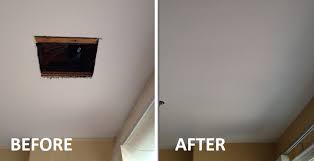
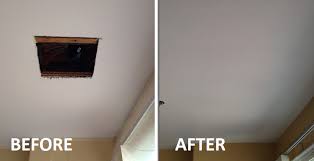
Light fixture replacements, recessed can installations, attic access additions, and plumbing chase openings. Ceiling repairs require the same backing and finish attention as wall repairs with the added challenge of overhead work.
Why the Repair Method Matters
Walk into any hardware store and you will find mesh patch kits, peel-and-stick repair products, and premixed compound in tubs promising easy repairs for holes of any size. Some of these products work acceptably for very small holes in walls that will not be inspected closely. For anything larger, the shortcuts they encourage produce patches that are visible within months: raised edges where the compound built up at the mesh perimeter, cracks along the seam between patch and existing wall, texture mismatches that catch the light differently from the surrounding surface.
The difference between a patch that disappears and a patch that announces itself is almost entirely in the preparation and the feathering. A patch that is cut to clean edges, backed solidly, finished in properly thinned coats that extend well beyond the repair zone, and textured to match the surrounding field will not be visible under normal conditions. A patch that is slapped into a ragged hole and sanded smooth at the edges will show. MrWalls prepares and feathers every repair correctly, regardless of the hole size.
The Repair Methods MrWalls Uses by Hole Size
Professional drywall hole repair uses different techniques depending on the size of the hole. The method determines how solid the backing is, how the compound is supported during application, and ultimately how durable and invisible the finished repair will be.
Under 1 inch
Direct Fill
Small holes filled directly with lightweight setting compound in one or two passes, feathered to a smooth blend with the surrounding surface, sanded flush once cured.
1 to 4 inches
California Patch or Backing Clip
A backing clip or a California patch technique using the cut-out piece with paper face intact provides solid support for compound coats without requiring access to the wall cavity behind the panel.
4 to 12 inches
Backing Board and New Drywall
Wood backing blocks or metal backer strips installed inside the cavity give the new drywall patch solid fastening points at all edges. New drywall cut precisely to the opening, taped, and finished in full coats.
12 inches and larger
Full Panel to Framing
Large holes are cut back to the nearest stud centers, new drywall installed spanning full framing bays, taped and finished at the natural seam locations for maximum structural soundness and invisible finish.
MrWalls tip: for holes between four and twelve inches, the backing method is the most important decision in the repair. A patch that has solid backing at all four edges holds compound coats correctly, does not flex, and produces a seam that can be feathered properly. A patch that has inadequate backing at any edge will develop a crack at that edge within the first seasonal cycle as the surrounding wall moves and the unsupported patch edge cannot move with it. MrWalls installs solid backing on every patch before any compound is applied, regardless of hole size.
What Is Behind the Wall Matters Too
Before any drywall hole is closed, MrWalls checks what is inside the wall cavity at the repair location. In Western Massachusetts homes built before 1960, knob-and-tube wiring, abandoned plumbing runs, and original insulation conditions are common discoveries when walls are opened. In newer homes, active plumbing, electrical conduit, and HVAC ductwork sometimes run closer to wall surfaces than the original construction drawings suggest.
If you know or suspect that a hole in your wall was caused by, or is adjacent to, water damage, we assess for moisture inside the cavity before closing it. Installing new drywall over wet framing or wet insulation traps moisture inside the wall and creates conditions for mold growth that will require far more expensive remediation to address than the original hole repair. MrWalls will not close a wall cavity that shows active moisture or mold without addressing the underlying condition first.
Texture Matching After the Patch
Closing the hole correctly is only half the job. The other half is making the surface above the patch read identically to the wall around it under paint and under every lighting condition the room experiences. Texture matching is where amateur repairs fail most visibly, and where professional technique shows most clearly.
Western Massachusetts homes contain every texture variety common in residential construction across the past six decades. Smooth walls in older homes. Orange peel in mid-century construction. Knockdown in most homes built since the 1980s. Skip trowel in custom and higher-end residential work. Each has its own application technique and each has its own failure mode when matched poorly. A knockdown patch that is too dense looks like a bump in the wall. One that is too flat looks like a hole was filled there. MrWalls reads the existing texture before any patch material is applied and replicates it specifically for the surrounding field.
For smooth walls, which are common in older Pioneer Valley homes where the original plaster finish set a high standard, a patch repair requires two full skim coats feathered well beyond the patch boundary, followed by sanding under raking light before any primer is applied. There is no shortcut to an invisible smooth wall patch. The feathering distance is what determines visibility, and professional feathering extends two to three times further from the patch edge than most DIY repairs attempt.
Our Drywall Hole Repair Services
MrWalls handles the full range of drywall hole repair scenarios throughout Western Massachusetts for residential and commercial customers.
🔧
Small Hole and Nail Pop Repair
Fast, clean repair of small holes, nail pops, and anchor damage. Sanded flush and finished to match surrounding texture and paint sheen.
🚪
Doorknob and Impact Hole Repair
The most common hole repair in Western MA. Properly backed, finished in multiple coats, and texture-matched to the surrounding wall.
🔲
Access Panel and Trade Cut Repair
Closing the square and rectangular openings left by plumbers, electricians, and HVAC contractors throughout homes and commercial spaces.
🏗️
Large Hole and Panel Replacement
Holes cut back to framing and repaired with new drywall spanning full bays for maximum structural integrity and invisible finish.
🏠
Multi-Hole Projects
Multiple holes addressed in one visit, with consistent texture application across all repairs for a uniform result throughout the home or space.
🎨
Prime and Paint Completion
Repaired surfaces primed and painted to match existing wall colors. One contractor from hole to finished painted wall, no coordination required.
The MrWalls Drywall Hole Repair Process
Every drywall hole repair MrWalls performs follows the same careful sequence regardless of hole size. Here is how we work.
Assessment of hole size, cause, and cavity condition. We examine the hole, determine the appropriate repair method for its size and geometry, and check the cavity for any moisture, mold, wiring, or other conditions that affect how the repair should be approached. Cause matters too. A hole from a door handle can be closed immediately. A hole from a plumbing leak requires moisture confirmation before the cavity is sealed.
Cut-back to clean geometry. Ragged holes are cut back to straight, clean edges. A clean square or rectangular opening accepts a repair panel and produces seams that can be properly taped and feathered. An irregular hole does not. For small holes where a cut-back is not necessary, edges are cleaned of loose paper and broken gypsum before any compound is applied.
Backing installation. For holes larger than one inch that will receive a new drywall panel, solid backing is installed inside the wall cavity at every open edge of the repair. For very small repairs, backing clips or the California patch technique provide the equivalent support without requiring cavity access. No patch goes in without solid support at every edge.
New drywall installation. A patch panel is cut precisely to the opening and fastened to the backing. Matching the thickness of the existing drywall exactly is critical. A patch that sits proud of the surrounding wall will create a bump that shows through compound no matter how many coats are applied. A patch that sits recessed creates a hollow that telegraphs through the finish for the same reason.
Tape and first coat of compound. All seams around the patch are taped and receive the first coat of joint compound, feathered out from the patch edge into the surrounding wall surface. For small holes filled directly, the first compound coat is applied to the fill and feathered in a similar way. The feathering distance at this stage is two to three times the width of the hole on every side.
Second and third finish coats. Successive coats extend the feathered edge further, each coat thinner and wider than the last. Full drying time between every coat. Setting-type compound is used for the first coat on larger repairs where dimensional stability matters. Lightweight finishing compound is used for the outer coats where smooth feathering and easy sanding are the priority.
Sanding under raking light. Fully cured compound is sanded and the surface is inspected under a raking light held parallel to the wall. This inspection reveals any remaining ridges, seam lines, or surface irregularities before primer is applied. Everything identified at this stage is corrected before moving forward.
Texture matching. The repaired area receives texture replicating the surrounding wall finish. For smooth walls, a final skim coat troweled flat. For knockdown, a spray and timed knockdown pass calibrated to match the existing density and island size. For orange peel, a spray calibrated to match the existing stipple profile. The texture is feathered into the surrounding field rather than applied only over the repair boundary.
Prime and paint-ready handoff. Repaired surfaces are primed and left ready for your painter, or MrWalls can complete the painting as part of the same project engagement. For repairs that involved moisture or water contact, a stain-blocking primer is applied before any finish paint is allowed on the surface.
Drywall Hole Repair in Older Western Massachusetts Homes
Homes built before 1960 across Springfield, Northampton, Holyoke, and Chicopee were typically finished with plaster rather than drywall. When a hole in a plaster wall needs to be repaired, the approach is different from a standard drywall patch. Plaster walls are thicker, harder, and built in multiple coats over lath, and repairs that use standard joint compound directly into a plaster hole fail quickly because the materials are not compatible.
MrWalls repairs holes in plaster walls using compatible materials and techniques appropriate to the original system. Where a section of plaster has been knocked out cleanly, we rebuild it in base coat and finish plaster following the original layer sequence. Where original lath is intact and the hole is modest in size, the repair can often be made without replacing any lath. Where lath has been removed or broken, backing is installed and the repair is built up from a solid foundation. MrWalls handles both plaster and drywall hole repairs, which means one call covers any home regardless of what is behind the wall surface.
Why Hire a Professional for Drywall Hole Repair
Small nail holes are genuinely a DIY repair for most homeowners. A tube of lightweight spackle and a putty knife produce acceptable results on holes under a quarter inch in smooth or flat-painted walls. But the line between a repair that disappears and one that announces itself is crossed earlier than most homeowners expect.
The two skills that separate professional drywall repairs from amateur ones are feathering and texture matching. Feathering requires applying compound in progressively wider and thinner coats until the transition between compound and original wall surface is imperceptible to touch and to light. Texture matching requires reading the existing wall surface and replicating it with the correct tool and technique, not just applying something that looks approximately right up close. Both of these skills take practice to develop, and the investment in a professional repair pays back in a result that does not need to be redone.
Solid backing on every patch larger than one inch, no repairs that flex, crack, or fall out within the first seasonal cycle.
Professional feathering on every repair, compound extended well beyond the patch boundary so no visible edge remains under any lighting condition.
Texture matching for every surface type found in Western Massachusetts homes, smooth, knockdown, orange peel, skip trowel, and plaster finishes.
Plaster and drywall capability, one contractor for any hole in any wall regardless of construction era or material.
Moisture check before closing any cavity where water damage may have been involved, no new drywall installed over conditions that guarantee a repeat repair.
Full drywall and painting services available, one contractor takes the repair from hole through finished painted wall with no gap between trades.
Frequently Asked Questions
How long does drywall hole repair take?
Small holes under two inches can often be filled, sanded, and primed in a single visit with a return appointment for texture and paint once the compound cures. Larger holes requiring new drywall, multiple compound coats, and texture matching typically take two visits, one for the structural patch and first coat, and one for finish coats, sanding, and texture once everything is fully cured. MrWalls schedules both visits at the time of the first appointment so the project moves efficiently.
Will the patch be visible after painting?
A correctly prepared and feathered patch with matched texture should not be visible under normal viewing conditions after painting. Under extreme raking light, such as direct sunlight entering a window at a low angle and traveling directly across the repair, a very slight variation may occasionally be detectable by a person looking for it. Under normal room lighting, overhead fixtures, and indirect natural light, a professionally executed repair disappears. MrWalls inspects every repair under raking light before leaving the site to confirm the standard has been met.
Do I need to worry about what is behind the wall before the hole is patched?
In most cases no. Standard wall cavities between studs contain only insulation and framing. However, if you know the hole is near plumbing, electrical, or if it was caused by a water event, MrWalls checks the cavity condition before closing it. We also confirm there are no active wiring issues in the repair area before installing backing or fastening new drywall into the cavity.
My wall has knockdown texture. Can the patch be matched?
Yes. Knockdown texture is the most common wall and ceiling texture in Western Massachusetts homes built since the 1980s, and MrWalls matches it regularly. The key variables are pattern density, island size, and the degree of flattening, all of which are read from the existing ceiling before any texture is applied. On unpainted knockdown with consistent original texture, a professional patch can come very close to invisible under normal room lighting.
Can MrWalls paint the wall after patching?
Yes. MrWalls Drywall and Painting handles the full project from hole through primed and painted finished wall. We prime the repaired area with the appropriate sealer and paint to match the existing wall color. Completing the patch and paint through a single contractor eliminates the gap between trades and ensures the primer is correct for the specific repair material used. Most homeowners find completing the full project in a single engagement the most efficient and satisfying outcome.
Serving Western Massachusetts Communities
MrWalls provides drywall hole repair throughout Western Massachusetts, including Springfield, Chicopee, Holyoke, Westfield, Northampton, Easthampton, Agawam, Ludlow, Wilbraham, East Longmeadow, Longmeadow, South Hadley, Amherst, Belchertown, Palmer, Ware, and surrounding communities across Hampden and Hampshire Counties. Whether you have one doorknob hole or thirty trade access cuts, MrWalls brings the same standard of preparation and finish to every repair.
Contact MrWalls Drywall & Painting
Hole in Your Wall? MrWalls Fixes It Right.
Professional drywall hole repair throughout Western Massachusetts, from nail holes to full panel replacements, finished and textured so nobody knows it was ever there.
Call or email us today: (413) 302-0640 · Service@MrWalls.Net
Request a Free Estimate ↗
”Very Dependable and fair.”
- Mary from Holyoke MA




”Reasonable price, Excellent experience! I was in a bind and was on a time constraint, and Jason was extremely accommodating and sensitive to my dilemma! The job turned out great! Thank you, Jason!”
- Dianna from Agawam MA
”Great Job, reliable and trustworthy. He comes when he says he will”
- Maureen from Springfield MA
”Jason was friendly and on time. He did a nice job. He was trustworthy in our home. His prices were very reasonable. We are recommend him greatly”
- Susan from Longmeadow MA
Drywall Repair Customer Reviews From Massachusetts
Real Reviews from Google


Home | Contact | Offices | Faq | Service Area | Blog | Drywall Finishing | Drywall Taping | Drywall Repair | Plaster Repair | Ceiling Repair | Wall Repair | Drywall Installation | Drywall Hanging | Popcorn Ceiling Repair | Hole in Ceiling | Fix Hole In The Wall | Interior Painting | Knockdown Texture | Water Damage Repair | Drywall Bathroom | Drywall Ceiling | Soundboard | Drywall Patch | Ice Dam Roof Leak | Drywall over Plaster | Drywall Over Popcorn | Skim Coat Level 5 | Popcorn Texture Removal | Drywall Finish Levels | | Refund Policy | Privacy Policy | Terms and Conditions


600 East Main St Chicopee, MA, 01020
203 Circuit Ave n39, West Springfield, MA 01089