How To Tell If Wall Is Drywall Or Plaster
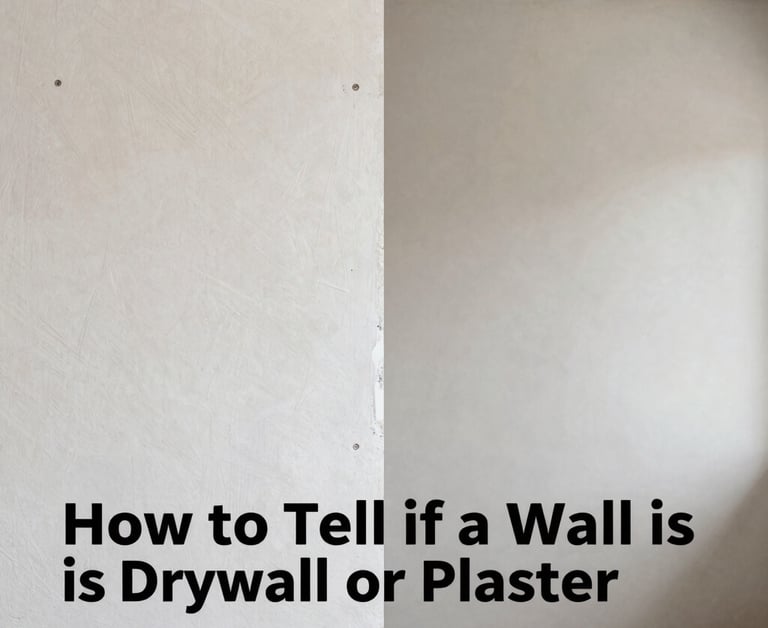
How To Tell If Wall Is Drywall Or Plaster. In New England we have many homes with plaster walls and ceilings. This is a guide to determine which you have either drywall or plaster.
How To Tell If Wall Is Drywall Or Plaster
Most people in Western Mass don't think about what their walls are made of until they try to hang a heavy mirror. Then they either find a solid surface or a hollow one that crumbles like chalk. If you are planning a renovation or hanging a heavy item, you need to know which one you have. If you are wondering, are my walls drywall or plaster? You are at the right article.
Simple Tests You Can Do Right Now
Are My Walls Plaster or Drywall?
Drywall is basically a sandwich of paper and gypsum. It has a little bit of give if you press on it firmly between the studs. Take an electrical cover plate off and look at the material beside the box. If you see a clean 1/2" thick board then you have drywall. In the area behind the cover plate press with a fingernail and try and dent the wall. Plaster is a rock hard surface and wont dent more than the thickness of the paint, however drywall will dent easily. Plaster It is a mixture of lime, sand and gypsum applied over wooden slats or metal mesh called lath. If you push on a plaster wall and the plaster moves you have plaster that has lost its "key" and should be secured to the lath with plaster
How To Tell If Wall Is Drywall or Plaster With a Nail
Grab a thumbtack or a small finishing nail. Try to push it into the wall in an inconspicuous spot. If it goes in easily with just your thumb, you are looking at drywall. If the pin bends or you feel like you are trying to drive it into a sidewalk, it is plaster
How To Tell If Wall Is Drywall or Plaster by Knocking
One of the easiest ways to determine whether your walls or ceilings are made of drywall or plaster involves using a knocking test. Gently knock on the surface with your knuckles or a similar object. This method will produce distinct sound differences between the two materials.
If you hear a hollow sound, it is likely that you have drywall. Drywall is typically thinner and has a hollow cavity behind it. Conversely, if you hear a more solid sound that resonates without much echo, chances are you are dealing with plaster, which is thicker and applied in multiple layers.
Visual Inspection and Other Tests
Along with the knocking test, visual inspection can provide important clues. Plaster tends to have a textured appearance and may show signs of cracking or peeling due to age. It is often a bit uneven, giving it a distinctive old-world charm that is difficult to replicate with modern materials.
On the other hand, drywall typically has a smoother finish and can be painted easily. Look closely for seams between panels of drywall, as these may be visible. If you see nails or screws holding the panels together, you've most likely got drywall.
You can also check the edges of outlets or switches. If they are flushed into the wall surface, it is more likely to be drywall. If they appear to be protruding and the surface is thick, then plaster is the most likely material.
Check the Calendar
The age of your home in towns like Holyoke or Northampton is usually the best giveaway. If your house was built before 1940, it almost certainly has plaster walls. Builders didn't start using drywall as the standard until after World War II. Homes built in the 1950s sometimes have a hybrid called rock lath (which is a small sheet of drywall with a plaster coat over the top).
How To Tell If Wall Is Drywall or Plaster Behind Cover Plates
Find an outlet or a switch plate and take the cover off. Look at the edges of the wall material. Drywall will look like a uniform gray or white slab about half an inch thick. Plaster will look messy. You'll see layers of rough material and you might even see the edges of the wooden lath strips behind it.
Why This Changes Your Project
You cannot treat plaster like drywall. If you try to fix a crack in a plaster wall with standard joint compound and a piece of mesh tape, it will crack again in six months. Plaster expands and contracts differently than modern materials.
We see a lot of DIY disasters where people try to modern-up an old home by slapping drywall over the top of failing plaster. This just hides the rot and makes the wall even thicker. That extra thickness ruins the look of your door and window trim. If you are not sure what you're working with, give MrWalls a call. We will tell you the truth about your walls and what it takes to actually
Home | Contact | Offices | Faq | Service Area | Blog | Drywall Finishing | Drywall Taping | Drywall Repair | Plaster Repair | Ceiling Repair | Wall Repair | Drywall Installation | Drywall Hanging | Popcorn Ceiling Repair | Hole in Ceiling | Fix Hole In The Wall | Interior Painting | Knockdown Texture | Water Damage Repair | Drywall Bathroom | Drywall Ceiling | Soundboard | Drywall Patch | Ice Dam Roof Leak | Drywall over Plaster | Drywall Over Popcorn | Skim Coat Level 5 | Popcorn Texture Removal | Drywall Finish Levels | | Refund Policy | Privacy Policy | Terms and Conditions


600 East Main St Chicopee, MA, 01020
203 Circuit Ave n39, West Springfield, MA 01089