Learn why drywall installers typically start with the ceiling first, when walls may come first, and when overhead work calls for professional help.
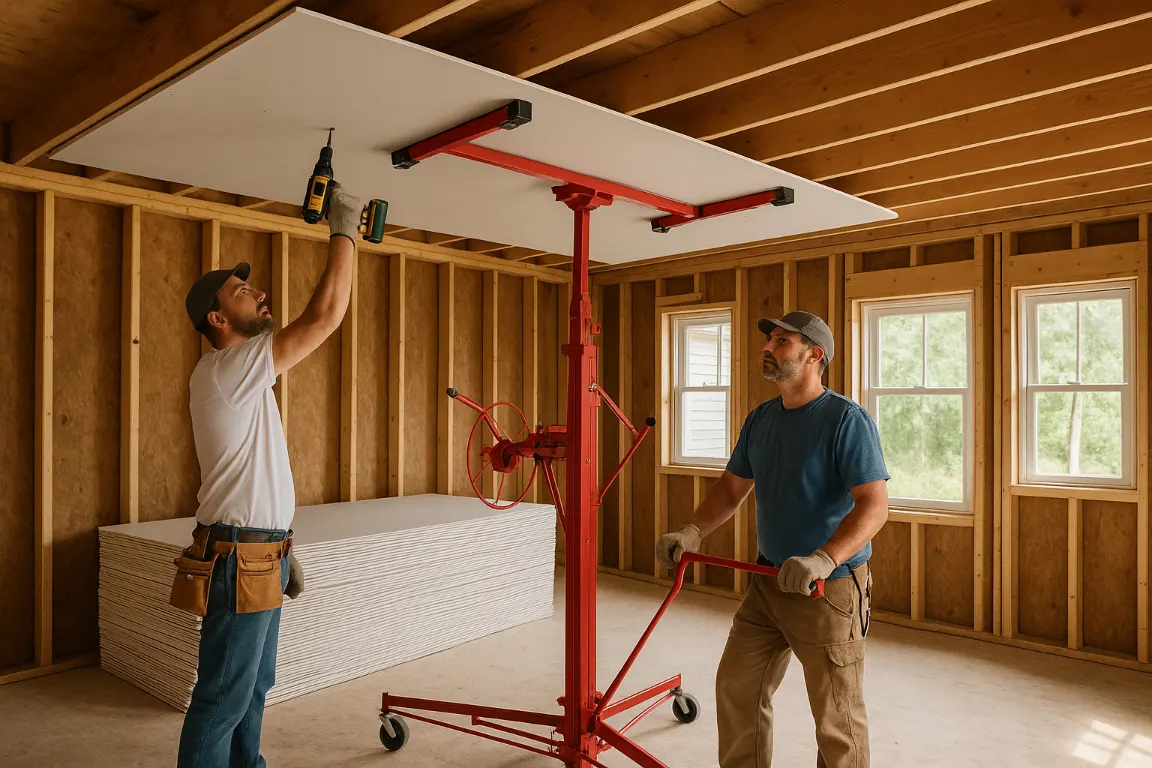
When deciding whether to install sheetrock ceilings or walls first, always start with the ceiling. Installing ceiling panels ceiling first allows the wall sheets to brace the edges of the ceiling drywall. The result is a tighter, cleaner corner joint with less risk of sagging or visible gaps. For most crews, ceilings first remains the standard sequence, whether the project includes a drywall ceiling, a drop ceiling, or a finished basement.
Strong results depend on more than the order of hanging sheetrock. Before hanging drywall, inspect the building framing, moisture conditions, insulation, electrical work, and blocking for cabinets or fixtures. Confirm clear access to the work site, then map the placement of every drywall sheet, wall, and sheetrock wall. This preparation makes installing drywall and finishing more efficient, whether you are hanging drywall yourself or working with a local contractor.
Install Sheetrock ceilings before walls in most standard rooms: wall panels then support ceiling edges for tighter corners, fewer gaps, and a more durable finish. Prepare framing, moisture conditions, utilities, and backing before hanging boards; use safe lifting equipment and plan seams carefully. Exceptions include selective repairs, major wall work, ongoing overhead access needs, and drop ceilings.
If you are asking whether to install sheetrock ceilings or walls first, the answer is straightforward: always start with the ceiling. Installing ceiling drywall before the walls creates a stronger, cleaner connection around the room. The wall sheets support the ceiling edges, helping prevent sagging and reducing the likelihood of cracks at the top corner.
Experienced crews choose ceilings first for practical reasons as well. Ceiling panels are heavy, overhead, and difficult to reposition once lifted. Hanging drywall in an open room gives the crew better access for a lift, scaffolding, and safe movement around the site. Installing walls first can leave a finished sheetrock wall vulnerable to damage and force installers to work around corners unnecessarily.
On a typical job, the crew marks framing locations and confirms that the ceiling joists are sound and reasonably level. They hang the drywall ceiling perpendicular to the framing when appropriate. Each drywall sheet is fitted snugly, secured with the proper screw pattern, and staggered so end joints do not create long, weak seams. A drywall lift keeps the board tight to the framing while fasteners are set, making hanging sheetrock more precise and controlled.
Once the ceiling is covered, the wall sheets are installed beneath it. The upper edge of each wall board presses firmly against the ceiling board, adding support where it matters most. This ceiling first sequence also simplifies taping, produces straighter inside corners, and leaves cleaner paint lines. For most full-room projects, ceilings first remains the dependable standard for installing drywall.
There are a few exceptions. A basement renovation, unusual building framing, partial wall removal, a drop ceiling, or a repair affecting only one surface may call for a different approach. Water damage can also require selective removal rather than a full-room installation. In every case, the objective is the same: provide solid backing, align seams carefully, and avoid unsupported drywall edges.
At MrWalls Drywall & Painting, we recommend ceiling first because it protects the finished work, not because it is a shortcut. Proper framing checks, fastening, joint treatment, and drying time all matter. Whether we are hanging sheetrock for new ceilings or repairing walls, our team delivers a durable finish designed to look seamless long after the project is complete.
When clients ask whether to install sheetrock ceilings or walls first, we always start with the ceiling. At MrWalls Drywall & Painting, hanging drywall on the ceiling first creates a cleaner, more reliable connection where the ceiling and walls meet. The wall panels rise beneath the ceiling drywall, supporting the edges of each drywall sheet and helping prevent visible gaps at the corner.
This sequence is particularly valuable when a building has uneven framing, a common condition on a renovation site, in an older home, or in a basement affected by settling or past water damage. Ceilings may have subtle dips, bows, or variations between joists. By installing drywall ceiling panels before the walls, installers have clear access to the framing, allowing the sheets to fit tightly and irregularities to be addressed early. The wall drywall can then sit snugly beneath the ceiling, creating a more intentional joint.
There is a finishing advantage as well. Drywall joints require stable backing and a consistent surface for tape, compound, and paint. If the walls go up first, it can be more difficult to seat the ceiling board tightly around the perimeter. Even a small drop or opening may call for additional mud work and remain visible through the finished surface. Hanging sheetrock on ceilings first allows each sheetrock wall to support the ceiling edge, creating a tighter corner that is easier to tape and less prone to cracks from normal movement.
This approach delivers more than a neater installation day. It establishes a stronger foundation for the finished room, with straighter lines, cleaner transitions, and less reliance on joint compound to conceal preventable gaps. Whether the project involves a repaired area, a refinished room, a drop ceiling, or replacement after moisture damage, proper hanging matters. Choosing ceiling first, or ceilings first, is a straightforward decision with a lasting effect on the durability and appearance of completed drywall.
| Installation consideration | Ceiling installed first | Walls installed first |
|---|---|---|
| Ceiling-edge support | Wall panels rise beneath the ceiling sheets and support their perimeter edges. | Ceiling-board edges may be harder to seat tightly at the perimeter. |
| Fit at the perimeter | Ceiling sheets can be positioned tightly against framing before wall boards are fitted below. | Can leave an opening at the ceiling edge that requires additional mud work. |
| Framing irregularities | Allows installers to address dips, bows, and joist variations before installing wall drywall. | Provides less flexibility for fitting the ceiling tightly when framing is not uniform. |
| Finishing work | Creates a stable, consistent corner plane that is easier to tape and finish with less joint compound. | Openings at the perimeter can require more compound and may telegraph through the finished surface. |
| Finished corner joint | Produces a tighter, cleaner transition that is less prone to cracking from normal movement. | Can result in a more visible gap or weaker-looking seam at the corner. |
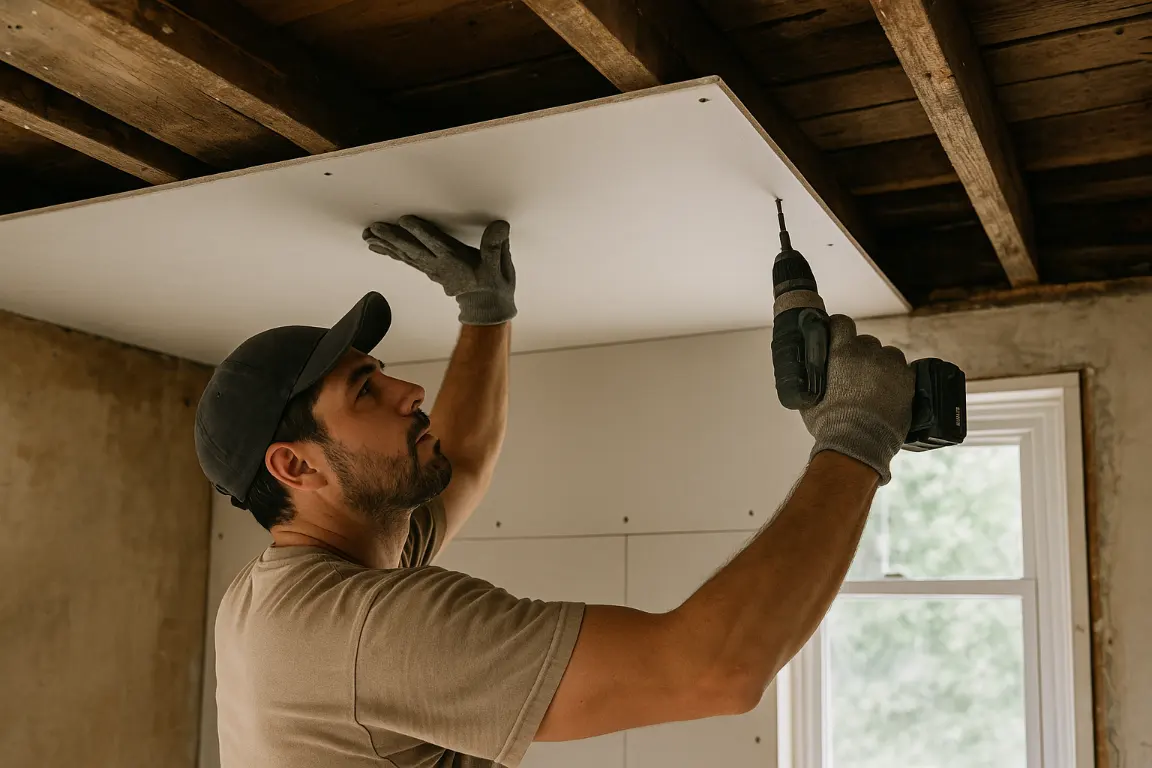
Before a single drywall panel is lifted, the building and site should be ready. At MrWalls Drywall & Painting, we always start with this review because it lays the groundwork for lasting quality. Drywall performs only as well as the framing, mechanical systems, and conditions behind it. A thorough assessment helps prevent cracks, uneven walls, moisture damage, and costly return visits.
Begin with the structure. Framing should be straight, securely fastened, and aligned on a consistent plane so each drywall sheet sits flat without pressure or compromise. Inspect every corner, window and door opening, soffit, and transition between new and existing walls. Add blocking wherever sheet edges will not land on framing. Correct bowed studs and misaligned joists before hanging drywall or hanging sheetrock. This is particularly important for a ceiling: loose strapping, sagging framing, or poorly supported fixtures can affect both the finish and the safety of ceiling drywall.
Moisture deserves the same level of attention. The site should be dry, enclosed, and reasonably climate-controlled before drywall arrives. Resolve roof leaks, plumbing issues, damp insulation, and water intrusion around the foundation or basement first. Covering an active water issue with drywall only conceals it temporarily. Over time, it can lead to stains, mold concerns, and softened sheets. If restoration is underway, allow affected areas to dry fully and confirm that damaged materials have been removed before rebuilding.
Good access shapes the installation plan. A professional crew needs a clear route from the delivery point to the work area, adequate room to stage sheets safely, and protection for finished floors, stairs, trim, and nearby rooms. Narrow hallways, occupied spaces, limited parking, upper-level access, and active renovation areas all require advance coordination. If you are deciding whether to install sheetrock ceilings or walls first, the answer depends on the project, though ceiling first, or ceilings first, often creates cleaner wall joints. The same planning applies to a drywall ceiling, a drop ceiling, or a ceiling drywall repair.
Finally, review everything that will be concealed once walls and ceilings are closed. Electrical boxes should sit at the correct depth. Plumbing and HVAC runs should be secure. Insulation should be complete where required, and low-voltage wiring should be documented. Confirm locations for recessed lights, access panels, cabinetry backing, grab bars, wall-mounted televisions, and other future attachments. Whether you are installing drywall for a repair, remodel, sheetrock wall, or popcorn ceiling removal, this preparation gives the finished work a cleaner appearance and a more dependable life.
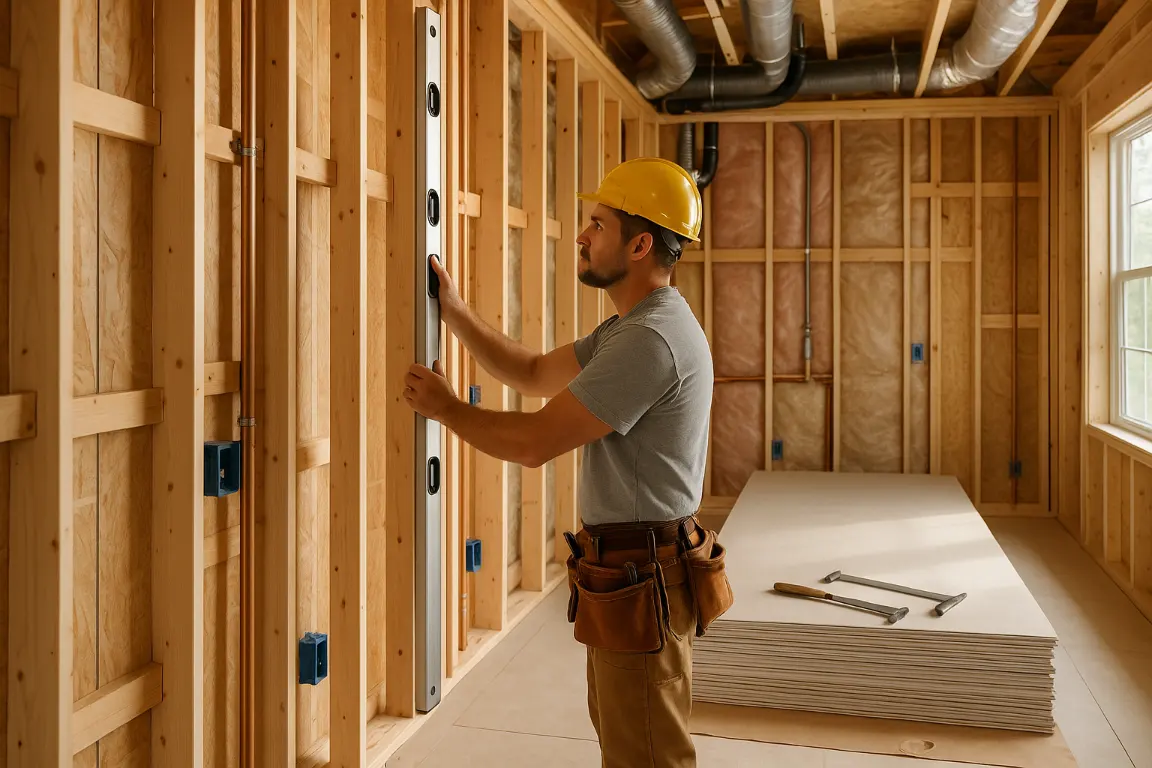
A clean drywall job begins with the right sequence, not speed. Whether the room is in a basement, part of a renovation, or within a complete building interior, thoughtful planning keeps the site orderly and the finish predictable. At MrWalls Drywall & Painting, we always start by confirming that the framing is sound, dry, and on plane. Verify access, electrical boxes, plumbing, insulation, blocking, and backing before any drywall sheet is hung. This is also the moment to correct bowed studs and ensure every edge has solid fastening support.
Room sequence at a glance: ceiling first, then walls, planned openings, and finishing coats.
For most standard rooms, ceilings first is the strongest approach. Install ceiling drywall before the walls so the wall sheets support the edges of the drywall ceiling. This helps prevent sagging and unsupported perimeter joints. When practical, run full sheets perpendicular to ceiling joists. Set fasteners consistently just below the paper surface, without breaking it. A drywall lift offers safer handling and tighter seams, especially with 5/8-inch board, in larger rooms, or beneath low ceilings.
Next come the walls. Hang sheets horizontally when the layout allows. This keeps factory-tapered edges accessible for taping and can reduce seams across a sheetrock wall. Begin with the upper course, leave a small gap above the floor, and use a drywall foot lift to hold sheets in position. Vertical hanging can be effective in narrow areas, tall spaces, or wherever it eliminates an awkward butt joint. For a basement, a drop ceiling, or another specialized layout, the best direction is the one that creates fewer seams and keeps them away from each corner of doors and windows.
When clients ask whether to install sheetrock ceilings or walls first, the answer is usually ceiling drywall first. Plan openings with care. Rather than ending a joint at the corner of a door or window, run the sheets across the opening and cut them out afterward. This reduces the likelihood of cracks at common stress points. Stagger butt joints from course to course, keep joints tight without forcing sheets together, and confirm that screw heads are properly set before taping.
Finishing proceeds in deliberate passes: tape embedded in joint compound, fill coats to flatten seams and fasteners, then a final skim coat feathered well beyond each joint. After thorough drying and controlled sanding, the drywall is ready for primer and paint. Careful installing drywall and a disciplined finish create a calm, continuous surface with a professionally completed appearance.
The advice to always start with the ceiling suits many paint and drywall projects, but it is not an absolute rule. In certain rooms, ceiling first, or even ceilings first, is not the smartest sequence. The right order depends on the repairs required, future access, and whether later building work could conceal or damage completed surfaces. At MrWalls Drywall & Painting, we plan each project around the room’s actual condition, never a one-size-fits-all checklist.
In a basement, walls may require attention before the ceiling is closed. Water staining, mold-related removal, cracked seams, or damaged drywall behind framing should be resolved while the area remains open. If insulation, electrical work, plumbing lines, or moisture repairs are still underway overhead, finishing the ceiling first can create avoidable rework. We correct the source of damage and stabilize affected surfaces before adding new board, tape, texture, or paint.
A drop ceiling can shift the sequence as well. Because panels can be lifted out for future access, wall repairs and painting are often completed before the grid and tiles are installed. This produces cleaner cut lines, keeps dust and overspray away from new panels, and allows the finished wall to extend neatly to the proper height. If an existing drop ceiling is staying in place, we may temporarily remove selected tiles so the walls can be finished without disturbing the grid.
Walls also come first when substantial rebuilding is required. Replacing a large drywall section, correcting framing, or repairing damage around a window, door, or corner can generate sanding dust that would compromise a freshly refinished ceiling. During a site review, we assess whether ceiling drywall, a drywall ceiling, a drywall sheet, or a sheetrock wall needs replacement. For hanging drywall or hanging sheetrock, the decision to install sheetrock ceilings or walls first depends on access and the building sequence. When installing drywall, we stage sheets carefully to protect completed work.
The practical principle is straightforward: complete work that is messy, structural, or difficult to reach before closing up finished surfaces. A ceiling may still be the first surface painted in a standard room, but repairs, basement conditions, and access needs can change the order. A careful assessment ensures every stage supports the next, leaving a final finish that looks deliberate from every angle.
Should ceiling drywall be installed before the walls? In most standard rooms, yes. Professionals typically hang ceilings first, using the proven ceiling first sequence. Installing the drywall ceiling before the wall panels lets the walls support the ceiling edges, creating a cleaner corner and reducing the likelihood of visible gaps or cracks at the wall-to-ceiling transition. If you are deciding whether to install sheetrock ceilings or walls first, ceilings first remains the standard order for new construction, remodels, and repairs that involve more than one surface. Is hanging drywall on a ceiling a DIY-friendly job? It can be, although hanging drywall overhead is considerably less forgiving than working on walls. A full drywall sheet is heavy, awkward, and difficult to position precisely; it must be secured to the framing without damaging the gypsum core. A drywall lift improves access and makes installing drywall safer, steadier, and more accurate. Without a lift, always start with a second experienced person to help support the sheets. Small patches may suit a capable homeowner, but broad repairs, sagging panels, water damage, or full replacement are often better handled by a drywall contractor. What is the difference between a sheetrock wall and drywall? Sheetrock is a widely recognized brand name often used generically for drywall. In practical terms, a sheetrock wall is usually a drywall wall: gypsum panels fastened to studs, taped at the seams, finished with joint compound, sanded, primed, and painted. The quality of that finishing work matters as much as the board itself, particularly under side lighting or across smooth painted ceilings. When should damaged ceiling material be replaced rather than repaired? Replacement is often the wiser choice when water has caused swelling, staining, softness, mold concerns, loose fasteners, or recurring cracks. The moisture source should be corrected before any repair begins. MrWalls Drywall & Painting can determine whether targeted drywall repair will blend seamlessly or whether removal and replacement will deliver a more durable result. Can popcorn texture be removed during ceiling repair? Yes. Popcorn ceiling removal can be coordinated with patching or replacement so the finished ceiling reads consistently from edge to edge. Older texture may require testing before disturbance. Careful containment, surface preparation, and refinishing are essential to a clean result. The right scope depends on the ceiling’s condition, the room’s use, and the finish you want to live with for years. This applies whether the work is in a basement, near a drop ceiling, or elsewhere on the building site. Hanging sheetrock around a drop or at a ceiling corner may require a different approach.
In most standard rooms, install the ceiling first. Wall panels then fit tightly beneath the ceiling sheets, helping support their edges and creating a cleaner inside corner for taping and finishing.
Ceiling sheets are heavy and harder to position overhead, so installing them before walls provides better access for a drywall lift or scaffolding. It also reduces the risk of damaging newly finished wall surfaces during overhead work.
Usually, yes. Running sheets perpendicular to ceiling joists helps distribute support across more framing members and can reduce sagging. Layout should still be planned around room dimensions, framing conditions, and seam placement.
When wall drywall is installed after the ceiling, its upper edge presses against the ceiling board at the perimeter. This supports the ceiling edge and can help prevent gaps or cracking at the wall-to-ceiling joint.
Yes. The sequence may change for partial repairs, extensive wall rebuilding, active plumbing or electrical work above the ceiling, or drop-ceiling installations. The best order is the one that preserves access and avoids redoing finished work.
A drywall lift can allow one experienced installer to position ceiling sheets more safely, but help is strongly recommended. Full panels are awkward and heavy, and proper fastening requires the board to stay tight against the framing.
Small, dry, stable areas may be repairable. Replacement is often better if drywall is soft, swollen, stained, mold-affected, sagging, or repeatedly cracked. Always correct the moisture source and dry the area fully before rebuilding.
Sheetrock is a widely recognized brand name for gypsum board, while drywall is the general term. Both refer to the panels installed on walls and ceilings before joints are taped, finished, primed, and painted.