Swirl ceiling texture repair in Springfield, Massachusetts, can restore a damaged ceiling without making the patch stand out. Whether you have water stains, cracks, or a missing section, careful inspection and texture matching help determine the right repair.
MrWalls Drywall & Painting provides Springfield, Massachusetts homeowners with professional swirl ceiling texture repair, drywall patching, plaster repair, and water-damage restoration. With 25 years of experience, the team identifies and resolves moisture or struct../water-damage-restoration-cost/index.htmlural issues before repairing damaged areas, then carefully matches swirl patterns for a seamless finish. From small cracks and stains to larger ceiling replacements, every project is completed cleanly and durably.
At MrWalls Drywall & Painting, we provide swirl ceiling texture repair in Springfield Massachusetts with the care needed to make a patched area disappear into the surrounding finish. After 25 years in drywall work, I know that a swirl pattern can be difficult to match: the direction, depth, and spacing of each sweep all affect the final look. Water stains, settling cracks, old light fixtures, and plumbing leaks can leave a ceiling uneven or damaged. We first address the source of moisture when needed, including drying and water damage restoration, then complete the repair with properly prepared drywall compound and a hand-matched texture. Whether your Springfield home needs one small repair or a larger ceiling restoration, our crew protects the room, controls dust, and leaves a clean, consistent result.
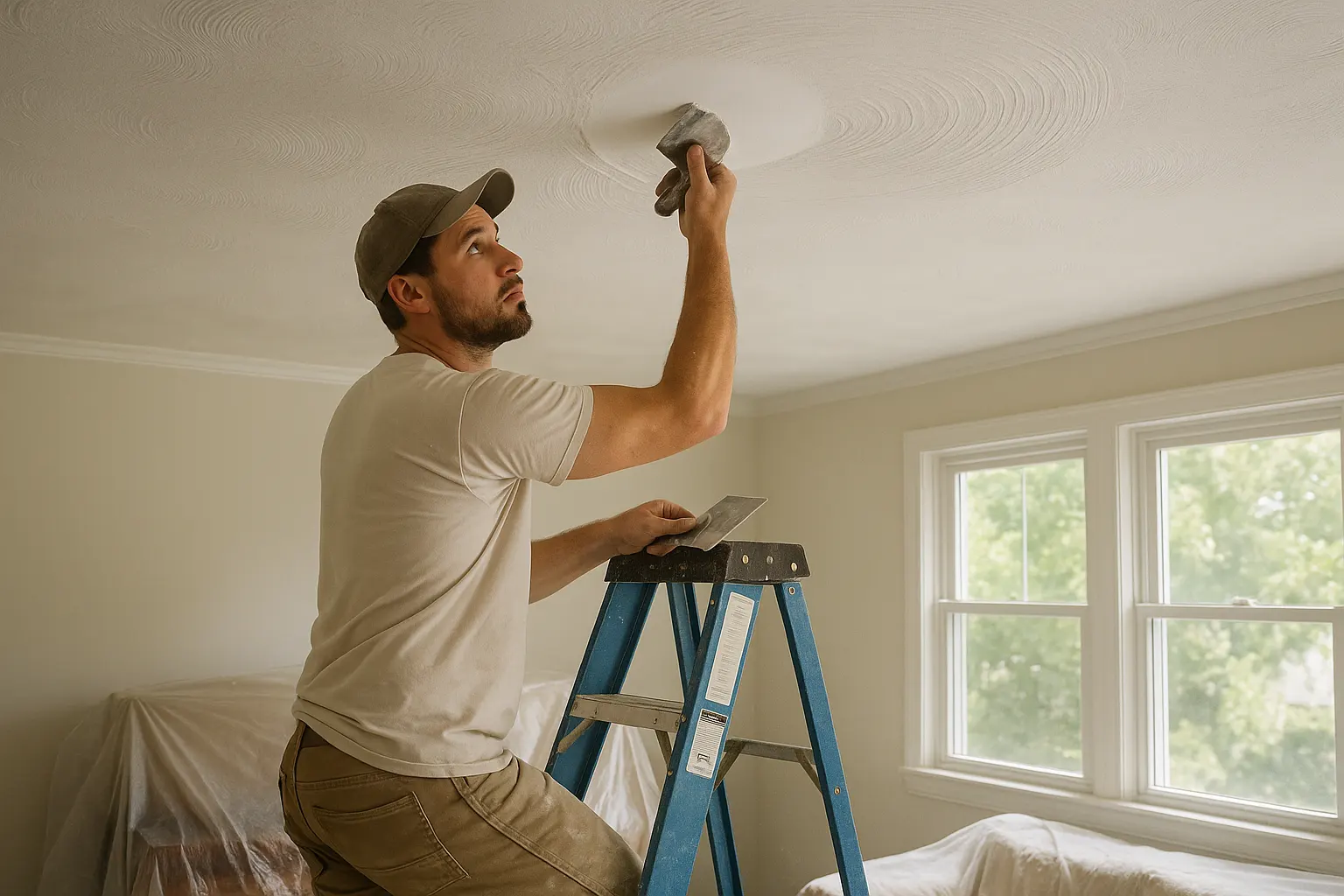
In my time as a drywall contractor, I’ve repaired plenty of texture ceiling damage that looked worse than it was. Small cracks, nail pops, isolated stains, and minor impact damage can often be fixed without replacing the entire surface. The key is making sure the ceiling is dry, stable, and free of an active leak before we apply a patch. Swirl ceilings and other texture ceilings can be blended successfully when the surrounding pattern is still sound and enough matching material remains. At MrWalls Drywall & Painting, we assess the cause first, then repair the damaged area and match the texture as closely as possible. If moisture has weakened a larger section or the texture is failing across several ceilings, replacement may be the more durable choice.
Before any ceiling texture repair, I start with a close inspection. After 25 years in drywall work, I know that a crack, stain, or sagging area can point to a larger issue above the surface. At MrWalls Drywall & Painting, we check for active moisture, soft drywall, loose seams, and signs of past water damage before planning the repair. A new texture can make a ceiling look finished, but it cannot correct wet insulation, hidden leaks, or weakened board. Once the source of damage is resolved and the area is fully dry, we can determine whether a simple patch, a larger drywall replacement, or texture matching will provide the cleanest, longest-lasting result.
At MrWalls Drywall & Painting, we have spent 25 years seeing what happens when a ceiling is retextured before the underlying moisture problem is solved. A stain may be cosmetic, but water can weaken drywall, loosen plaster, and create damage that continues out of sight. Proper ceiling repair starts with finding and correcting the source, then fully drying the area before any finish work begins. We assess whether the material can be repaired or whether affected sections need removal and replacement. Once the ceiling is dry, stable, and properly patched, our ceiling repairs can blend smoothly with the surrounding surface. That careful sequence protects the new texture, improves the finished appearance, and helps prevent the same problem from returning.
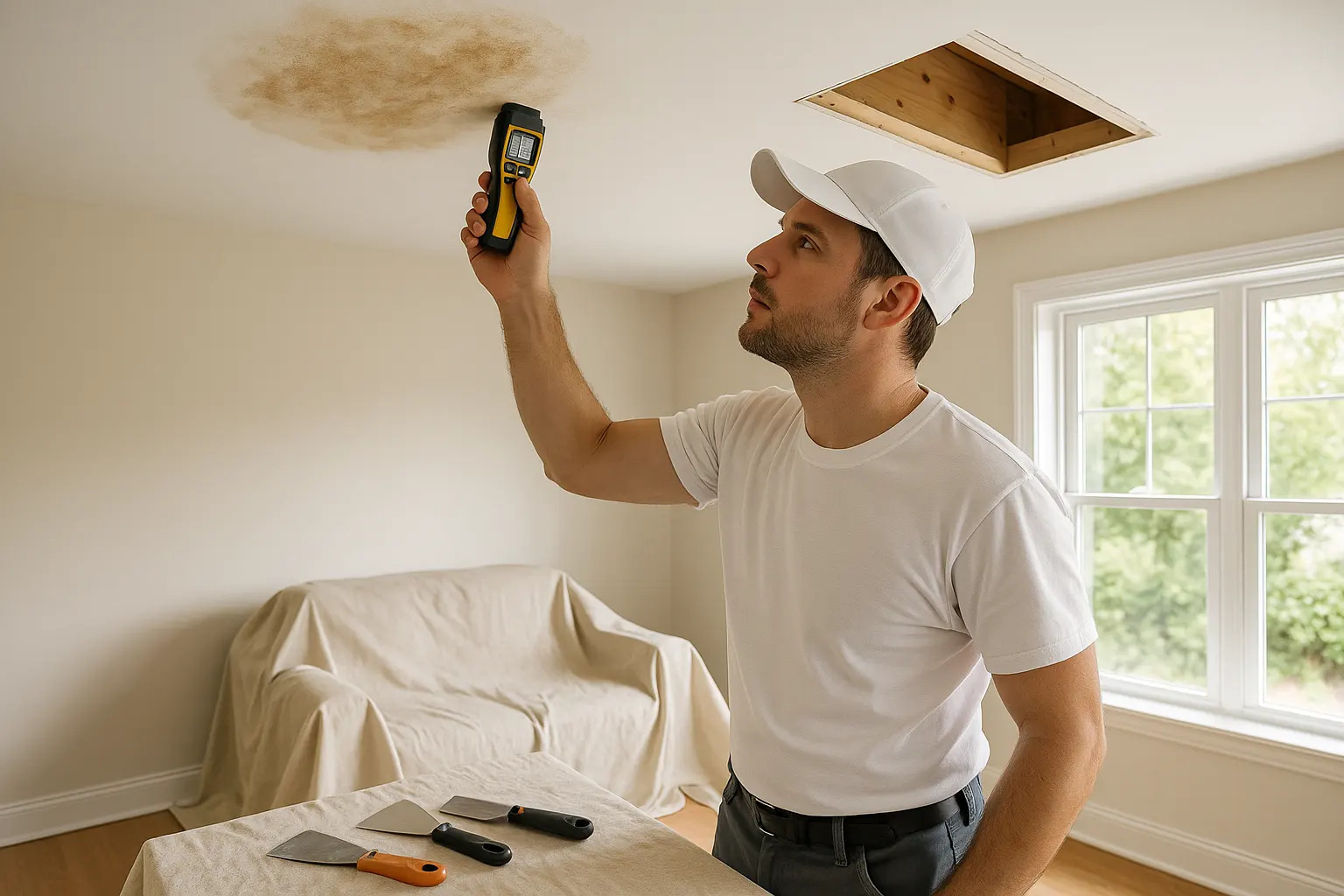
After 25 years in the trade, I know ceiling damage rarely has a one-size-fits-all answer. At MrWalls Drywall & Painting, we begin by finding the cause, especially when water damage or settling is involved. Small drywall repair may only require a secure patch, joint compound, and careful sanding. Larger ceiling repair often calls for removing weakened material, drying the area fully, and replacing sections of drywall. Older homes with plaster need a different approach: we can reattach loose plaster, rebuild missing areas, or recommend replacement when the surface has failed beyond a lasting repair. Our goal is ceiling repairs that blend smoothly, hold up over time, and leave your room ready for paint.
| Ceiling condition | Typical repair approach | When replacement may be recommended |
|---|---|---|
| Small drywall damage | Secure patch, joint compound, and careful sanding | Not typically indicated for small, localized damage |
| Larger drywall ceiling damage | Remove weakened material, fully dry the area, and replace damaged drywall sections | When weakened material or damage requires section replacement |
| Damaged plaster ceilings | Reattach loose plaster or rebuild missing areas | When the plaster surface has failed beyond a lasting repair |
Ceiling swirls can give a room a refined, hand-finished look, but they also make repair work less forgiving. After water damage or drywall work, the goal is not simply to cover the patched area. It is to recreate the surrounding ceiling texture so the repair disappears in normal light. At MrWalls Drywall & Painting, I have spent 25 years matching swirl ceilings with the right joint compound consistency, tool angle, and pattern size. A successful texture repair considers where each swirl begins, overlaps, and softens at the edges. We test the finish before completing the full area, then blend it into the existing field. The result is a consistent ceiling surface that looks intentional, not patched.
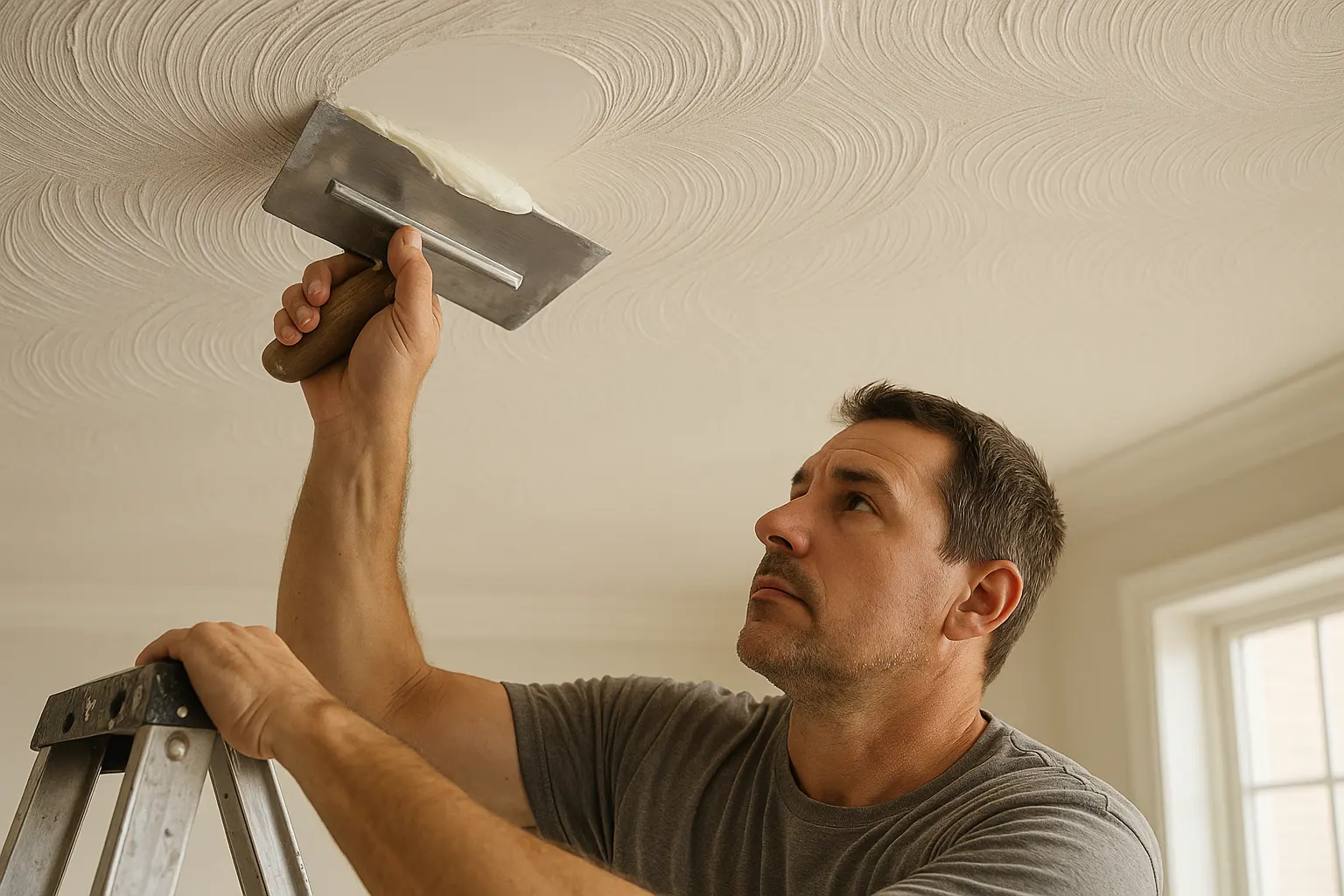
After 25 years repairing ceilings, I know that clear communication matters as much as skilled workmanship. At MrWalls Drywall & Painting, we begin by identifying the source of the problem, whether it is a roof leak, plumbing issue, settling crack, or failed drywall seam. For water-related damage, we make sure the area is dry before starting repairs so new materials have a stable foundation. Then we remove compromised sections, install or patch drywall, reinforce seams, and create a smooth finish that blends with the surrounding ceiling. We protect nearby rooms, keep the work area orderly, and explain the scope before work begins. Serving Springfield and Western Massachusetts, our goal is durable ceiling repairs that leave your Springfield home looking cared for again.
After over two decades as a drywall contractor, I know homeowners want clear answers before approving ceiling removal or repairs. At MrWalls Drywall & Painting, we price work based on the cause and scope of damage, ceiling height, materials, access, and the finish needed afterward. A small stained area may need drying and a targeted patch; a soft, sagging ceiling can require water damage restoration, removal, replacement drywall, and painting. Timing matters: stop the leak and dry the structure before closing it in. For Massachusetts repair work, I also recommend testing older textured ceilings before removal. Popcorn ceiling removal is a smart update when the surface is dry, stable, and ready for a clean finish.
After 25 years repairing ceilings for MrWalls Drywall & Painting, I know swirl ceilings can raise practical questions. Their curved ceiling texture is attractive, but it also makes damage more visible when the pattern is not matched correctly. A lasting texture repair starts with finding the cause, especially after a leak or moisture event, then drying the area fully before any ceiling repair begins. Whether you need a small repair around a stain or a larger section rebuilt after water damage, the goal is the same: a clean, blended finish that looks like it has always belonged there.
Often, yes. Small cracks, nail pops, stains, fixture holes, and isolated water damage can usually be patched and retextured when the surrounding drywall is dry, stable, and securely attached. Larger areas of soft, sagging, or failing material may require partial drywall replacement before the swirl texture is matched.
Swirl texture can be hand-matched by adjusting the joint compound consistency, tool angle, sweep direction, depth, and spacing of the pattern. A close match depends on the condition and style of the existing ceiling, but careful blending helps the repaired area disappear into the surrounding finish in normal room lighting.
No. The source of moisture should be corrected first, whether it is plumbing, roofing, condensation, or another issue. The ceiling also needs time to dry completely. Repairing or retexturing over active moisture can lead to recurring stains, soft drywall, loose seams, and failure of the new finish.
A patch may be appropriate for firm, dry, localized damage. Replacement is usually the better option when drywall is soft, sagging, crumbling, mold-damaged, extensively stained, or weakened across a larger area. An inspection can identify hidden moisture, loose seams, damaged insulation, and the proper repair scope.
Cost depends on the size of the damaged area, ceiling height, access, the cause of damage, drying or water restoration needs, drywall replacement, and whether painting is included. A small texture patch is generally less involved than a ceiling affected by a leak or widespread material failure.
Yes. In older Springfield-area homes, textured ceiling materials should be evaluated before sanding, scraping, or removal. Testing is especially important when the ceiling may contain asbestos-containing material. If removal is appropriate, the work should be planned with the right safety steps and a suitable replacement finish.
At MrWalls Drywall & Painting, we spend our time helping Springfield homeowners restore walls and ceilings after water damage, settling cracks, failed patches, and everyday wear. A clear estimate starts with an in-person look at the affected area, the existing texture, and what caused the damage. We explain whether the repair is limited to drywall and texture work or whether drying, stain sealing, or ceiling replacement should be included. You will know what we recommend, why it matters, and what the work is expected to cost before repairs begin. Whether you need a small texture repair or a larger ceiling restoration, our goal is a clean, durable result that blends naturally with the surrounding surface. Call or text us at (413)302-0640 Or Email Us at [email protected]