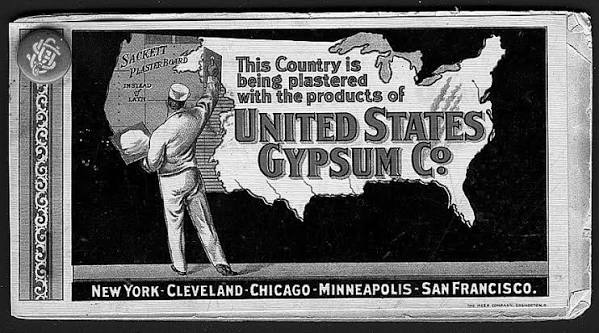
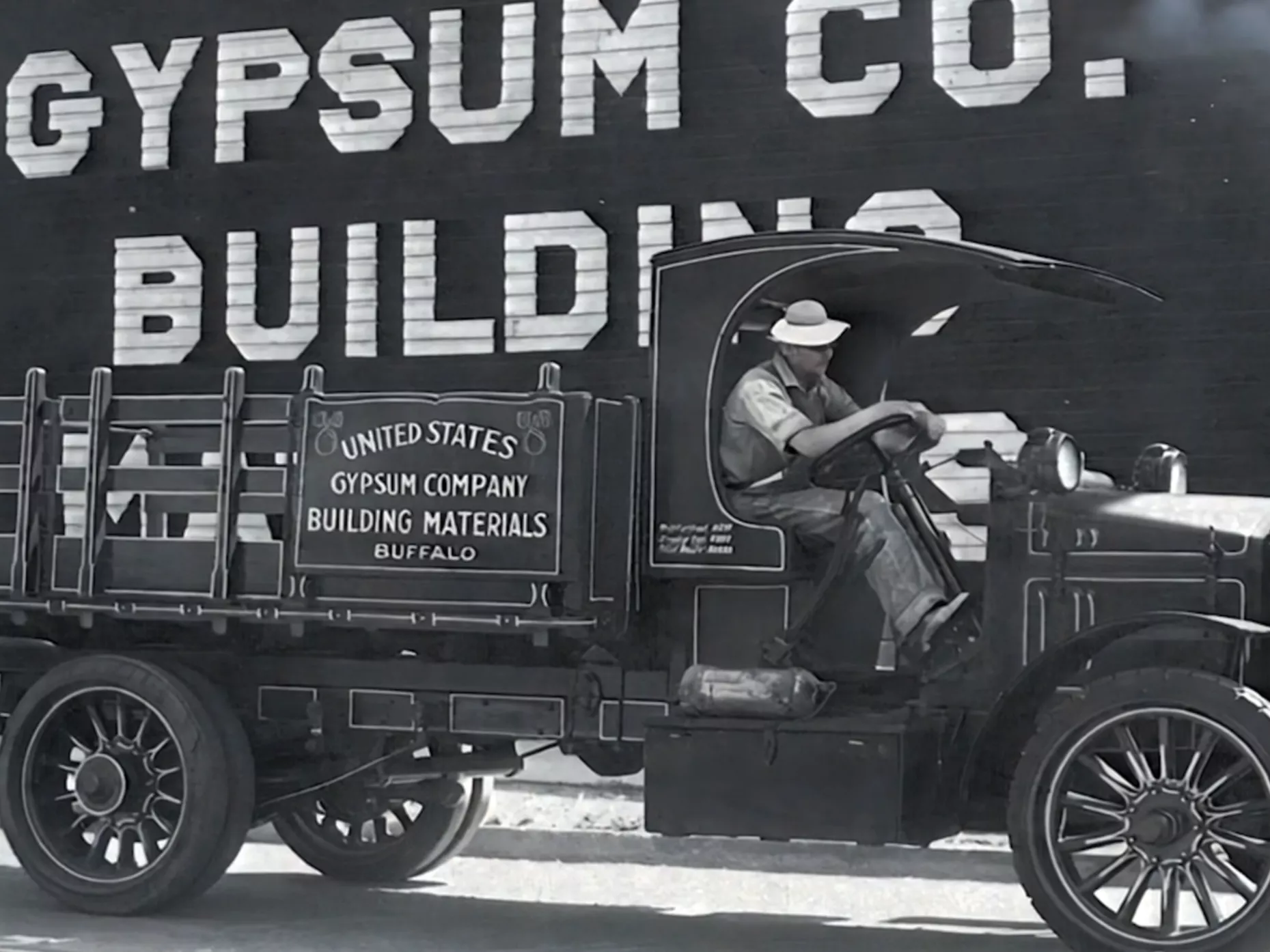
The History of Sheetrock and United States Gypsum. Before the drywall od today was a product called rocklath. Rocklath was a 24" wide gypsum core with paper on both side and was plastered. The need for faster drying times led to only feathering the seams and corners with joint compound.
The history of Sheetrock and United States Gypsum starts before modern drywall existed. Most interior walls once used wood lath covered with several coats of wet plaster. The work took time, skill, and several drying periods.
Builders wanted a wall material that installed faster. Inventors began testing panels made from paper and gypsum plaster. Those early panels led to the drywall used in homes today.
Plaster Wall Construction Before Sheetrock
Before drywall became common, builders nailed thin wood strips across the wall studs. These strips were called wood lath. A plasterer pushed wet plaster through the spaces between the strips.
The plaster that passed through the spaces formed plaster keys behind the lath. These keys held the finished wall in place.
A traditional plaster wall often received three coats:
A base coat that formed the plaster keys
A second coat that flattened the wall
A thin finish coat that created a smooth surface
Plaster made strong walls, but the work required several trades and long drying times. Builders could not finish and decorate the walls until the plaster had dried.
Augustine Sackett and the First Gypsum Board
Augustine Sackett developed one of the first useful forms of gypsum wallboard. His design placed layers of plaster between sheets of paper. The paper gave the brittle plaster more strength.
Sackett applied for his wall covering patent in 1890. The United States Patent Office granted Patent Number 520,123 on May 22, 1894.
The patent described large boards that builders could nail directly to wall framing. Sackett wanted the boards to replace wood lath and wet plaster. His original panels used several layers of paper with thin layers of plaster between them.
The product became known as Sackett Board. It was an early version of gypsum board, but it was thicker and built differently from the drywall sold today.
The Founding of United States Gypsum
The gypsum business was divided among many small regional companies during the late 1800s. Shipping heavy gypsum products over long distances cost a lot of money. Most manufacturers served customers near their mines and plants.
In 1902, 30 independent gypsum companies joined together to form the United States Gypsum Company. The new company combined 37 mining and calcining operations.
Calcining heats raw gypsum and removes part of its water. The processed gypsum can then be mixed with water to make plaster and other building products.
United States Gypsum soon became known as USG. The company had access to gypsum mines, processing plants, manufacturing equipment, and a larger shipping network. There main product was bagged gypsum plaster.
United States Gypsum Buys the Sackett Plaster Board Company
United States Gypsum purchased the Sackett Plaster Board Company in 1909. The purchase brought Sackett Board and its manufacturing process into the USG product line, Now one company sold the plaster board rocklath and the bags of plaster.
USG continued changing the original rocklath board. Each change moved it closer to the drywall panels used now.
In 1910, USG added folded edges to reduce crumbling.
In 1913, the company removed the inside paper layers and used a solid gypsum core.
In 1916, square edges allowed adjoining panels to sit close together.
In 1917, USG introduced Sheetrock Brand gypsum panels but this original sheetrock continued to be used as a plaster lath for many years. Workers would build up a thick base coat of plaster, a scratch coat, and a final white finish plaster coat.
The solid gypsum core between two paper faces became the design for modern drywall. Manufacturers have changed the paper, core materials, weight, edges, and additives over time, but the main design remains familiar.
Where the Name Sheetrock Came From
Sheetrock was a brand name, not the original name for all gypsum board.
USG first called its improved panel Adamant Panel Board. D. L. Hunter, a USG sales representative, suggested the name Sheetrock. The shorter name described a rock based wall material made in sheets.
USG records place the Sheetrock Brand introduction in 1917. Some company pages discuss manufacturing changes that started near the end of 1916. This is why both years appear in articles about early Sheetrock.
Sheetrock became so well known that people started using the name for almost any drywall panel. The same thing happens when a brand name becomes part of daily speech.
Sheetrock remains a registered USG brand. Drywall, gypsum board, plasterboard, and wallboard are general product names.
Why Builders Started Using Sheetrock
Early wallboard faced resistance from builders and plasterers. Many people viewed plaster as the better wall system. Plaster had been used for centuries, and skilled tradespeople already knew how to install it.
Sheetrock offered several practical gains:
Panels arrived at the jobsite ready to hang and didn't require a thick base coat or scratch coat. The
Builders needed less water inside the building.
Walls required less drying time.
Crews could close walls faster.
The gypsum core added fire resistance.
Large panels reduced the amount of wet plaster work.
Builders could complete more houses in less time.
Early installations did not always look like drywall work today. Some builders installed gypsum board as a base and covered it with a thin plaster finish. Others covered the joints and decorated the panel faces.
Sheetrock at the Chicago World’s Fair
The 1933 and 1934 Chicago World’s Fair gave Sheetrock wide public exposure. USG supplied panels for many fair buildings. According to the USG Sheetrock history, Sheetrock made up 65 percent of the gypsum wallboard used in the exhibits.
The fair gave architects, builders, and homeowners a chance to see gypsum board used across a large building project. USG followed the event with a national advertising campaign.
This helped move Sheetrock from a lesser known building panel to a recognized wall and ceiling product.
Sheetrock Used For Military Buildings During World War II
Construction needs grew during World War II. The country needed military buildings, factories, offices, housing, and other structures built on short schedules.
USG supplied large amounts of Sheetrock for War Department projects. Crews used the panels inside military buildings and plants that made war supplies.
Fast installation worked well for projects that needed to open quickly. The large amount of wartime construction also placed Sheetrock in front of more contractors and construction managers.
The Postwar Housing Boom Transition To Drywall
Housing demand rose after World War II. Returning service members started families and bought homes. Large housing developments appeared across the country.
Traditional plaster required more labor and drying time. Drywall worked better with the faster schedules used for tract housing.
Crews could hang panels, tape the joints, apply joint compound, sand the surface, and paint the rooms in less time than a full plaster system required. The bigest time saver is that drywall compound can be painted once dry but plaster must go through a curing process that can take up to a month before paint can be applied.
By the 1950s, drywall had become common in new American homes. Plaster did not disappear, but drywall took a larger share of residential construction.
The Transition From Plaster To Drywall Continues
Installing the panels was only part of the job. Contractors also needed a good way to hide the seams and fasteners.
Drywall finishing developed into a system that used paper tape and joint compound. Finishers applied tape over the joints and covered it with several coats of compound. Each coat spread farther across the panel face.
Manufacturers also developed tapered panel edges. Two tapered edges create a shallow space for tape and joint compound. This helps the finished seam to be truly flat once finished.
Metal corner bead had been used even with plaster and continued to be used with joint compound. It provides a protective edge for outside corners that doesn't chip if bumped with furniture. Drywall screws later replaced many drywall nails. Screws held the panels firmly and reduced some types of fastener movement.
How Sheetrock Is Fire Resistance
Gypsum contains water as part of its mineral structure. When fire heats the panel, the gypsum releases this water as steam. That process slows the movement of heat through the panel.
One sheet of drywall does not make every wall fire rated. A fire rated wall or ceiling depends on the complete tested assembly. That assembly includes the panel type, number of layers, framing, fasteners, joint treatment, insulation, and installation details.
Type X and other fire rated gypsum panels later gave builders more options for garages, apartment buildings, stairways, mechanical rooms, and commercial spaces.
New Types of Sheetrock Panels
Early gypsum board had a limited number of uses. Manufacturers later made panels for different rooms and building needs.
Drywall products now include:
Regular drywall for walls and ceilings
Lightweight drywall for easier lifting
Type X drywall for tested fire rated assemblies
Moisture resistant panels for damp areas
Mold and moisture resistant panels
Impact resistant panels
Sound control panels
Flexible drywall for curved surfaces
Abuse resistant panels for busy buildings
Exterior gypsum sheathing
The right panel depends on the room, framing, local code, and wall assembly. No single drywall panel fits every use.
USG After the Early Sheetrock Years
United States Gypsum expanded beyond basic gypsum wallboard. The company developed joint compounds, tapes, plaster products, ceiling systems, cement board, shaft wall systems, and other building materials.
USG formed L and W Supply during the 1970s and moved into building material distribution. The company later sold that business in 2016.
USG Corporation became a holding company in 1984. United States Gypsum continued as one of its operating companies.
Knauf Group purchased USG Corporation in April 2019. USG now operates as part of Knauf, a large international manufacturer of gypsum and building products.
What Sheetrock History Means for Home Repairs
Homes in Western Massachusetts contain many wall and ceiling systems. An older house can have wood lath and plaster. A little newer home can have gypsum lath covered with plaster. Remodeling work can leave plaster and drywall in the same room.
You need to identify the wall system before starting a repair. A method that works on modern drywall does not always work on old plaster.
For example, a crack in drywall tape needs a different repair from loose plaster that has broken away from wood lath. Water damaged gypsum board also reacts differently from a thick plaster ceiling.
MrWalls Drywall and Painting works on both drywall and plaster. Our work includes:
Frequently Asked Questions About Sheetrock and United States Gypsum
1. Who invented Sheetrock?
Augustine Sackett invented the early plaster and paper panel that became known as Sackett Board. United States Gypsum bought the Sackett Plaster Board Company in 1909. USG changed the panel design and introduced Sheetrock Brand gypsum panels in 1917.
2. When was Sheetrock invented?
The history has two main dates. Augustine Sackett received his wallboard patent in 1894. USG introduced the Sheetrock Brand product in 1917 after making several changes to Sackett Board.
3. Are Sheetrock and drywall the same thing?
People often use the words the same way, but they have different meanings. Drywall is the general name for gypsum wallboard. Sheetrock is a registered brand of drywall made by USG.
4. Why did drywall replace plaster in many homes?
Drywall reduced labor and drying time. Crews could install large panels and finish the seams faster than they could build a full lath and plaster wall. The postwar housing boom increased demand for this faster method.
5. Who owns United States Gypsum today?
Knauf Group purchased USG Corporation in 2019. United States Gypsum and the Sheetrock Brand now operate as part of Knauf.