Owner-operated25 years of experienceClean, protected work areas
🎨Blueboard Veneer Plastering Walls
Veneer plaster gives walls a harder, more refined presence than standard drywall, bringing quiet depth to older homes and thoughtfully considered renovations. Yet it is not the right choice for every home, building, budget, or repair. A two-coat veneer plaster system pairs blue board with a veneer coat and finish coat, creating a durable veneer finish with a notably tailored character. Options include diamond veneer, imperial veneer, veneer lime, and plaster veneer; lime plaster being applied can lend a distinctly traditional warmth. Compared with veneer drywall, stucco, or a thin application of plaster, this construction demands precision in mixing veneer materials, experienced plastering, and a clear understanding of the right coats. Here’s how veneer plaster works, including a thin plaster layer applied over the surface, and what to weigh before planning a project.
⚡ Key takeaways
Veneer plaster is a thin, durable interior finish applied over specially faced blue board.
It provides a harder, more seamless surface than standard drywall, with crisp corners and refined paint results.
Blue board, proper fastening, mixing, and application are essential; ordinary drywall is not interchangeable.
Assess moisture, movement, and substrate issues before plastering to ensure repairs and finishes last.
Veneer plaster delivers a smooth, durable, high-end wall finish by applying thin plaster coats over specialized blue board. It offers more strength and substance than standard drywall while avoiding the labor and drying time of traditional multi-coat plaster. Ideal for new construction, renovations, and selected repairs, it requires proper substrate preparation, moisture assessment, and experienced installation to ensure lasting results.
What Veneer Plaster Is and How the System Works in a Home
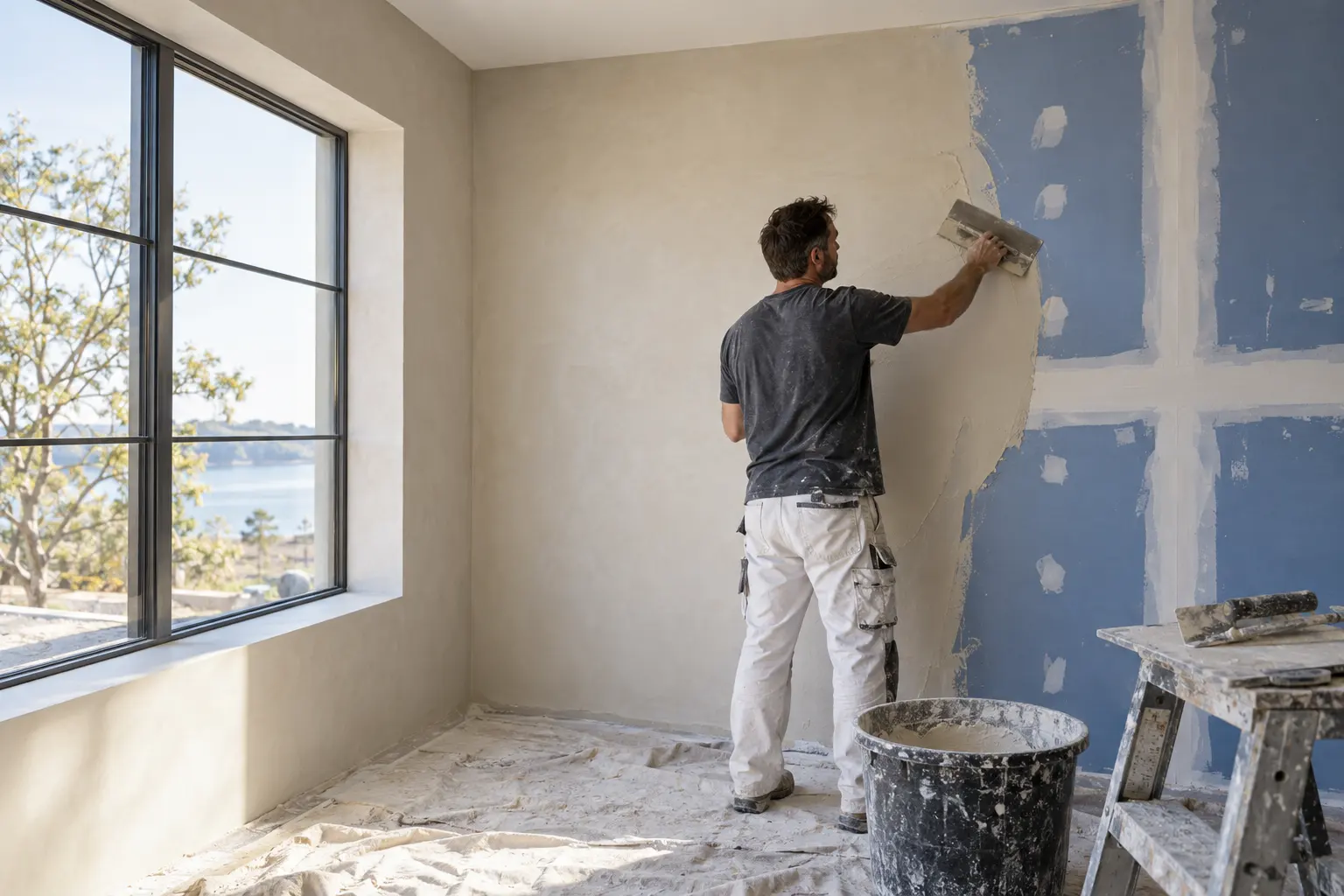
Veneer plaster is a durable, exceptionally smooth wall finish that brings the character and solidity of traditional plaster to a home without the depth, drying time, or labor associated with historic three-coat work. At Mrwalls Drywall & Painting, we approach it as a fully coordinated wall system: blue board installed with precision, joints properly prepared, and a thin plaster layer applied across the surface to create a refined, finished wall.
The preferred method for many interiors is a two-coat veneer plaster system. A base veneer coat is applied first, followed by a smooth veneer finish or finish coat. Together, these coats bond to the specially faced blue board, forming a hard, seamless surface that resists everyday dents and wear. This thin application also delivers crisp corners, clean reveals, and level walls without sacrificing valuable room space.
Some projects are better suited to a single-coat plaster veneer product, depending on the board, desired texture, and site conditions. Products including imperial veneer and diamond veneer are chosen for their working time, strength, and finish quality. Proper mixing veneer plaster matters just as much as selecting the right product: water ratios, mixing speed, timing, and plastering technique each influence how the material sets, cures, and polishes. We also provide guidance on veneer lime, lime, lime plaster being applied, stucco, and plaster repair when those materials are part of the construction.
Veneer drywall can resemble standard drywall before finishing, but the two are not interchangeable. Its absorbent blue face is designed specifically to receive veneer plaster. Successful building begins with accurate blue board hanging, secure fastening, and clean detailing at openings. Because our team manages both drywall installation and plaster work, the completed veneer system performs as intended, delivering the quiet, substantial feel homeowners expect from real plaster.
Veneer Plaster System Essentials
Blue board provides the absorbent surface needed for reliable plaster bonding.
Two-coat systems combine a base coat with a refined finish coat.
Thin plaster creates durable, seamless walls without reducing room dimensions.
Careful mixing and timing determine plaster strength, smoothness, and finish quality.
Professional installation ensures crisp corners, clean openings, and lasting performance.
Veneer Plaster Compared With Drywall, Lime Plaster and Stucco
At Mrwalls Drywall & Painting, we help clients select a wall finish that suits the building, the room and the way they want their home to feel. veneer plaster offers a considered middle ground, pairing efficient modern drywall construction with the depth and durability long associated with traditional plaster.
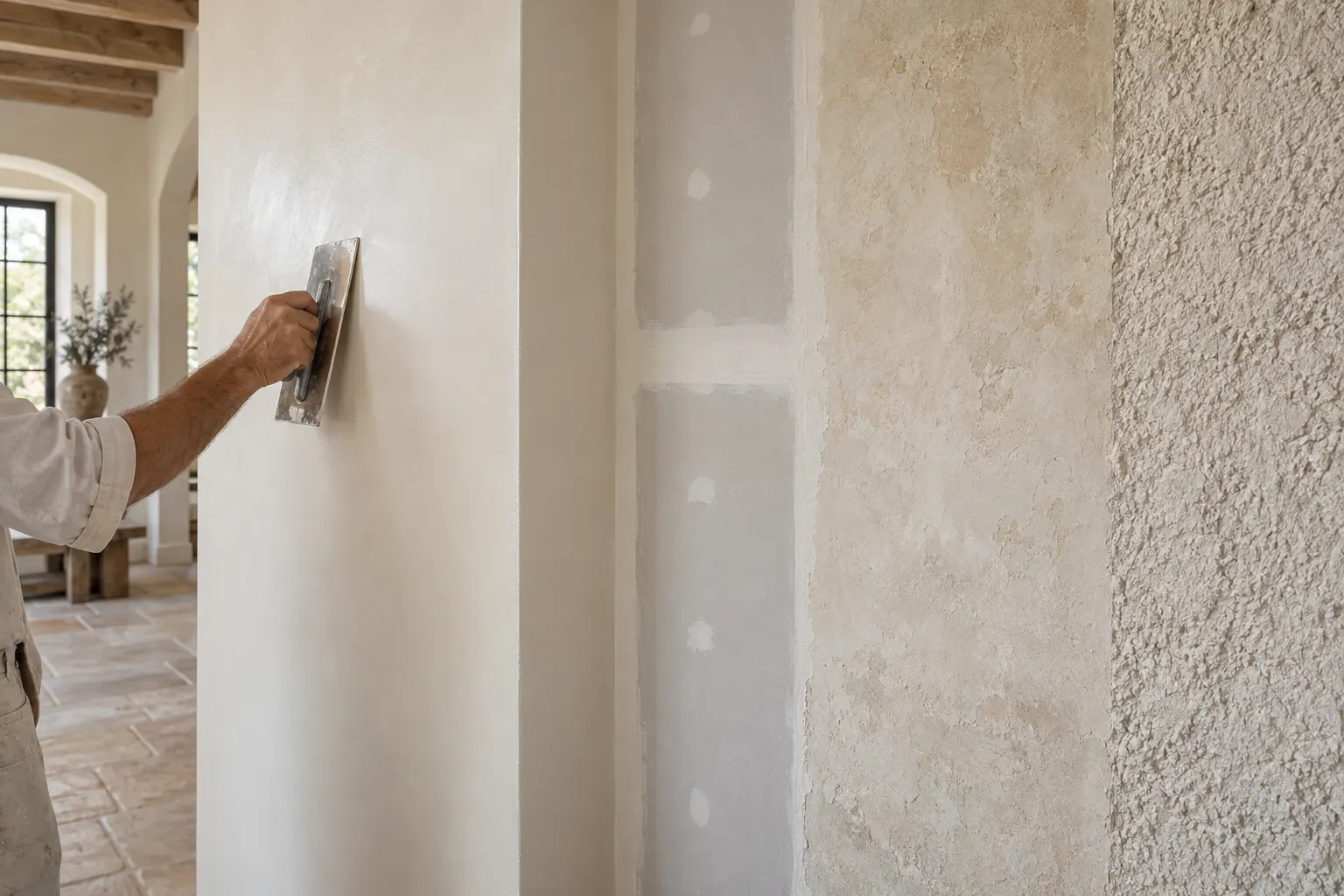
Standard drywall is efficient, clean and well suited to a wide range of projects. Its joints are taped and finished with compound, while a plaster veneer creates a denser, more seamless surface. A thin plaster layer applied over blue board delivers a refined veneer finish that holds up beautifully to everyday wear. Where added strength and depth are desired, a two-coat veneer plaster system combines a base veneer coat with a final finish coat.
Traditional lime plaster brings enduring character and is often the right choice for historic work. lime plaster being applied in several coats requires the proper substrate, more drying time and experienced plastering. veneer lime, including diamond veneer and imperial veneer products where appropriate, can create a breathable, softly textured result. It is not, however, a substitute for a full lime assembly when restoration requirements call for one.
Stucco is also a form of plaster, though it is generally intended for exterior walls. Its texture and weather-resistant construction serve a distinctly different purpose from an interior veneer drywall finish. Inside, veneer works well for new construction, renovations and targeted repair, particularly where crisp lines and a substantial wall surface matter.
Our team manages board hanging and plastering as one coordinated service. From mixing veneer materials to planning the thin application, we prepare corners, transitions and surfaces as a complete system. Whether a project calls for a veneer coat or a thin application with a thin plaster layer applied, we focus on a clean, lasting result that performs beautifully over time.
Veneer Plaster, Drywall, Lime Plaster and Stucco: Where Each Fits Best
Wall finish
Typical application
Finish and visual character
Installation considerations
Best fit
Veneer plaster
Interior walls for new homes, renovations and targeted repairs
Thin, hard plaster finish with a dense, monolithic feel; refined under paint
Installed over blueboard; board installation, corners, transitions and finish work together as a complete system
Projects seeking crisp lines and the substantial quality of plaster
Standard drywall
Many interior projects where a smooth painted surface is the priority
Smooth painted surface, but without the same dense, monolithic feel as veneer plaster
Joints are taped and finished with compound
Fast, practical wall finishing
Traditional lime plaster
Certain historic restoration projects
Exceptional character
Applied in multiple coats and requires particular substrates, drying time and experienced craftsmanship
Heritage projects that require a full traditional lime assembly
Stucco
Exterior walls
Heavier texture
Weather-resistant construction for a different purpose than an interior veneer finish
Exterior wall applications
Wall Finish Comparison
Choose veneer plaster for a hard, refined interior surface over blueboard.
Choose drywall for efficient installation and smooth painted finishes.
Use traditional lime plaster when historic restoration requirements demand authentic assemblies.
Reserve stucco for exterior walls needing weather resistance and heavier texture.
Coordinate blueboard and plaster installation for clean corners, transitions, and lasting performance.
Planning a Veneer Plaster Project, From Building Conditions to Repair
At Mrwalls Drywall & Painting, every veneer plaster project begins with a close reading of the building, not simply the wall area. The age of the home, framing movement, moisture history, existing finishes, and substrate condition all inform the right plastering plan. Whether the work involves drywall, veneer drywall, or an older plaster veneer, a thorough assessment ensures a refined veneer finish is never used to conceal an unresolved issue.
For new construction, blue board must be hung, fastened, and detailed with precision before the plaster crew arrives. Unlike standard drywall, blue board is made to receive the specialized coats used in a two-coat veneer plaster system, often including a veneer coat and finish coat. This thin application creates a durable, elegant surface: a thin plaster layer applied evenly, with clean joints, properly treated corners, and no unnecessary buildup or patchwork. From mixing veneer materials to selecting an imperial veneer or diamond veneer system, the details determine how well the finished work performs.
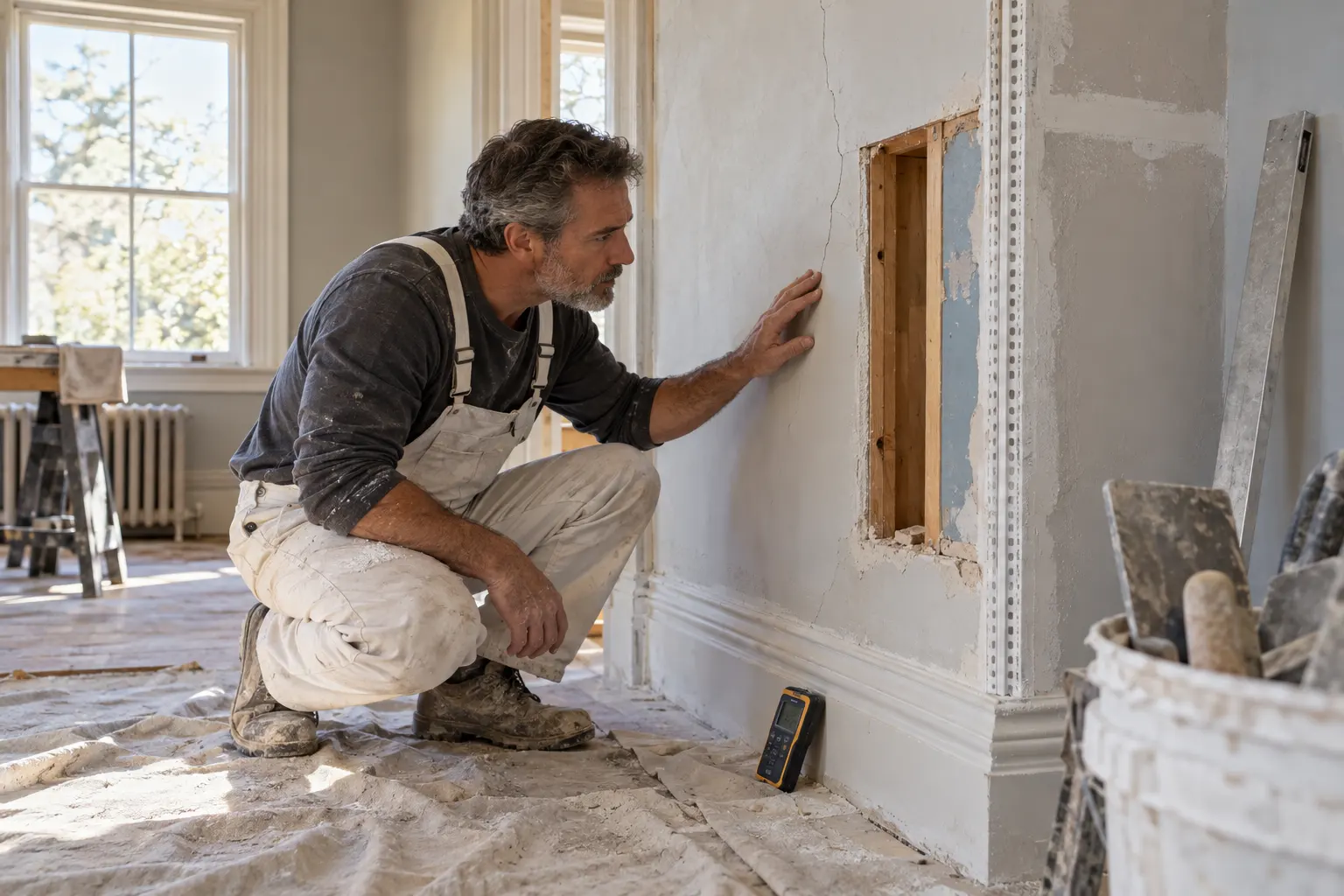
Repair work deserves the same disciplined attention. Cracks may reflect seasonal movement, failed past repair work, water intrusion, loose plaster behind the surface, or issues that affect how the assembly works. I determine whether a local repair will blend cleanly or whether damaged material should be removed and rebuilt. Addressing the cause first helps the repair last, whether the surrounding finish is veneer, stucco, or traditional plaster.
In older homes, I also explain the distinction between modern veneer plaster and traditional lime plaster. Lime has its own character and performance qualities, and lime plaster being applied may be the appropriate choice for historic restoration. Veneer lime and veneer plaster, meanwhile, offer an efficient, polished solution over blue board for many renovations and additions. I’ll clearly explain the options, recommend the system that suits your home, and provide careful plastering that feels right for the space.
Frequently asked questions
What is veneer plaster?
Veneer plaster is a thin, hard plaster finish applied over specially faced blue board. It creates smooth, durable interior walls with more solidity and dent resistance than standard drywall, without the depth and extended drying time of traditional three-coat plaster.
What is the difference between veneer plaster and drywall?
Drywall uses taped joints and joint compound before painting. Veneer plaster uses blue board and a thin plaster coat, creating a more seamless, dense surface. It can provide crisper details, improved resistance to everyday dents, and a refined appearance under paint.
Can veneer plaster be used to repair older plaster walls?
Yes, veneer plaster can be part of an older wall repair when the substrate is stable and the source of cracks or damage has been addressed. Historic lime plaster may require a different approach, particularly when preserving original materials is important.