Wet Drywall From a Roof or Pipe Leak? Repair Guide for Western MA
Jason Lebeau from MrWalls Drywall & Painting
Jason has been a drywall contractor for 25 years. He is the owner of MrWalls Drywall & Painting in Chicopee Massachusetts, and still works in the field daily.
Learn what to do when drywall gets wet from a roof or plumbing leak. Discover repair signs, costs, and expert drywall restoration in Springfield, Chicopee, and Western Massachusetts.
Wet Drywall From a Roof or Pipe Leak: What Every Homeowner Should Know
Finding wet drywall in your home can be alarming. Whether the damage came from a leaking roof during a heavy rainstorm, a burst pipe, an overflowing bathroom, or an ice dam during a Massachusetts winter, acting quickly can prevent much more expensive repairs.
The most important step is stopping the source of the water before repairing the drywall. Repairing damaged drywall without fixing the leak almost always leads to recurring damage, mold growth, and additional costs. Home improvement experts consistently recommend addressing the leak first, thoroughly drying the affected area, and then evaluating whether the drywall can be repaired or must be replaced.
At MrWalls Drywall & Painting, we specialize in restoring water-damaged drywall for homeowners throughout Chicopee, Springfield, the Pioneer Valley, and Western Massachusetts. From small ceiling stains to complete drywall replacement after significant water damage, we restore your walls and ceilings to a seamless finish and offer complete drywall repair services.
Is Wet Drywall Dangerous?
Yes, sometimes.
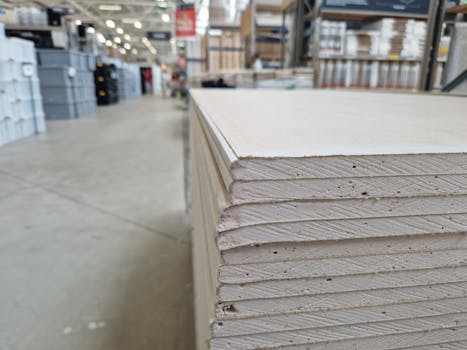
Drywall is made from gypsum covered by heavy paper. When exposed to moisture, the paper facing can become an ideal environment for mold if it remains damp for an extended period. Wet drywall also loses structural strength, especially on ceilings where water adds significant weight.
Common warning signs include:
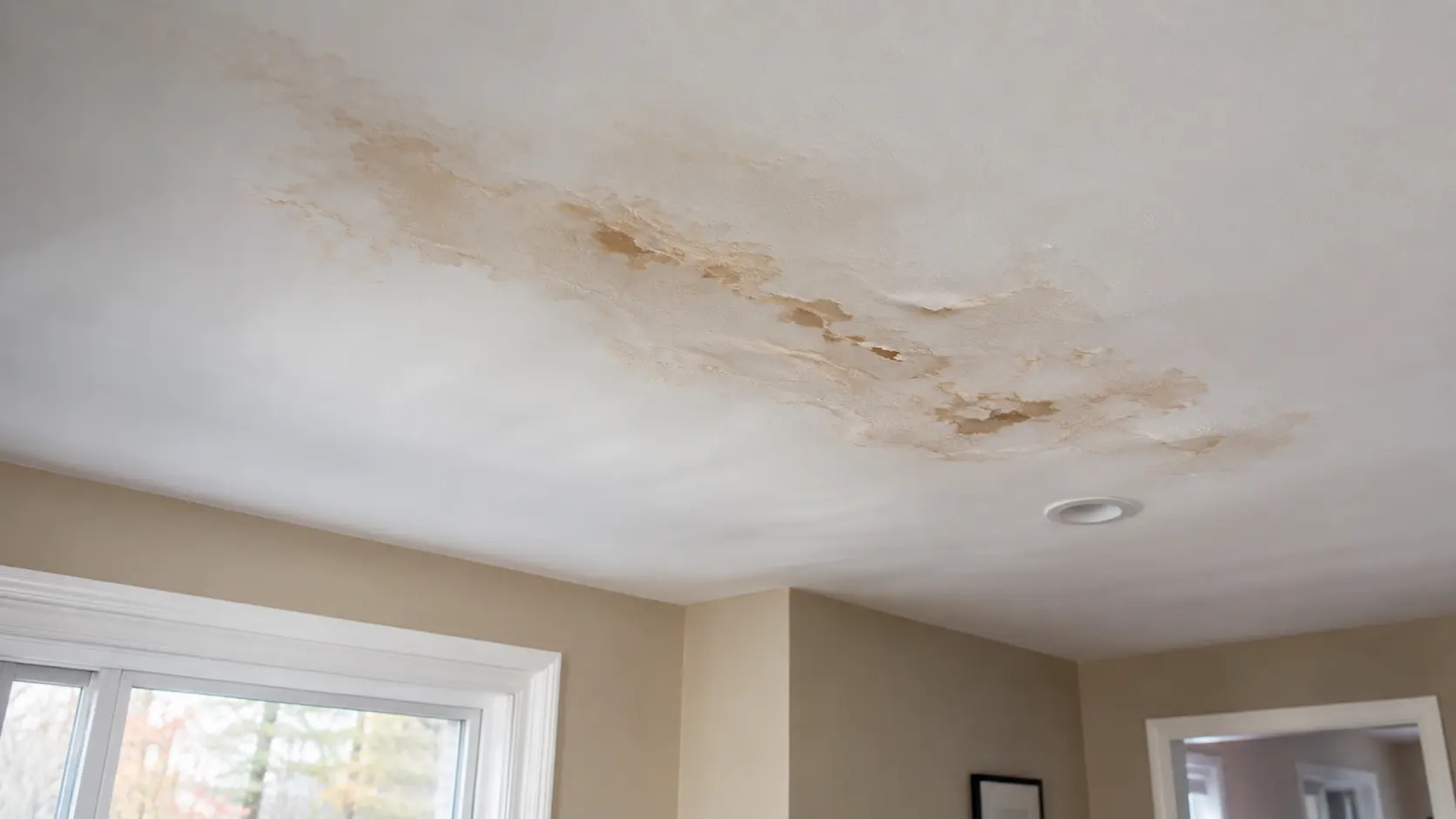
Brown or yellow water stains
Bubbling paint
Peeling drywall tape
Soft drywall
Sagging ceilings
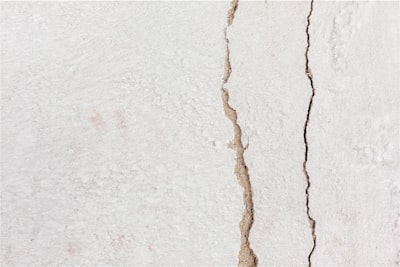
Cracks that suddenly appear after a leak
Musty odors
Visible mold
If your ceiling is sagging or bulging, avoid standing directly underneath it. Water can accumulate above the drywall, making it heavy enough to collapse.
What Causes Wet Drywall?
Several household problems can lead to water-damaged drywall.
Roof Leaks
Roof leaks are especially common in Western Massachusetts after:
Heavy rain
Snow melt
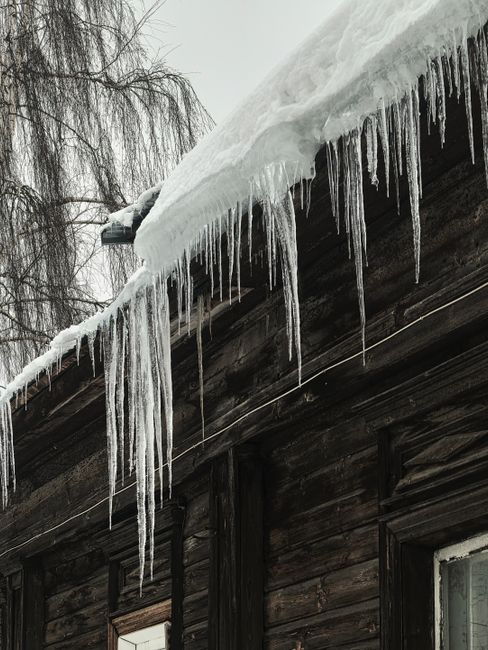
Ice dams
Missing shingles
Damaged flashing
Chimney leaks
Skylight leaks
Water often travels along framing before appearing somewhere completely different from the actual roof leak.
Plumbing Leaks
Plumbing issues include:
Burst pipes
Frozen pipes
Leaking shower valves
Toilet overflows
Washing machine supply lines
Refrigerator water lines
Bathroom plumbing failures
Unlike roof leaks, plumbing leaks can continue unnoticed for days or weeks, soaking insulation and drywall before homeowners notice discoloration. The plumber will have to cut open drywall to repair the pipes. We offer Drywall repair after plumbing repair to fix these cutouts.
Can Wet Drywall Be Repaired?
Sometimes.
Whether drywall can be saved depends on:
How long it stayed wet
Amount of water
Whether the drywall became soft
Whether mold developed
Whether the drywall joints failed
Minor staining after a small leak may only require drying, sealing with a stain-blocking primer, and repainting.
However, drywall that has softened, crumbled, sagged, or supported mold growth usually needs replacement. Professionals often remove damaged sections so the wall cavity can dry thoroughly before installing new drywall.
Signs Your Drywall Needs Replacement
Replace wet drywall if you notice:
Soft or spongy drywall
Sagging ceilings
Loose drywall tape
Crumbling gypsum
Mold growth
Repeated leaks in the same location
Wet insulation behind the wall
Water trapped inside the wall cavity
Attempting to mud over severely damaged drywall usually results in recurring cracks and poor adhesion.
What To Do Immediately After Discovering Wet Drywall
Follow these steps:
Stop the water source.
Protect furniture and flooring.
Turn off electricity if water is near wiring.
Remove standing water.
Increase airflow with fans.
Use a dehumidifier.
Document damage for insurance.
Contact professionals for repairs.
Many homeowners make the mistake of patching the drywall before confirming the leak has been fixed. If moisture remains behind the wall, the damage often returns.
Roof Leak Drywall Damage
Ceilings often show the first signs of roof leaks.
Common symptoms include:
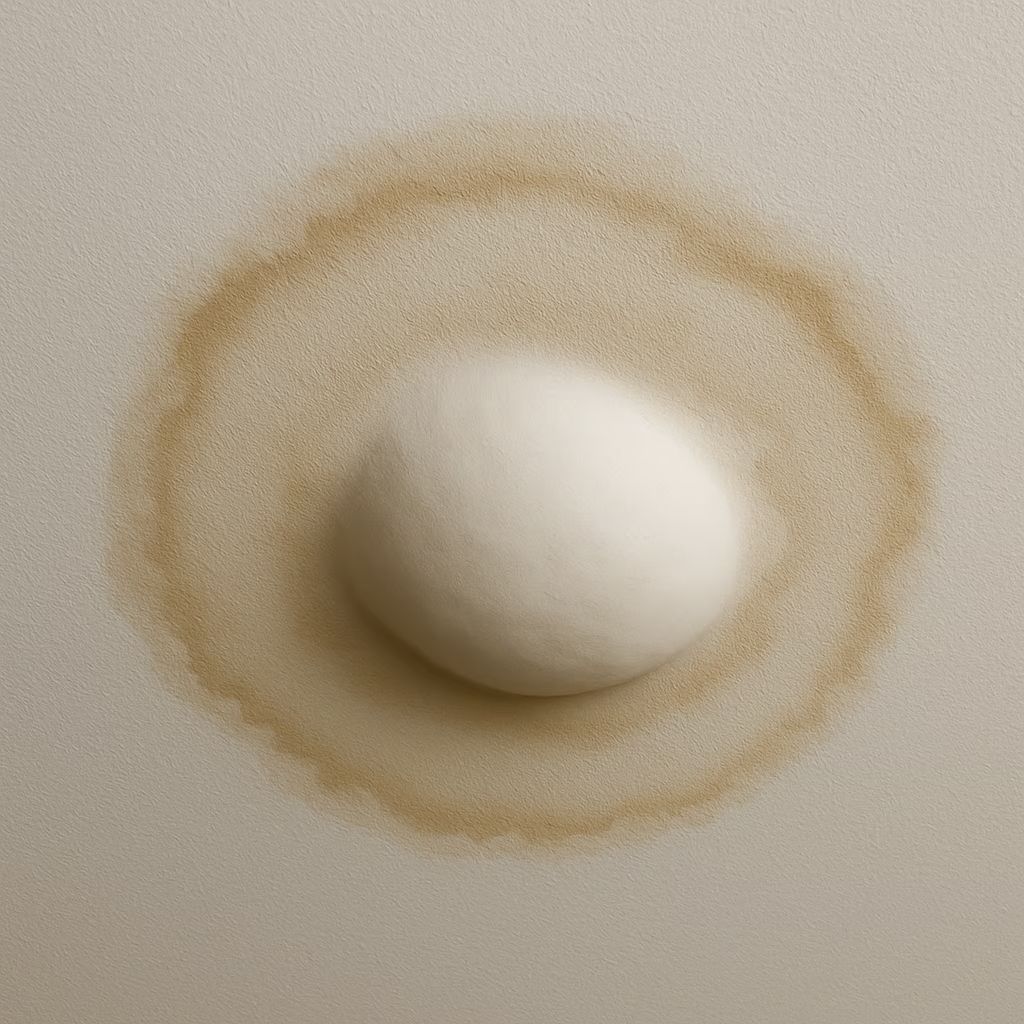
Water rings
Ceiling stains
Texture peeling
Bubbling paint
Sagging drywall
Cracked ceiling joints
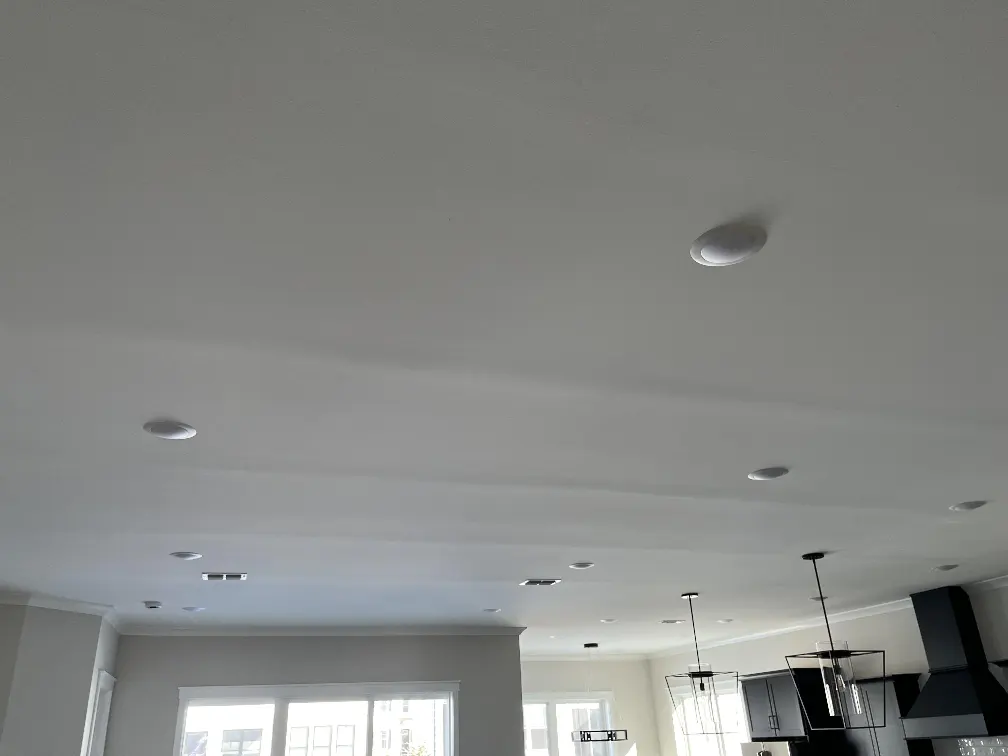
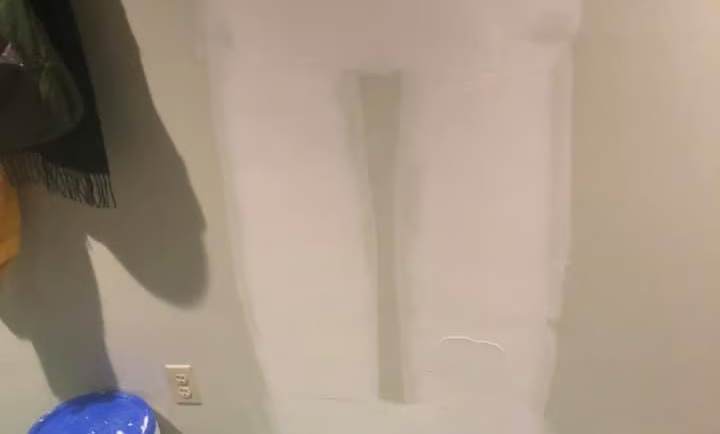
Once the roof has been repaired, damaged drywall can be removed, replaced, taped, finished, texture matched if necessary, primed, and painted so the repair blends seamlessly with the surrounding ceiling.
Does Homeowners Insurance Cover Wet Drywall?
In many cases, yes but it depends on what caused the damage.
Homeowners insurance generally covers sudden and accidental water damage, but it often does not cover damage caused by long-term neglect or lack of maintenance.
Insurance may cover drywall damage caused by:
Burst or frozen pipes
Sudden plumbing failures
Water heater failures
Accidental appliance leaks
Storm-related roof damage (after the roof is repaired)
Insurance may not cover drywall damage caused by:
Long-term roof leaks
Deferred maintenance
Ongoing plumbing leaks that were ignored
Groundwater or flooding (unless covered by a separate flood policy)
If you're planning to file a claim:
Take photos before any repairs begin.
Save damaged materials if requested by your insurance adjuster.
Keep receipts for emergency mitigation services.
Prevent additional damage by drying the affected area as soon as possible.
How Professionals Repair Water-Damaged Drywall
At MrWalls Drywall & Painting, our goal is to make the repairs look like the damage never happened. Every project is different, but the repair process typically includes:
1. Inspect the Damage
We inspect the damage and negotiate the restoration cost with your insurance determine:
Where the water entered
Whether the drywall is structurally sound
If insulation is wet the water damaged drywall must be removed to allow insulation replacement.
Whether replacement is necessary also depends on if the board is sagging.
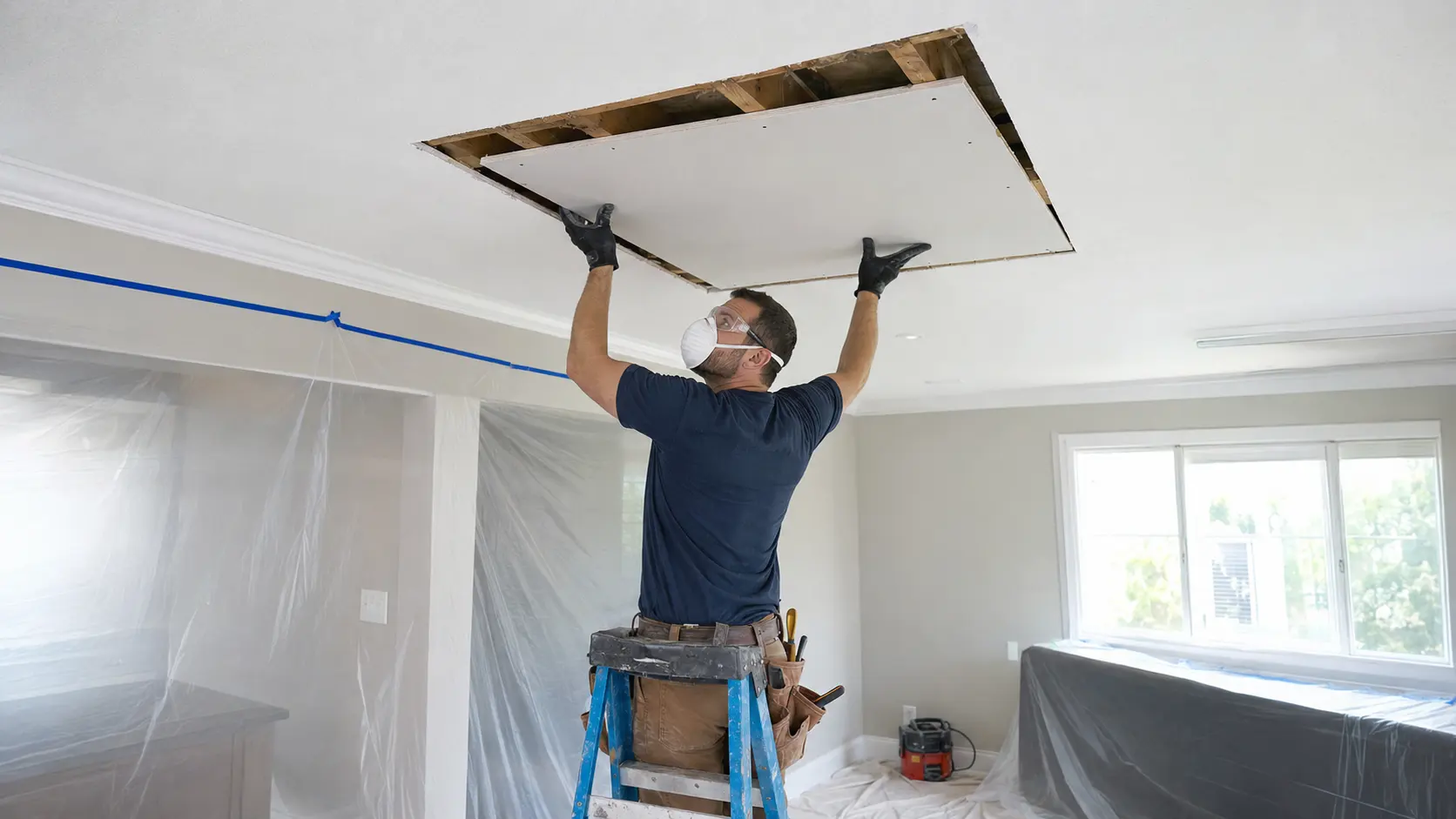
2. Remove Unsalvageable Drywall
If the drywall has become soft, swollen, moldy, or has lost its strength, the damaged sections are carefully removed to expose the framing and allow the area to dry completely.
3. Dry the Area
Any remaining moisture must be eliminated before new drywall is installed. Proper drying helps reduce the risk of future mold growth and recurring problems.
4. Install New Drywall
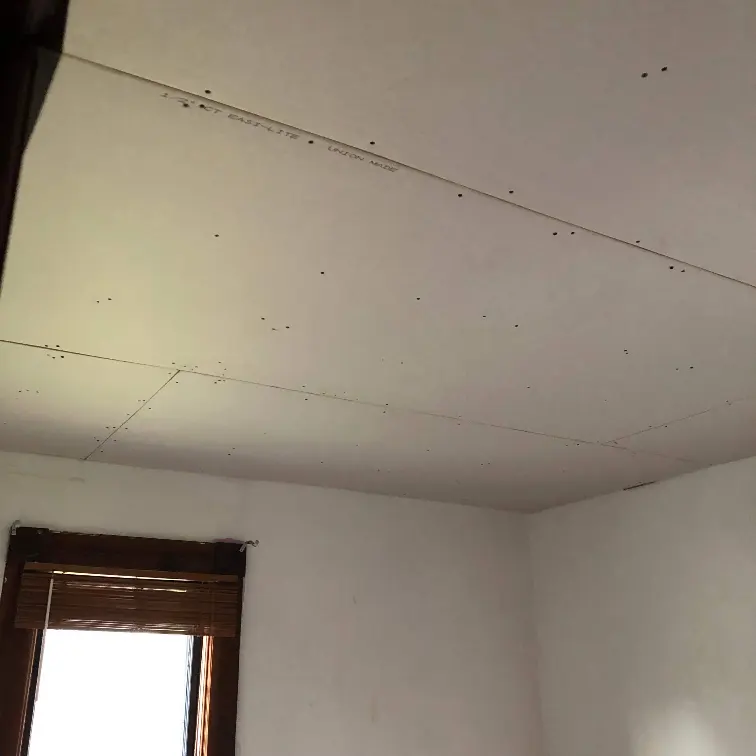
Replacement drywall is measured, cut, and securely fastened to match the existing wall or ceiling.
5. Tape and Finish the Joints
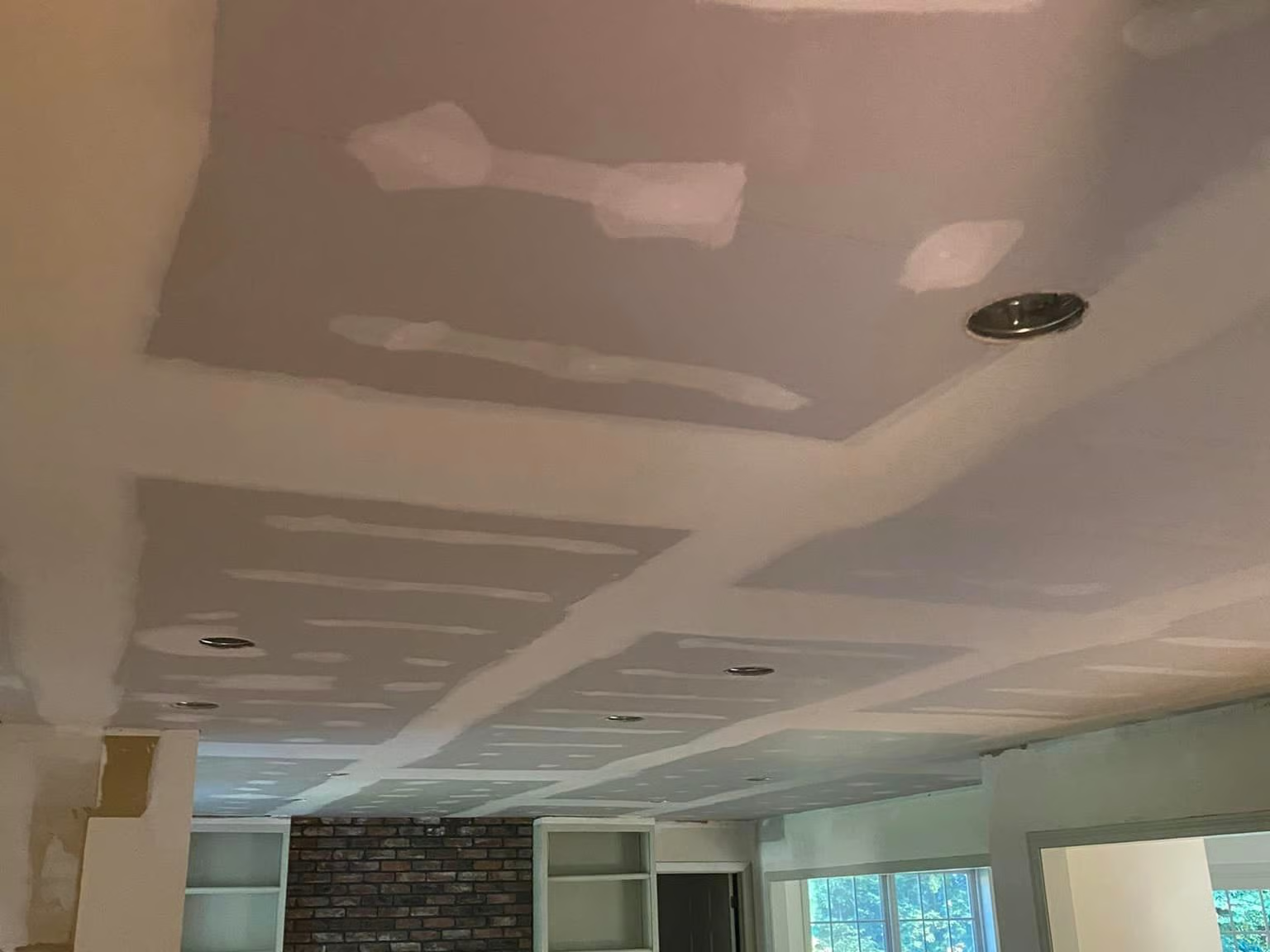
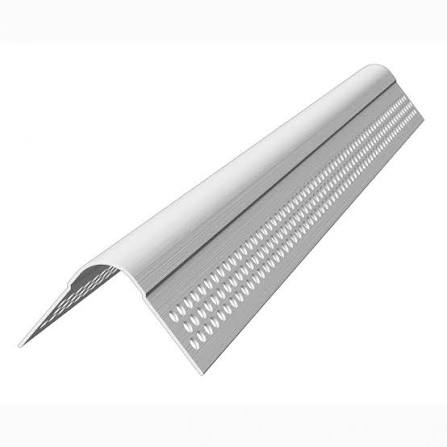
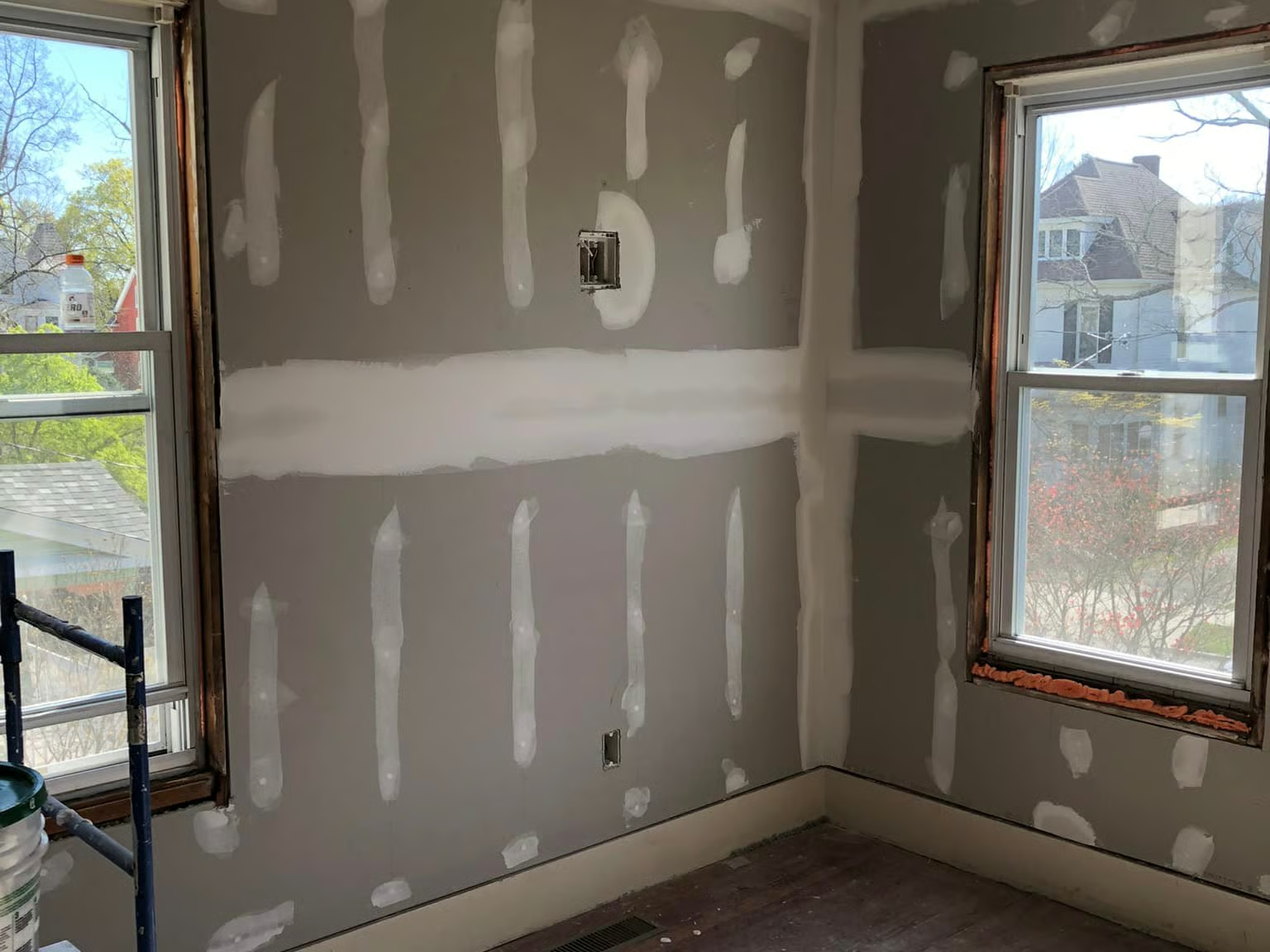
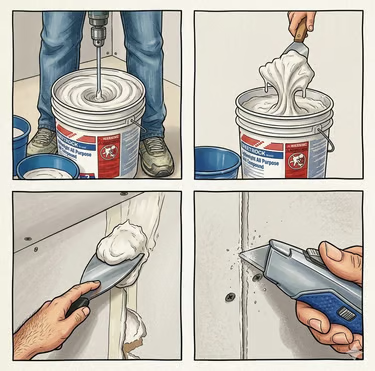
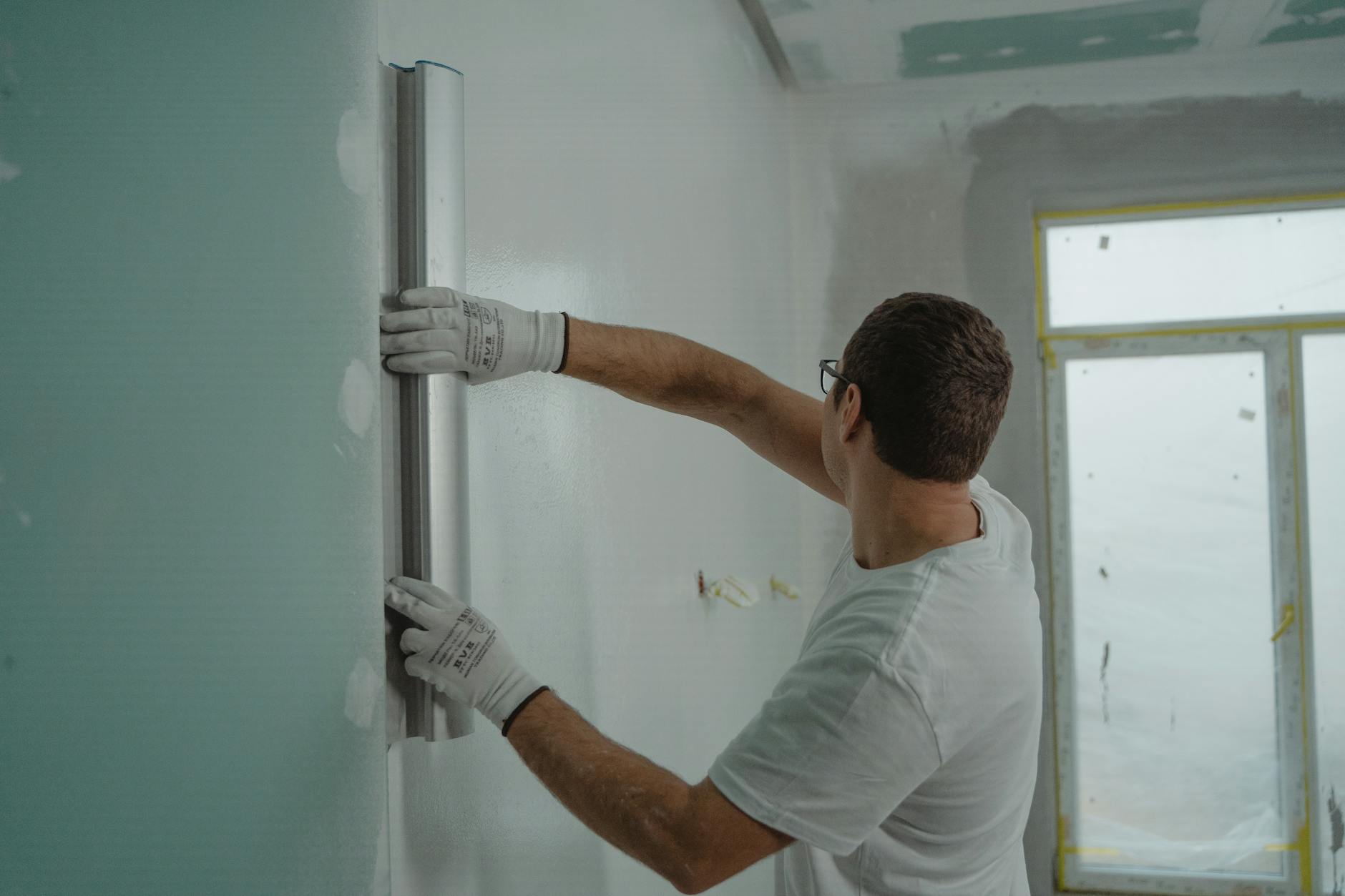
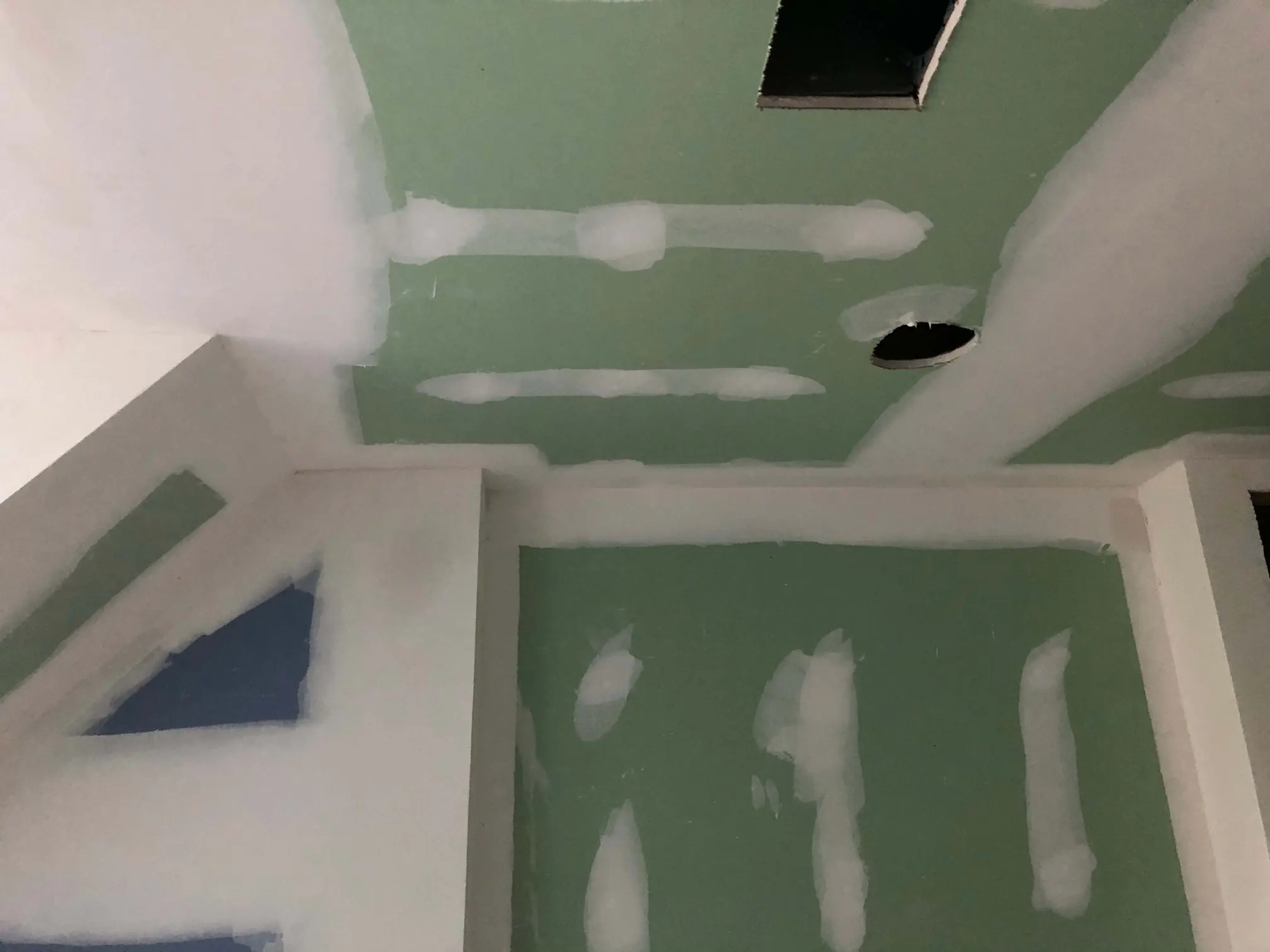
After the new board is installed, the drywall taping work begins by embedding a paper drywall tape into joint compound. Then the drywall finishing phase is where two coats of joint compound are applied over the tape, screw holes, and corner beads. Then the drywall compound is sanded smooth, and blended into the surrounding surface to create an invisible repair.
6. Match Existing Texture
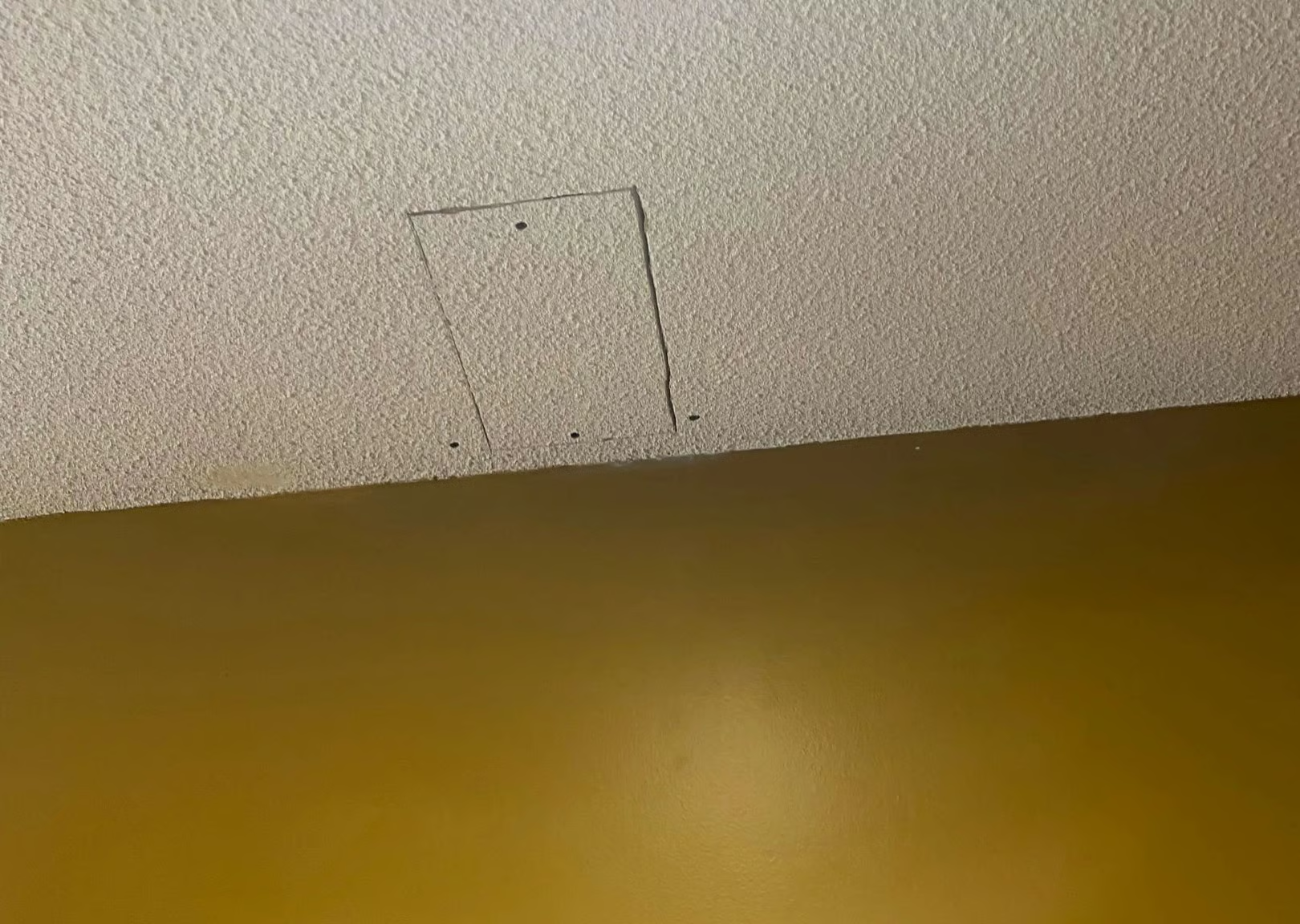
If your ceiling or wall has a texture, we carefully match it so the repair blends with the surrounding area.
Water stains require a quality stain-blocking primer before the finish coats when interior painting work begins. This helps prevent old stains from bleeding through the new finish.
Wet Ceiling Drywall Requires Special Attention
Ceilings are often more vulnerable than walls because water collects above the drywall, adding significant weight.
Common warning signs include:
Sagging sections
Visible bulges
Cracks around seams
Peeling texture
Brown water rings
A sagging ceiling should never be ignored. It may indicate trapped water or weakened drywall that could fail unexpectedly.
Quick drying greatly reduces the risk of mold. If mold is already visible or there is a persistent musty odor, additional mold remediation may be necessary before drywall repairs begin.
Preventing Future Water Damage
While not every leak can be prevented, homeowners can reduce the risk of future drywall damage by:
Inspecting the roof annually.
Cleaning gutters and downspouts.
Checking attic spaces for signs of leaks.
Replacing aging plumbing supply lines.
Monitoring areas around water heaters and washing machines.
Repairing small leaks before they become major problems.
Addressing ice dams promptly during winter.
Routine maintenance can help prevent the need for costly ceiling repair later.
Why Hire a Professional Drywall Repair Company?
Small cosmetic repairs can sometimes be completed by experienced DIY homeowners, but water damage often extends beyond what is visible on the surface.
Hiring a professional offers several advantages:
Accurate assessment of hidden damage
Proper removal of compromised drywall
Smooth, seamless repairs
Texture matching
Professional finishing and painting
Reduced risk of recurring issues
For ceiling repairs especially, experience is important to ensure a safe, durable, and visually consistent result.
Why Homeowners in Western Massachusetts Choose MrWalls Drywall & Painting
When water damages your drywall, you need more than a simple patch you need a repair that looks like the damage never happened. We have 25 years of experience working on water damaged drywall repairs. We can work with your insurance to get your homes walls and ceilings back to like new condition. The owner of Mrwalls is always on the jobsite working to insure we always turn over the best quality work.
Proudly Serving Western Massachusetts
MrWalls Drywall & Painting provides drywall repair and finishing services throughout the Pioneer Valley, including:
Chicopee
Springfield
Holyoke
West Springfield
Longmeadow
East Longmeadow
Ludlow
Wilbraham
South Hadley
Easthampton
Northampton
Amherst
Belchertown
Granby
Agawam
If you're searching for:
wet drywall repair near me
ceiling water damage repair
roof leak drywall repair
drywall repair after pipe leak
water damaged ceiling repair
drywall contractor Chicopee MA
drywall repair Springfield MA
our team is ready to help restore your home with professional workmanship and attention to detail.
Frequently Asked Questions
Can drywall dry out on its own?
Sometimes, if the water exposure was minimal and the drywall remained structurally sound. However, drywall that stays wet for an extended period may weaken or develop mold, making replacement the better option.
How long can drywall stay wet before mold grows?
The exact timing varies with temperature, humidity, and airflow, but mold can begin developing surprisingly quickly if materials remain damp. Prompt drying is the best way to reduce the risk.
Should I replace wet insulation too?
Yes. Fiberglass, cellulose, and other insulation materials can retain moisture, reducing their effectiveness and contributing to mold growth if they don't dry completely.
Can you repair a water-stained ceiling?
Yes. Once the leak has been repaired and the ceiling is dry, stains can typically be sealed with a stain-blocking primer before repainting. If the drywall has lost its strength, replacement may be necessary.
Can you match my existing ceiling texture?
Absolutely. MrWalls Drywall & Painting specializes in matching existing textures so repairs blend naturally with the surrounding ceiling or wall.
Do you repair popcorn ceilings after water damage?
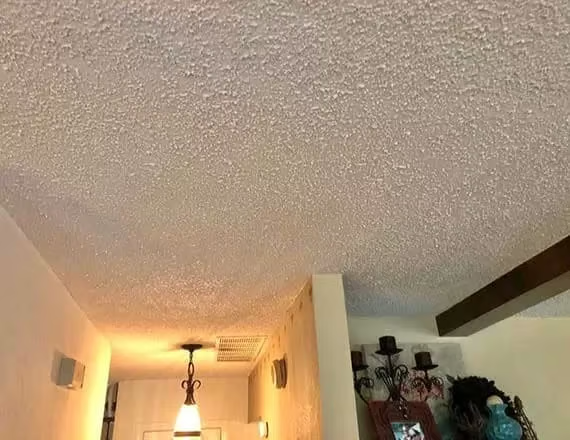
Yes. We repair damaged popcorn ceilings, remove loose material, restore affected areas, or provide complete popcorn ceiling removal if requested.
How long does drywall repair take?
Smaller repairs may take a day or two, while larger projects involving drying time, multiple coats of joint compound, and painting can take several days. The timeline depends on the extent of the damage and drying requirements.
Do you serve homeowners outside Chicopee?
Yes. We proudly serve homeowners throughout Springfield, the Pioneer Valley, and many surrounding communities in Western Massachusetts.
Conclusion
Wet drywall is more than a cosmetic issue. Whether the damage is caused by a leaking roof, a burst pipe, or another plumbing problem, acting quickly can help limit repairs and protect your home.
The key steps are to stop the source of the water, dry the affected area thoroughly, and repair or replace damaged drywall as needed. Addressing the problem early helps restore the appearance of your walls and ceilings while reducing the likelihood of additional damage.
If you need dependable drywall repair after water damage, MrWalls Drywall & Painting provides professional drywall repair, ceiling repair, popcorn ceiling repair and removal, texture matching, and interior painting for homeowners throughout Chicopee, Springfield, and the Pioneer Valley.
Say Goodbye to your Popcorn Ceilings, This Popcorn Ceiling texture removal Guide. Basic guide to DIY popcorn ceiling removal giving you smooth flat ceilings. Tool and material list and step by step instructions from MrWalls. We also Remove tough painted popcorn ceilings.
Ceiling Drywall Repair Contractors In Chicopee MA in homes, basements, additions, and remodels. We repair drywall ceilings replace damaged sections, patch holes, repair cracks, and water damage.
Drywall Ceiling Contractor In Springfield Massachusetts. At Mrwalls Drywall & Painting, we are skilled drywall ceiling professionals. We install new ceilings tape and finish, remove and repair popcorn ceilings. We work with insurance to fix water damaged ceilings, and skim coat drywall and plaster smooth(413)302-0640
Types Of Drywall Corner Bead Bullnose, Metal, Vinyl. The corner bead you choose, and how you install and coat it, determines whether those corners look crisp and straight for years.
Drywall Finishing Guide Step-by-Step Guide To Drywall Finish Levels. When you are thinking about having drywall work done, or to DIY the job, here are some things to know. Why level 5, a clean jobsite, and why ceiling repair is tough.
Our article about drywall sizes and types goes over the commonly used sized of board, and the various types of drywall board such as moisture resiatant.
Discover the essential drywall tools and supplies you need for flawless results. Whether you are repairing smooth walls or popcorn texture ceilings, Transform your space with confidence!
Repairing Drywall Ceiling Seam Humps, lumpy, wavy bumpy, not flat ceiling. The cause is usually too much compound left over the seams by the drywall finisher. Solution is to feather the seams out wider making gradual change
How Many Screws Should You Put in a 4x8 Sheet of Drywall? If you are hanging drywall its important to place your screws at the proper spacing for building code and ceilings that don't sag
How To Hang Pictures On A Plaster Wall With Wall Anchors This article describes the steps to install plastic wall anchors to mount heavier items onto plaster such as picture frames.
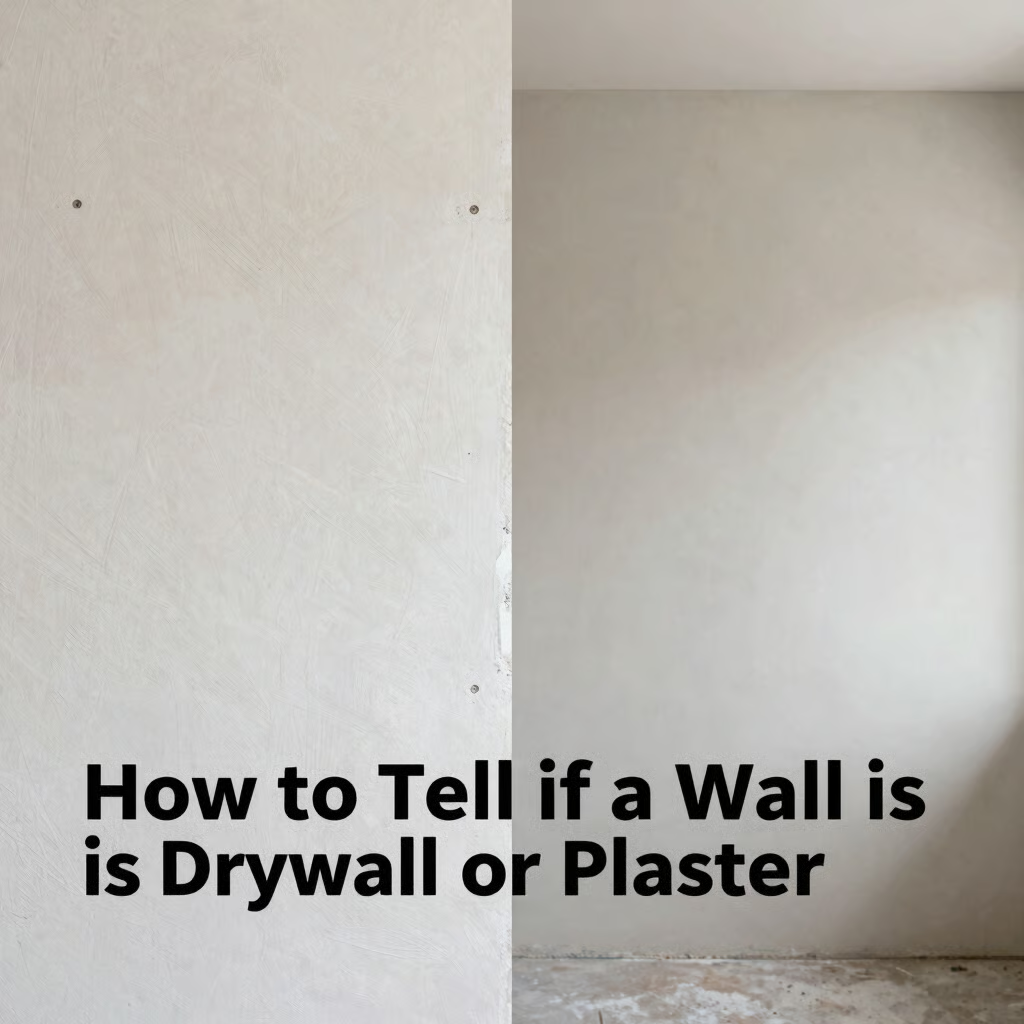
How To Know If You Have Drywall Or Plaster In Your Home. In New England we have many homes with plaster walls and ceilings. This is a guide to determine which you have either drywall or plaster.
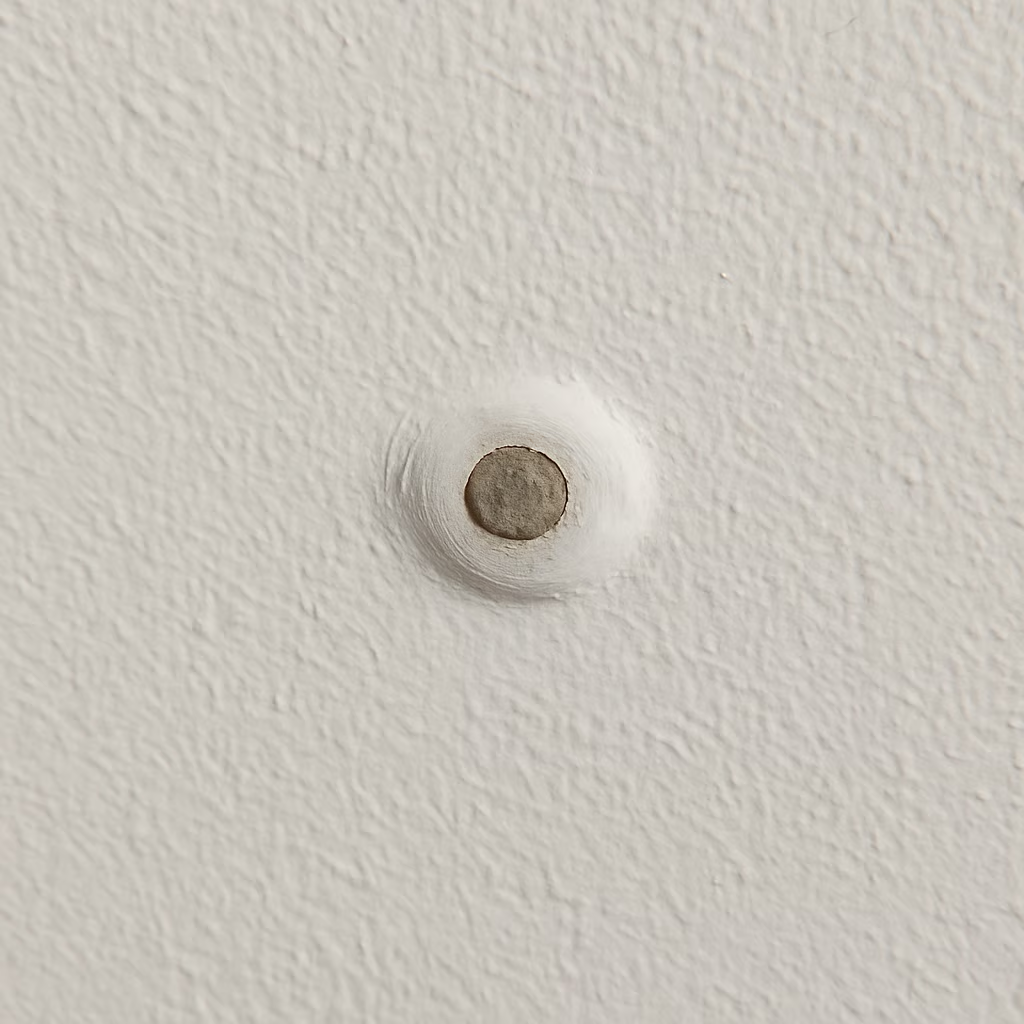
Nail pops usually happen because the wood behind your wall is shrinking. Most houses are built with green lumber. As it dries, the studs pull away from the drywall but the nail doesn't move creating a gap.
Learn when painting wood paneling to update your home makes sense. How to prep the wood surface for a good paint bond, and when drywall is a better option.
Should You Install Sheetrock Ceilings or Walls First? This is important to get right when installing sheetrock. The wrong order could cause gaps in your ceiling corners. Learn which order the professionals install sheetrock.
Ice Dam Roof Leak Drywall Repair Contractor MrWalls Drywall & Painting will repair your water-damaged drywall and fix those brown water spots from melting snow behind ice dams.
Drywall Repair Step-by-Step Guide to Patch a Drywall Hole Like a Pro
Master the art of drywall repair like a professional and enhance your home's appeal! Our step by step guide to fix small, medium, and large drywall holes.
What are the Five Levels of Drywall Finishing? This guide explains what each finish level includes, allowing you to make an informed decision when comparing contractors quotes.
he History of Plaster as a Wall and Ceiling Material. Plaster is one of the oldest and most enduring building materials in human history. Long before modern drywall was invented, plaster was used.
The ultimate guide to stucco ceiling paint. This article goes over painting ceilings with heavy stucco textures or chunky popcorn ceilings. DIY Friendly
Learn what to do when drywall gets wet from a roof or plumbing leak. Discover repair signs, costs, and expert drywall restoration in Springfield, Chicopee, and Western Massachusetts.
Choosing the Right Drywall for Your Bathroom and Basement. A guide for homeowners planning a bathroom or basement remodel. Moist areas require special drywall boards.