Drywall, Plaster, & Paintinmg services · In Western Massachusetts
Colored Lime Plaster: A Homeowner’s Guide
Explore colored lime plaster, from finish options and wall preparation to practical limitations, planning considerations, and professional application.
Owner-operated25 years of experienceClean, protected work areas
🎨Colored Lime Plaster
Colored lime plaster lends a wall a soft, mineral depth that paint cannot replicate. Color lives within the finish itself, creating gentle movement, nuanced tonal variation, and a surface that feels quietly considered rather than flat.
For a refined interior update, select the right lime based system, color finish, and preparation for the room. Understanding the plaster mix, pigment, and application is essential to achieving a smooth, enduring finish.
⚡ Key takeaways
Colored lime plaster embeds pigment throughout the finish, creating durable color with subtle depth and movement.
Lime plaster suits breathable masonry, historic walls, and interiors where a hand-finished mineral character is desired.
Correct moisture issues, loose material, salts, and unsuitable coatings before application; lime cannot fix a wet wall.
Unlike paint or limewash, layered lime plaster adds body, texture, and changing light effects.
Review large on-site samples: pigments, substrate, drying, and lighting can alter the final color.
Costs depend heavily on wall preparation, coats, texture, access, repairs, and custom color sampling.
Colored lime plaster creates breathable, hand-finished walls with mineral depth, built-in pigment, and subtle variation that changes with the light. Suitable for well-prepared masonry, historic interiors, and selected modern spaces, it offers more texture and character than paint or limewash. Proper substrate repair, sampling, gradual curing, and practical protection are essential for a durable finish that ages gracefully.
Colored Lime Plaster: Composition, Color and Wall Character
At Mrwalls Drywall & Painting, we use colored lime plaster for homeowners seeking depth, movement, and a restrained mineral character. It brings a more nuanced presence than a uniform painted wall. Lime plaster is a breathable, lime based finish made principally from natural limestone. The limestone is processed into lime, then blended with fine aggregate, water, and often powdered marble. A fine marble plaster can be worked to a refined, smooth surface, while other lime plasters retain a tactile grain or softly mottled appearance.
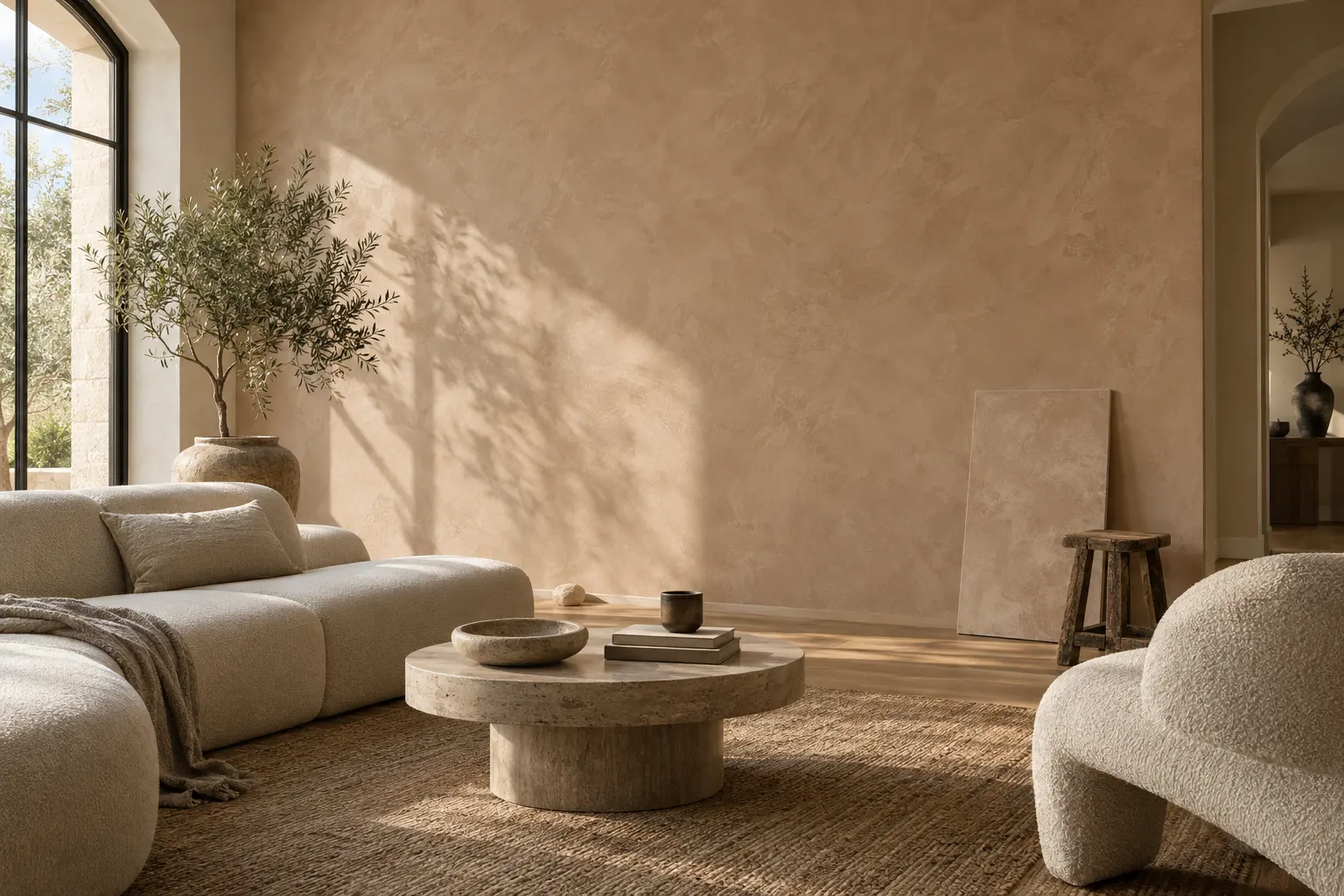
The color is integral to the plaster mix rather than applied over the surface. We create a lasting color finish by adding pigment during mixing, typically using stable powder pigments and earth pigments selected for compatibility with lime. Because the pigment extends through the plaster, minor wear and small marks are often less apparent than they are on conventional paint. The tone may still shift subtly with daylight, texture, and viewing angle, natural variation that gives each wall a composed, architectural quality.
Color selection is as important as application. Pale clay, warm stone, chalky gray, and muted green allow the quiet movement of lime finishes to emerge without becoming busy. Stronger colors can be equally compelling, though they should always be tested first. The alkalinity of lime, the base coat, and the drying process can all influence the final finish. Whenever possible, we create sample panels in the actual interior, then refine the pigment load, texture, and finish level before proceeding with the full wall.
Unlike limewash, a thin mineral coating brushed onto a prepared surface, colored lime plaster creates its own body and texture. It can be smooth and polished, lightly clouded, or more expressive, depending on the trowel work and chosen finishes. Our team prepares the substrate with care, applies the appropriate base coats, and protects surrounding details throughout the work. Where needed, we can recommend a breathable sealer after the plaster is fully dry. The result is intentional rather than ornamental: a lasting, hand-finished presence that paint alone cannot reproduce.
Lime Based Plaster: Where It Works and How Professionals Prepare Walls
Lime based plaster is among the most forgiving and enduring finishes we install, though it is not the right choice for every wall. At Mrwalls Drywall & Painting, we recommend lime plaster where its breathable, mineral character brings genuine value: historic homes, masonry walls, older interior spaces with sound original plaster, and rooms where a soft, hand-worked finish suits the architecture. Derived from natural limestone, lime plasters allow moisture vapour to move through the wall rather than trapping it behind a dense coating. Unlike many modern gypsum plasters, lime finishes are especially well suited to solid brick, stone, and traditional lath-and-plaster construction.
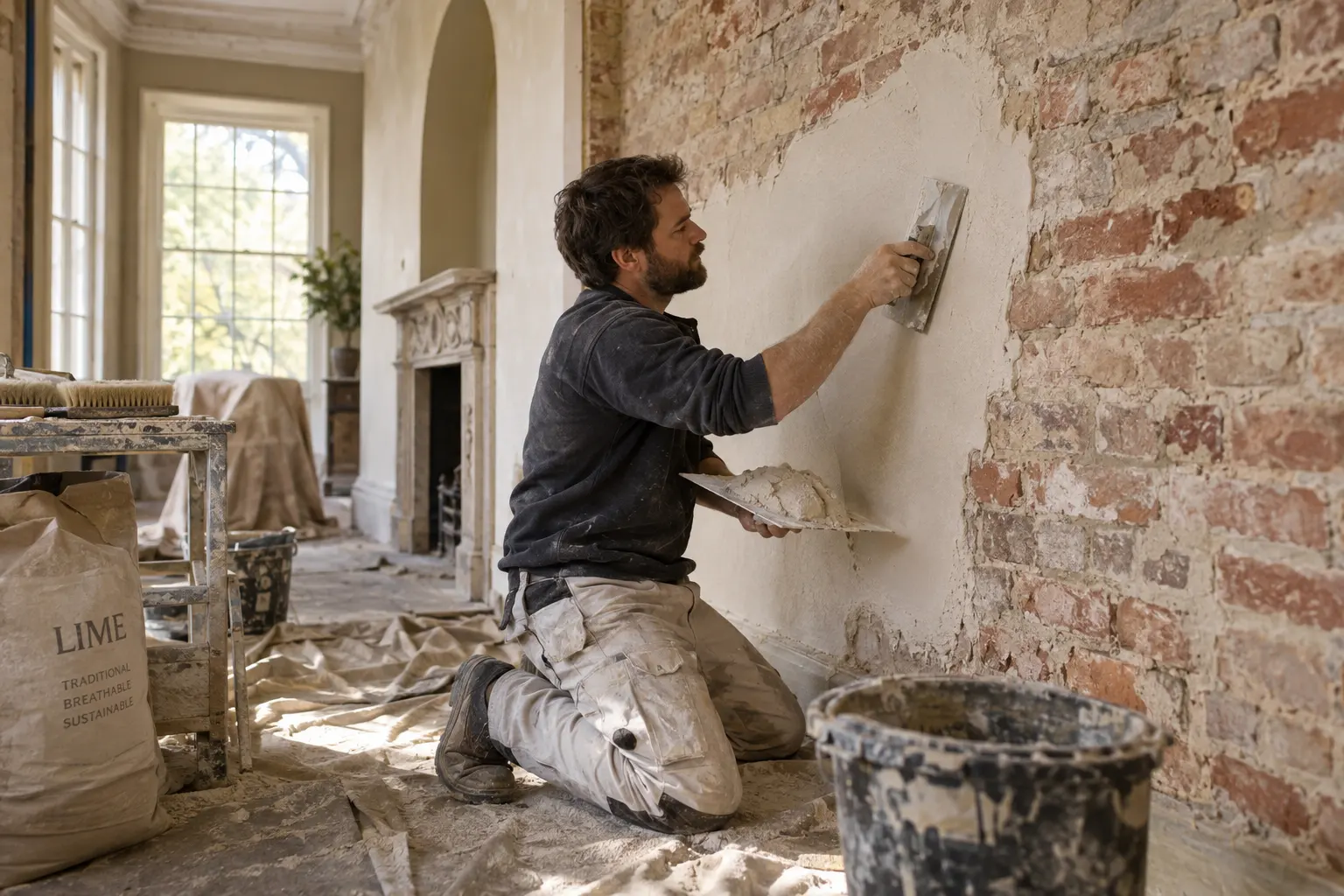
Every successful application begins with a candid assessment of the substrate. We inspect for active leaks, loose material, salts, movement cracks, and old coatings that could compromise the bond. Lime plaster is never used to conceal a wet wall; the source of moisture must be corrected first. The surface must be clean, stable, and suitably textured. On bare masonry, preparation may include raking out weak joints, repairing voids, and lightly dampening the wall before the first plaster mix is applied. On painted interior surfaces, we may remove non-breathable paint or specify an approved bonding system, depending on the existing finish.
Preparation also calls for patience. Each layer must dry gradually, without excessive heat, allowing the plaster to cure evenly and gain strength. We build compatible coats, address deeper repairs before the final finish, and can create a smooth color finish with colored lime plaster, fine marble plaster, powdered marble, earth pigments, powder pigments, or adding pigment directly to the mix. Limewash and other breathable finishes may also complement the completed surface. Where protection is needed, a compatible sealer can be considered; a film-forming sealer, however, can undermine the reason for choosing lime in the first place. Done properly, lime based plaster creates a durable, quietly refined wall that improves with age rather than simply covering what lies beneath.
Lime Plaster Preparation Checklist
Confirm lime plaster suits breathable masonry, historic interiors, sound original plaster, or traditional lath-and-plaster walls.
Find and repair active leaks before work begins; lime plaster must never be used to conceal damp conditions.
Inspect substrates for loose material, salts, movement cracks, weak joints, voids, and coatings that could prevent adhesion.
Clean and stabilize the wall, raking weak masonry joints and repairing deeper damaged areas before coating.
Remove non-breathable paint where necessary, or apply an approved bonding system suited to the existing surface.
Lightly dampen bare masonry before the first coat to control suction and support an even bond.
Apply compatible layers gradually, allowing each coat to dry naturally and cure without excessive artificial heat.
Use breathable mineral paint or compatible protection; avoid film-forming sealers that restrict vapour movement.
Lime Finishes Compared With Paint and Other Decorative Plasters
At Mrwalls Drywall & Painting, we help homeowners select wall treatments that suit the room, the existing surface, and the atmosphere they want to create, not simply what is trending. Standard paint is often the most economical option, offering even coverage, a dependable color finish, easy touch-ups, and straightforward maintenance. It is an excellent choice for a crisp, uniform finish.
Limewash creates a softer, more mottled effect. As a thinner coating, it follows the texture of the wall beneath it, revealing rather than concealing the substrate. Limewash can be beautiful on sound, carefully prepared masonry or plaster, but it will not disguise waviness, patches, or minor damage.
Lime finishes offer a distinctly different result. A colored lime plaster is hand-applied in layers, building depth, movement, and a tactile surface. Lime plaster is a lime based material typically made from natural limestone, powdered marble, and a carefully balanced plaster mix. By adding pigment, including earth pigments or powder pigments, we create nuanced color variation throughout the finish. Fine marble plaster can achieve an especially smooth surface, while other lime plasters offer a softly textured character.
The application method, pigment selection, and final sealer each shape the finished effect. As the plaster begins to dry, its character emerges naturally. Unlike flat paint, which reflects light evenly, lime plaster responds gently as daylight and interior lighting move across the wall.
Other decorative plasters, including acrylic- or resin-based products, can produce striking effects. They may provide more consistent color or added flexibility in demanding areas, though their appearance can feel more manufactured than mineral plasters. We explain the distinctions clearly before recommending a system.
The best choice is as practical as it is beautiful. Kitchens, bathrooms, high-traffic halls, and repaired walls each require the right preparation and protection. Our team can assess your substrate, complete necessary plaster repair, and create interior finishes that complement both your architecture and the way your home is lived in.
How Lime Finishes Compare With Paint and Decorative Plasters
Finish type
Visual character
Surface and preparation considerations
Practical considerations
Standard paint
Crisp, uniform color with dependable, even coverage and a wide range of sheens.
Does not add the movement, depth, or tactile quality of a plaster finish.
Usually the most economical option; offers easy touch-ups and straightforward maintenance.
Limewash
Softer, more mottled appearance.
A thin coating that follows the texture beneath it closely; suitable for sound, properly prepared masonry or plaster, but does not correct waviness, patches, or minor damage.
Requires a properly prepared surface for the intended result.
Colored lime plaster
Hand-applied layered finish with movement, depth, and tactile character; can appear softly clouded, lightly textured, or exceptionally smooth. Changes gently as light moves across the wall.
Aggregate selection, application method, and final treatment affect the result; substrate assessment and plaster repair may be needed.
Requires the appropriate protective approach for kitchens, bathrooms, high-traffic halls, and repaired walls.
Acrylic- or resin-based decorative plaster
Can create striking effects with more consistent color, though it may feel more manufactured than a mineral plaster finish.
May offer greater flexibility in demanding areas.
Suitability depends on the room, existing surface, and required protective approach.
Living With Lime Plaster: Care, Cost Factors and Selection Checklist
At Mrwalls Drywall & Painting, I recommend lime plaster for homeowners seeking depth, movement, and a more natural character than standard paint can offer. Lime plaster is durable, repairable, and especially well suited to heritage homes as well as considered modern interior spaces. From smooth lime finishes to richly textured finishes, every wall acquires its own quiet character. Options may include fine marble plaster, limewash, and other lime based plasters crafted with natural limestone and powdered marble.
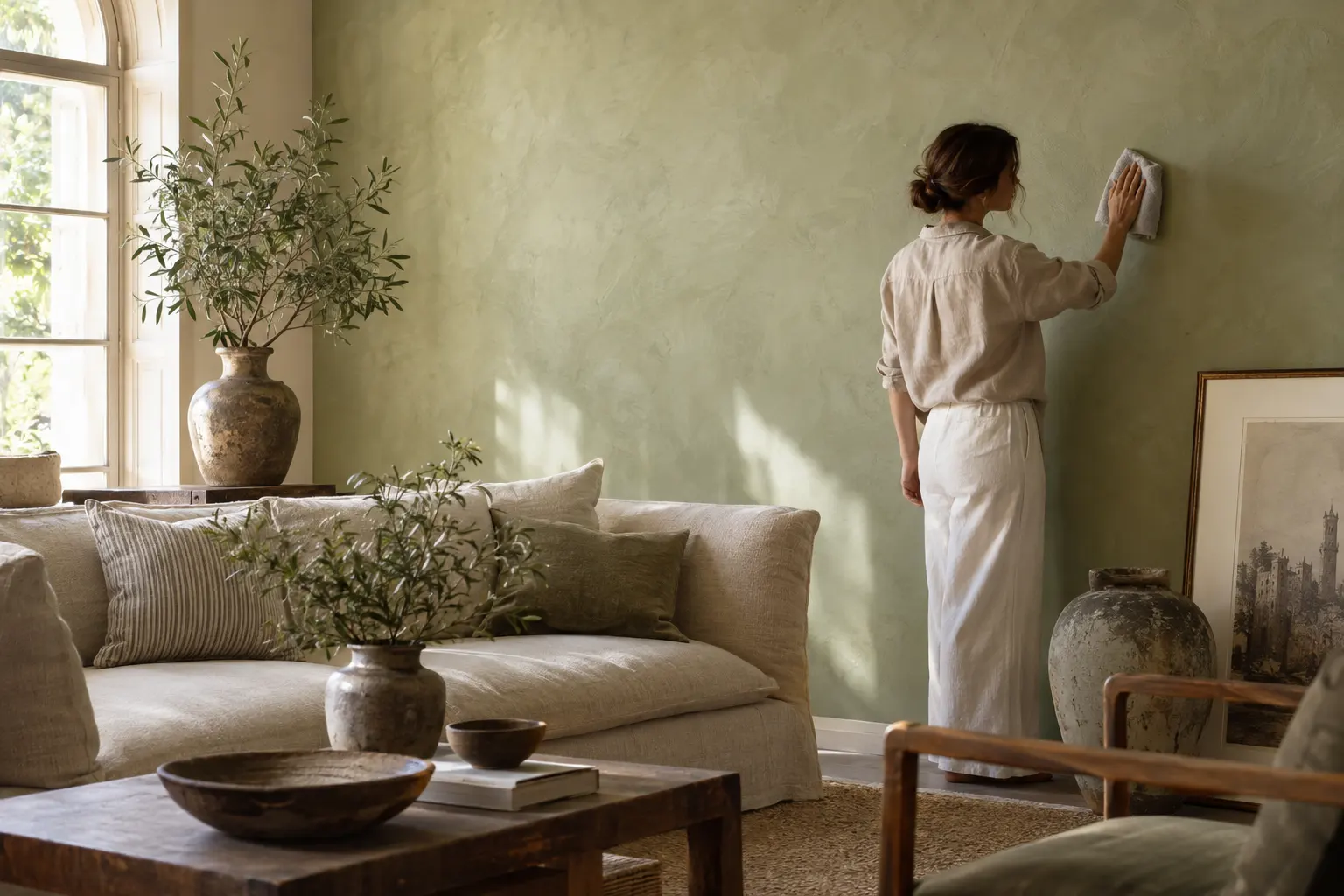
Day-to-day care is refreshingly simple. Allow each application to dry and cure according to the product requirements and site conditions before hanging art, cleaning, or placing furniture close to the wall. For routine marks, start with a soft dry cloth or a lightly damp microfiber cloth. Avoid aggressive scrubbing, which can burnish the finish or alter its texture. A sealer can be a practical choice in splash-prone areas, kitchens, mudrooms, and active family spaces. However, a sealer may subtly affect both the appearance and breathability of lime plaster. We help clients choose the right level of protection rather than sealing every surface by default.
Cost involves far more than square footage. Wall condition, cracks, uneven drywall, old coatings, moisture concerns, and plaster repair can all influence labor. The plaster mix, number of coats, access, ceiling height, and desired finish also play an important role. A custom color finish may require adding pigment, earth pigments, powder pigments, or a colored lime plaster sample process. Before selecting a surface, consider how the room will be used. Review samples in daylight and evening light, then decide whether you prefer subtle variation or a more expressive finish. Ask your contractor what preparation is included, how corners and transitions will be handled, whether the pigment can be repaired locally, and what care is recommended. Well-planned lime plasters are not intended to look factory-perfect; their restrained variation is precisely what gives the surface its lasting appeal.
Lime Plaster Selection Checklist
Confirm the room’s use, moisture exposure, traffic level, and likelihood of marks before selecting a finish or protection level.
Review large samples in daylight and evening light; pigment, texture, and natural movement can appear dramatically different throughout the day.
Ask what wall preparation is included, especially for cracks, uneven drywall, old coatings, moisture concerns, or existing plaster repairs.
Choose between subtle variation and a more expressive texture, understanding that lime plaster is intentionally not factory-perfect.
Discuss sealing for kitchens, mudrooms, and splash-prone areas; sealers add protection but may alter appearance and breathability.
Confirm how corners, transitions, ceilings, and difficult access areas will be handled, since these details can affect labor costs.
Request maintenance guidance and ask whether the selected color and finish can be repaired locally if future damage occurs.
Frequently asked questions
What is colored lime plaster?
Colored lime plaster is a mineral wall finish made from lime, fine aggregate, water, and often marble powder. Pigment is mixed through the plaster rather than painted on top, creating natural depth, subtle tonal movement, and a hand-finished appearance.
How is lime plaster different from limewash?
Limewash is a thin mineral coating that follows the texture already present on a wall. Lime plaster is applied in built-up layers, adding body and allowing greater control over smoothness, texture, clouding, and wall character.
Can lime plaster be applied over drywall or painted walls?
It can, provided the surface is stable, clean, properly prepared, and compatible with the selected system. Painted walls may require removal of non-breathable coatings or a suitable bonding coat. Cracks, loose material, and moisture issues should be repaired first.
Is lime plaster suitable for bathrooms and kitchens?
Lime plaster can work well in these rooms when the wall is properly prepared and protected for its location. Splash-prone or high-use areas may benefit from a compatible sealer, although protection can slightly affect the finish’s appearance and breathability.
Does lime plaster change color as it dries?
Yes. Pigment, the alkaline lime base, substrate color, texture, lighting, and drying conditions can all influence the finished tone. Reviewing a sample panel in the actual room is the best way to confirm color before completing the full wall.
How do you clean and maintain lime plaster walls?
Allow new plaster to cure fully, then use a soft dry cloth or lightly damp microfiber cloth for routine marks. Avoid abrasive pads, harsh cleaners, and vigorous scrubbing, which can change the texture or sheen of the surface.
What affects the cost of lime plaster?
Cost depends on wall condition, repair needs, moisture corrections, access, ceiling height, number of coats, chosen texture, custom color sampling, and the complexity of corners and transitions. Preparation and skilled hand application are major factors.