Learn what water damage may be covered, how rain-related damage can differ, and the practical steps to document a loss and plan drywall repairs.
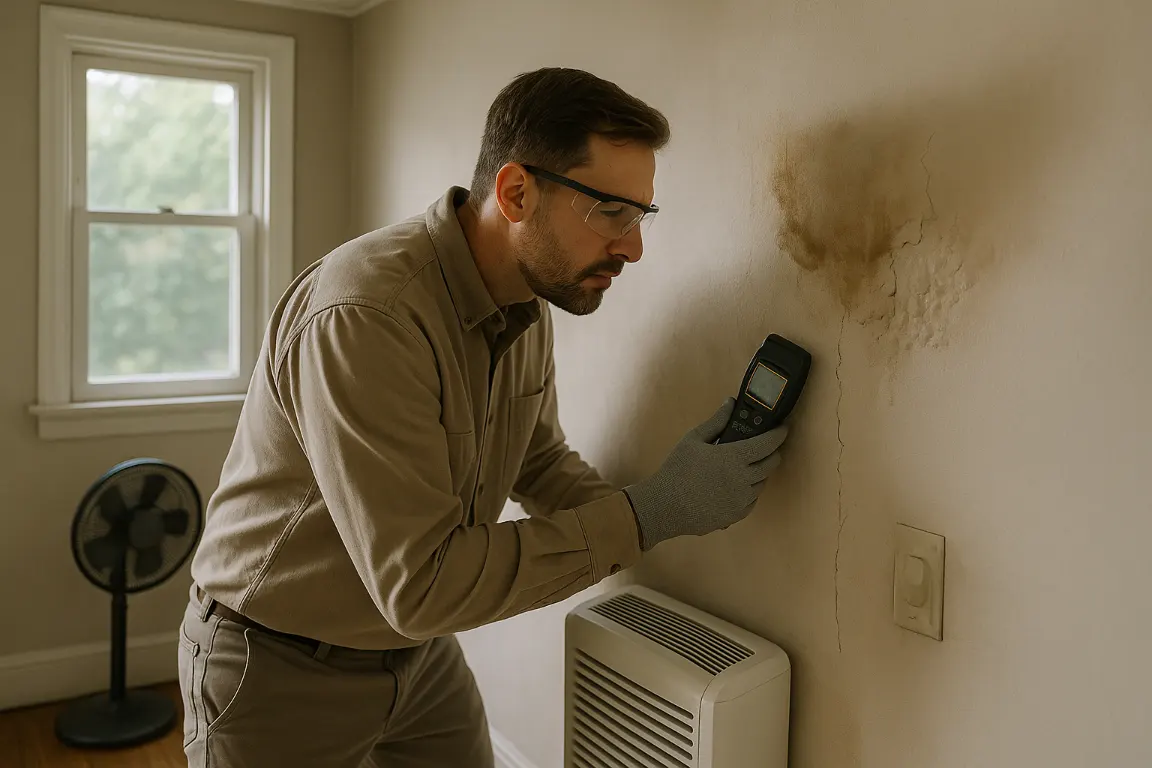
The question, does homeowners insurance cover water damage?—usually turns on the source of the water and how quickly you respond. Home insurance coverage may apply to sudden, accidental damage from a burst supply line, while flood damage, sewer backup, and slow water leaks may require separate protection. First, stop the water safely, document the damage, and review your insurance policy before arranging repairs or filing a claim.
Homeowners insurance may cover water damage from sudden, accidental events like burst pipes or appliance failures, but gradual leaks, poor maintenance, sewer backups, and flooding often require separate coverage or are excluded. Act quickly: stop the source safely, document damage, contact your insurer, and dry affected areas thoroughly. Once moisture is resolved, professional repairs can restore damaged drywall, ceilings, and finishes.
For anyone asking does homeowners insurance cover water damage, the answer is often yes, but the cause matters more than the visible damage. In many claims, homeowners insurance generally covers water damage that is sudden and accidental, such as a burst pipe, a failed water heater, or an abrupt water back-up from home water systems. Water damage is typically covered when it stems from a covered event; however, water leaks that develop over time, neglect, and mold may fall outside the policy. Flood damage is generally not covered under a standard homeowners policy. Instead, flood insurance provides separate protection for flood-related loss, including damage caused by rain and rising water. Before filing a claim, review your insurance policy, compare available coverages and coverage limits, and ask insurers how they handle similar claims. For more detail on what homeowners insurance cover, what home insurance may insurance cover, and common faqs, consult your policy documents.
A homeowners policy may cover water damage when it stems from a sudden, accidental failure within the home.
In these circumstances, homeowners insurance generally covers water damage that is sudden, helping pay for damage to drywall, ceilings, flooring, insulation, and personal belongings, subject to your deductible, coverage, and policy limits. Water damage is typically covered when the loss is abrupt and unforeseen, not the consequence of long-standing water leaks or deferred maintenance.
The distinction matters: a policy may cover the resulting damage, but not necessarily the worn-out appliance, pipe, or fixture that failed. Exact coverages vary among insurers, so review your insurance policy, including water-damage exclusions, water back-up provisions, and endorsements, before filing a claim. If you are asking, “does homeowners insurance cover water damage,” remember that home insurance and homeowners insurance cover different causes of loss in different ways. flood damage is generally not covered under a standard homeowners policy; flood insurance may provide separate protection for flood damage caused by rising water, while rain entering through a damaged roof may be handled differently. mold coverage can also be limited. Document the source, take photos before cleanup, and take reasonable steps to stop additional water from spreading. Prompt mitigation protects the home and creates a clearer record for claims, especially when drywall or ceilings require professional repair after everything has dried. For more guidance, consult your policy’s faqs or ask your insurer what your insurance cover includes for home water damage.
Water damage claims often begin with an issue that appears manageable: a slow leak beneath a sink, a failed water heater, or rain slipping through a compromised roof or window. Left unresolved, home water can migrate behind walls, beneath flooring, and into ceilings, leaving drywall soft, stained, and structurally weakened.
For many homeowners, homeowners insurance may cover sudden and accidental water leaks, including a burst supply line or appliance failure. Whether homeowners insurance cover applies depends on the source of the loss, the policy language, and how quickly the issue was discovered. Gradual deterioration, deferred maintenance, and long-term seepage are commonly handled differently than an unexpected event.
Rain damage can be equally complex. Wind-driven rain entering through storm-created roof damage may support a claim, while water entering through a pre-existing maintenance issue may not be covered. Water back-up from a sewer, drain, or sump pump often requires a separate endorsement beyond standard coverage.
Before cleanup begins, document affected rooms, visible damage, and the suspected source, then contact your insurer promptly. MrWalls Drywall & Painting can help restore damaged drywall and ceilings once the moisture source is corrected and the area is properly dried.
| Water damage scenario | What may affect coverage | What to document before cleanup |
|---|---|---|
| Sudden leak or appliance failure | Sudden and accidental events, such as a burst supply line or failed appliance, may be covered depending on the policy language, source of loss, and how quickly the issue was discovered. | Affected rooms, visible damage, and the suspected source of the leak or failure. |
| Gradual leak or deterioration | Gradual deterioration, deferred maintenance, and long-term seepage may be treated differently than an unexpected event. | Affected rooms, visible staining or softened drywall, and the suspected source of the ongoing moisture. |
| Storm-related rain entry | Wind-driven rain entering through roof damage created by a storm may support a claim, subject to policy language and the circumstances of the damage. | Affected rooms, visible roof or window damage, water staining, and the suspected point of entry. |
| Rain through an existing maintenance issue | Water entering through an existing roof, window, or other maintenance issue may not be covered. | Affected rooms, visible damage, the suspected entry point, and signs of the existing maintenance condition. |
| Sewer, drain, or sump pump back-up | Water back-up frequently requires a separate endorsement rather than standard coverage. | Affected rooms, visible damage, and whether the water appears to have backed up from a sewer, drain, or sump pump. |
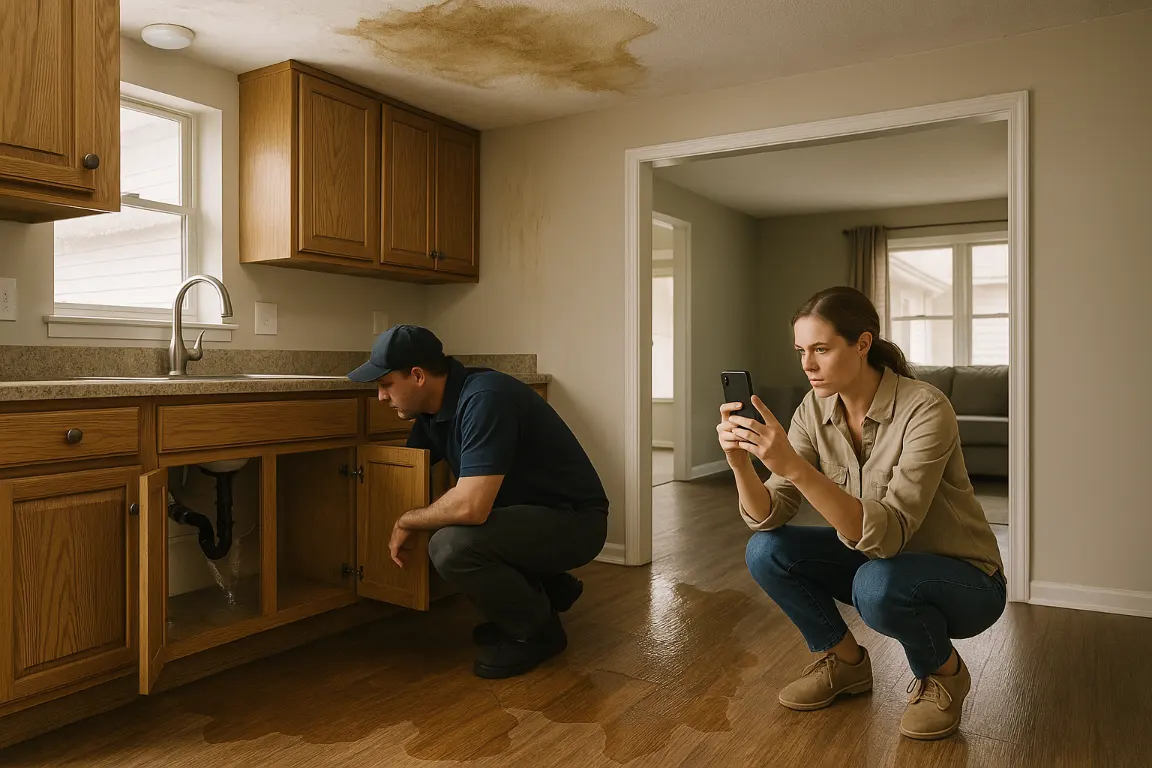
Few post-storm discoveries are more costly than learning that flood damage is generally not covered by a standard homeowners insurance policy. In insurance terms, a flood usually means water that rises or travels across normally dry land, whether from overflowing creeks, heavy rain runoff, storm surge, or water entering from outdoors at ground level. Reliable protection for this type of damage typically requires separate flood insurance through the National Flood Insurance Program or a private carrier. Review your policy limits, deductibles, and any waiting period well before severe weather reaches the forecast.
The source of the water matters every bit as much as the volume. A burst supply line or sudden appliance leak may fall under your policy’s water-damage coverage. In many situations, homeowners insurance generally covers water damage that is sudden and accidental; water damage is typically covered when it stems from a covered event. By contrast, gradual water leaks, deferred maintenance, and persistent moisture concerns may sit outside the policy. A failing water heater or another home water system can also lead to claims that depend on the cause, the available coverages, and the terms of your home insurance. Among the most common faqs: does homeowners insurance cover water damage, and what does insurance cover after a loss? The answer depends on your homeowners policy, the insurer’s terms, and whether the event was covered. Water back-up from a sewer or drain often requires a specific endorsement. Mold can present another limitation, as many insurers cap mold coverage or cover it only when it follows a covered loss addressed promptly.
When you discover water indoors, photograph the conditions, stop the source if it is safe to do so, and contact your insurer before major repairs begin. MrWalls Drywall & Painting can help restore damaged drywall and finishes once affected materials are dry and the scope of coverage for your claim is clear.
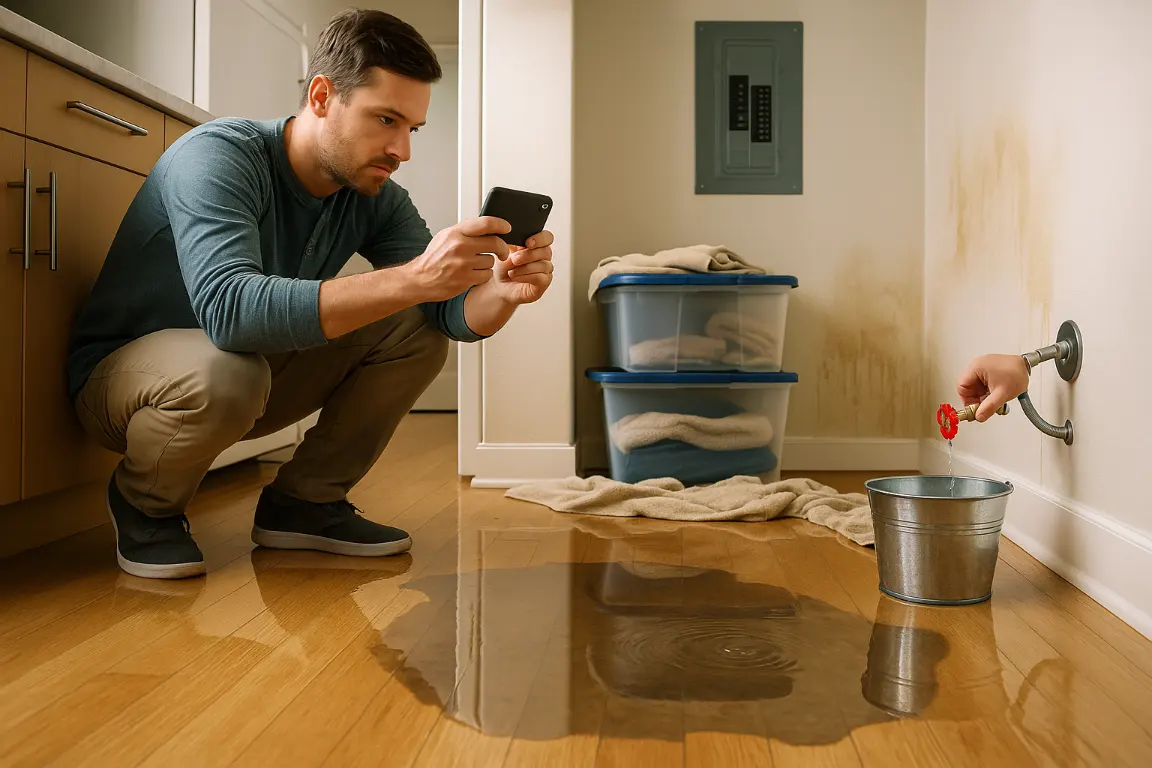
When water escapes its contained area, move quickly, but never at the expense of safety. If conditions allow, stop the source: close the nearest shutoff valve for a plumbing leak, move valuables away from the wet area, and place containers beneath an active drip. For a ceiling leak, stay clear of bulging drywall, sagging surfaces, and light fixtures. Turn off power to the affected area only if you can reach the electrical panel without crossing standing water; if there is any uncertainty, call an electrician.
Before cleanup begins, create a detailed visual record with clear photos and video. Document the source, affected rooms, damaged furnishings, and visible damage to walls, floors, and ceilings. This documentation can support a homeowners insurance claim and give a restoration professional a clearer picture of how far moisture may have traveled. Keep receipts for reasonable emergency measures, including a plumber’s visit and temporary drying equipment.
Contact your insurer promptly to confirm what your policy covered and how to open a claim. Water damage is not handled uniformly: sudden pipe failures may be treated differently than gradual leaks, sewer backups, or flood damage. Do not discard damaged materials until your insurer advises you to do so. MrWalls Drywall & Painting can assess affected drywall and ceilings once the area is safe and drying is underway, helping you plan repairs that restore the home cleanly and properly.
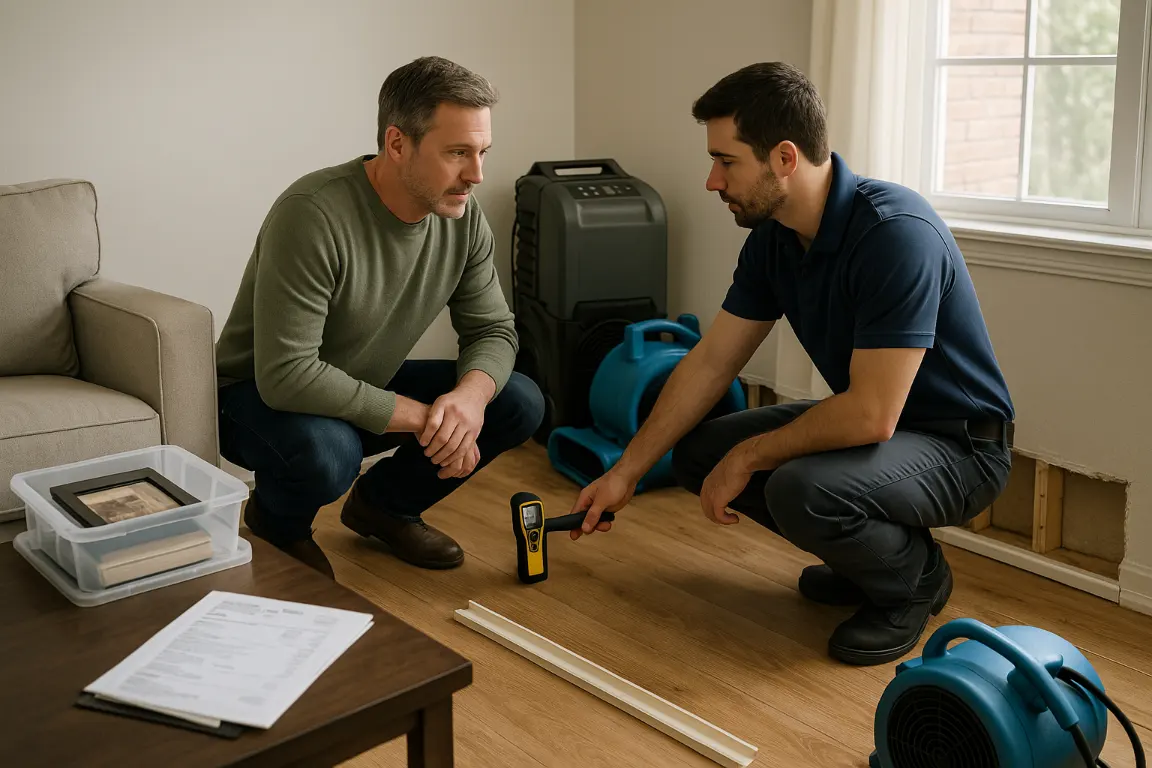
Small, contained water damage can sometimes be managed at home: stop the source, remove wet items, blot standing water, and run fans and a dehumidifier immediately. The objective is thorough drying, not merely a surface that appears dry. Drywall, baseboards, and insulation can hold moisture behind a finished wall, creating favorable conditions for mold long after the room seems restored.
Call a professional when water leaks have affected more than a limited area, soaked ceilings or flooring, involved contaminated water, or remained unnoticed for more than a day or two. A restoration team can locate hidden moisture, deploy properly sized drying equipment, and determine which materials require removal rather than cosmetic repair. This disciplined approach protects the structure and helps prevent recurring damage.
Document everything before cleanup whenever possible. Photograph the source, affected rooms, damaged belongings, and repair work, then retain invoices and correspondence. If the event may be covered, contact your homeowners policy provider promptly to clarify reporting requirements and available protection. Once the area is dry and stable, MrWalls Drywall & Painting can restore damaged drywall, match textures and finishes, and return the room to a clean, cohesive condition.
Among the most common faqs is: “does homeowners insurance cover water damage?” The answer turns on the source of the water, the terms of the homeowners policy, and how quickly the problem is addressed. In many situations, homeowners insurance generally covers water damage that is sudden and accidental, for example, from a burst pipe, failed appliance hose, or leaking water heater. When a covered event occurs, water damage is typically covered, including necessary repairs to wet drywall, ceilings, flooring, and other interior finishes. Still, what homeowners insurance cover can be more nuanced than it first appears: coverage and available coverages vary by insurance policy, deductible, exclusions, and insurers. Damage tied to ongoing water leaks, deferred maintenance, or ordinary wear may receive less protection. Rain requires the same close reading. If wind damages a roof and rain enters through that new opening, the resulting damage may be covered. By contrast, flood damage is generally not covered under standard home insurance. Rising groundwater, overflowing creeks, and related events are typically considered flood damage, making separate flood insurance an important consideration. Water back-up from a drain, sewer, or sump pump is another common exclusion, although many insurers offer insurance cover through an optional endorsement. Before filing a claim or reviewing claims guidance, check your policy declarations, mold and personal-property limits, and any applicable deductible. Document the source, photograph affected areas, and arrange prompt drying to protect home water systems from further damage. MrWalls Drywall & Painting can restore damaged walls and ceilings once the area is dry and the scope of work is clear.
Often, yes. Damage caused by a sudden and accidental burst pipe may be covered, including affected drywall, ceilings, flooring, and belongings, subject to your deductible and policy limits. The failed pipe itself may not be covered if it wore out or lacked maintenance.
Slow leaks and long-term seepage are commonly excluded because they are often considered gradual damage or maintenance issues. Report water problems quickly, document the source, and review your policy language for the specific terms that apply.
It may cover rain damage when a covered event, such as wind damage to a roof, creates a new opening that allows water inside. Rain entering through an existing worn roof, failed seal, or neglected repair is less likely to be covered.
Usually not. Water that rises or flows over normally dry land, including runoff, storm surge, or an overflowing creek, is generally classified as flood damage. Separate flood insurance is typically needed for this risk.
Standard policies frequently exclude water backup from sewers, drains, and sump pumps. Many insurers offer water-backup protection as an optional endorsement, so check your declarations page and coverage limits.
If it is safe, stop the water source, move belongings away from the area, and photograph the damage before cleanup. Avoid electrical hazards and bulging ceilings. Save receipts for emergency work, contact your insurer promptly, and begin proper drying to limit further damage.
Call a professional when water has reached ceilings, walls, insulation, or flooring; when the affected area is more than small and contained; or when the water may be contaminated. Hidden moisture can remain behind drywall after surfaces appear dry and may require professional assessment and repair.