Jason Lebeau from MrWalls Drywall & Painting
Jason has been a drywall contractor for 25 years. He is the owner of MrWalls Drywall & Painting in Chicopee Massachusetts, and still works in the field daily.
Jason has been a drywall contractor for 25 years. He is the owner of MrWalls Drywall & Painting in Chicopee Massachusetts, and still works in the field daily.
Drywall Finishing Guide Step-by-Step Guide To Drywall Finish Levels. When you are thinking about having drywall work done, or to DIY the job, here are some things to know. Why level 5, a clean jobsite, and why ceiling repair is tough.
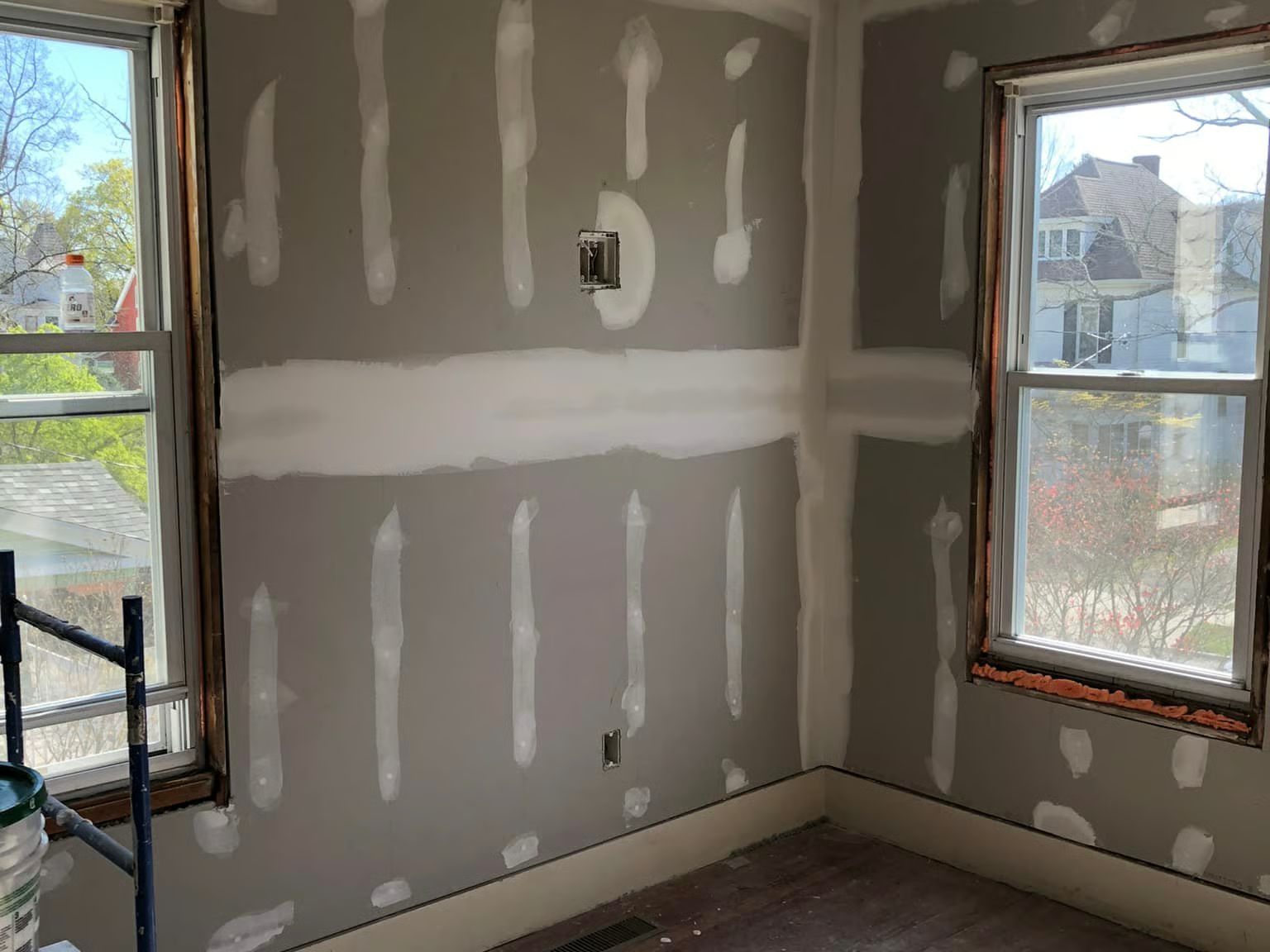
Many homeowners in Western Massachusetts get stuck during the drywall finishing phase. When you think about spreading a paste onto the drywall it seems easy so they give a try. Once they try it they realize how much harder it is to spread the mud in smooth straight lines. They end up with taping work that has many short strokes and a lot of sanding required. I still always tell people that ask to hire out the finishing work even if they hang the drywall. Anyone can hang a sheet of sheetrock with patience but finishing is a completely different animal. Sanding and getting drywall to a seamless finished wall takes a level of patience most people do not have.
In the Pioneer Valley, the homes usually have large windows and plenty of natural light. That light is your worst enemy if the drywall finisher was in a hurry. When the sun hits a wall at a sharp angle, it exposes every hump, ridge and poorly sanded joint.
If you are painting with a flat sheen paint, you might get away with a standard finishing job. If you are using anything with a sheen or a dark color, you need a level 5 finish on surfaces with a lot of sunlight. This involves applying a thin skim coat of joint compound over the entire surface to hide the difference in texture between the sheetrock paper and the smooth mud work.
We do not skip this step when the room calls for it. When we bid a job it is to a finish level that will look good for that rooms conditions. Most drywall crews just do everything to a level 4 drywall finish because skim coating it is tedious work that requires a steady hand and a lot of sanding. We do it because we know you will notice the flaws every time you turn on a lamp.
Good finishing starts before the first bucket of mud is opened. We check the framing for studs that are out of alignment. We make sure the screws are set at the right depth so they do not pop six months later.
Massachusetts has a lot of historic properties where the walls are not exactly square. We adjust our technique to compensate for those quirks so your baseboards and crown molding actually sit flush against the wall.
We know your house is not a construction zone. We use dust extraction systems and plastic barriers to keep the drywall dust out of your HVAC system and your furniture. We treat your living room with more respect than a typical job site.
If you are tired of looking at wavy walls or seams that show up when the light shines on them, give MrWalls a call. We will get your home looking the way it was meant to look.
Drywall ceiling repair can be trickier than wall repairs, mostly because of gravity and the usual causes of damage. When ceilings are damaged, it often goes beyond just the surface; it might point to water leaks, foundation settling issues, or even shoddy workmanship during the installation.
If the damage is extensive, involves water damage, sagging, or large cracks that seem related to structural movement, it's usually best to reach out to a drywall repair company. They can look at the situation and, if the problem is not structural, offer a safe and dependable solution for a permanent fix.