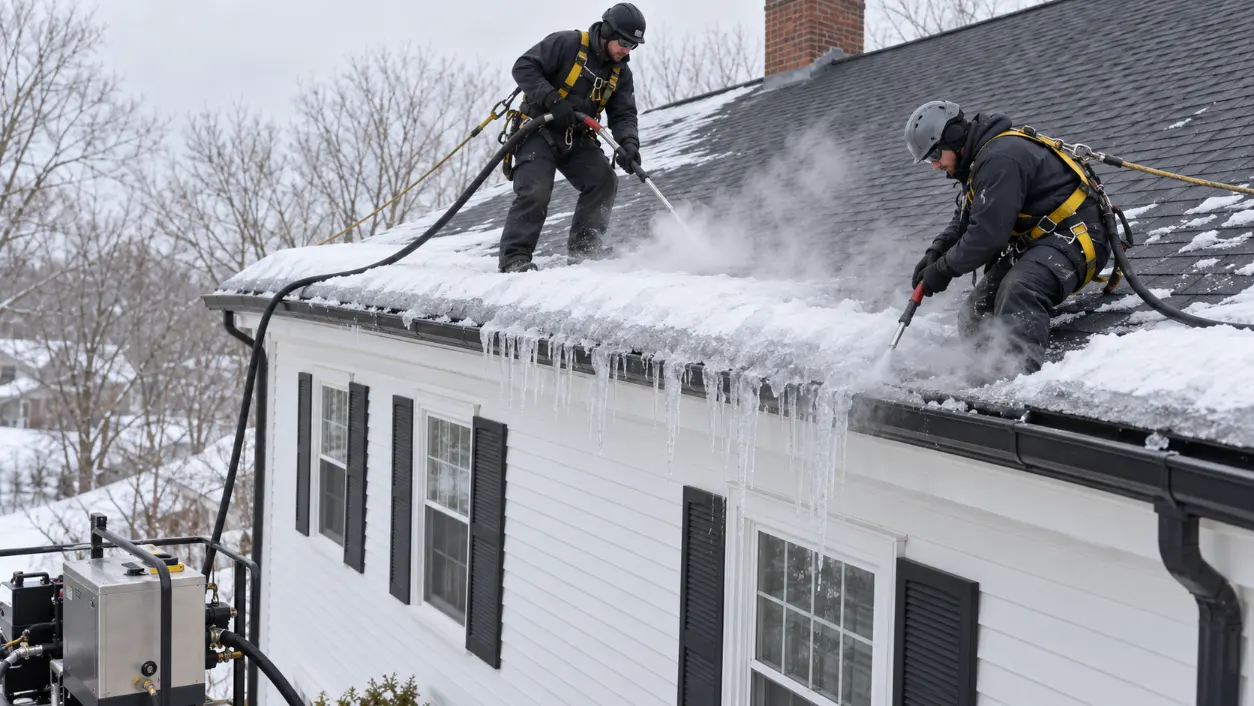
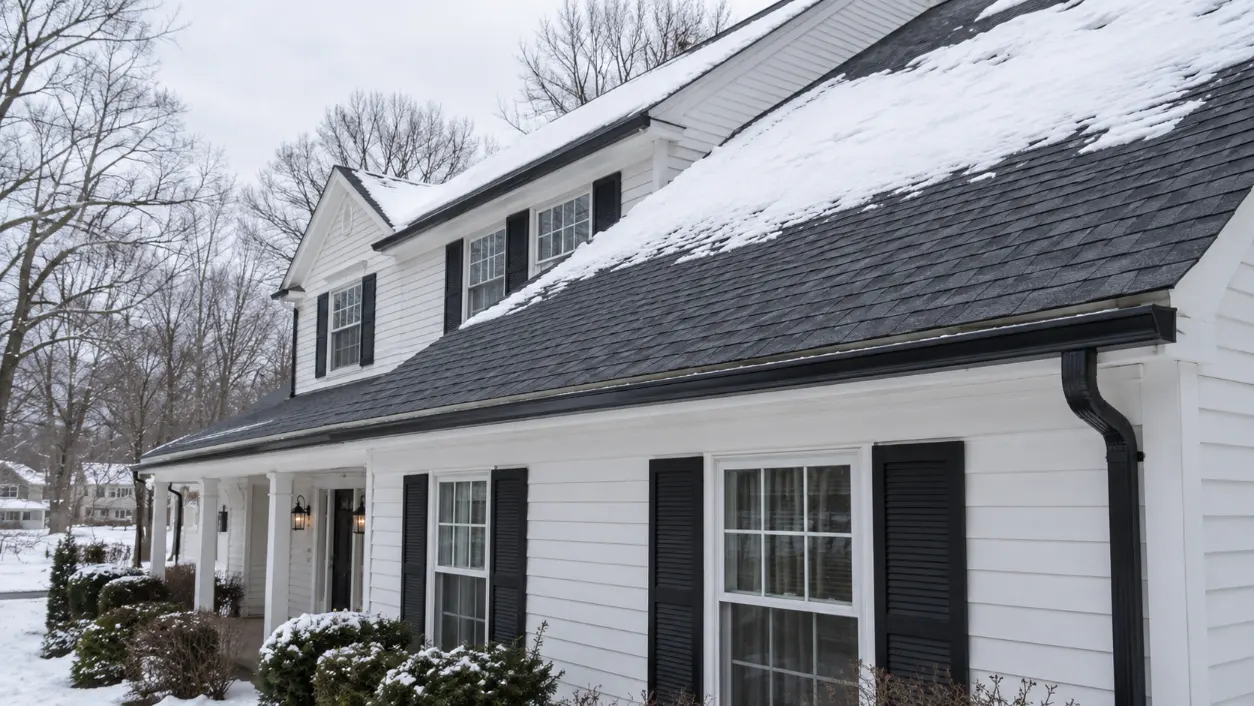
Ice Dam Water Damage In Massachusetts. Ice dams form when snow melting on the upper roof, then refreezes at the cold roof edge creating a thick ice dam.We offer complete turn key water damage restoration services for your home in Western Massachusetts.
the leak is stopped quickly, and the drywall is still solid, and moisture meter readings show that the wall
cavity is drying properly.
Removing Wet Insulation And Drying Wood Framing
The key factor in whether you can dry out wet insulation is how long it’s been wet. The longer insulation
stays wet, the greater the chance of mold growth and structural damage, making drying less effective.
For example, if insulation has been saturated for several days, mold spores may have already taken root,
and drying it alone won’t restore safety or performance.
Antimicrobial Sealer Is Applied To Seal The Wood Framing
We apply a Mold sealant which is a paint-like substance designed to seal a surface that may have had mold starting to grow.
The sealer is used where the material is hard to remove and which the mold cannot be fully
removed, like wood. Encapsulating mold in this way is generally only done when the moldy material cannot be
removed and replaced. Most of the time, it’s better to remove the moldy material if it cannot be adequately cleaned.
Installing New Insulation And Replacing Removed Drywall
New insulation and vapor barrier are installed in the wall stud bays and any opened ceiling bays.
We install the same r value that was removed or the value that the current code requires.
Taping The Drywall Coating and Blending In The Repairs
Drywall that was replaced is taped, coated and blended smooth and flat. Walls that have
a texture difference are skim coated smooth.
Priming and Re-Painting Walls and Ceilings
Drywall repairs are primed and any wall or ceiling that had damage on it is repainted.
Replacing Removed Trim and Trim Painting
If any trim was removed or damaged, it is replaced with new trim. Nail holes are puttied and the trim is painted.
Cleanup and Final Punch List Items
We clean up our tools and equipment and return extra materials. Once everything is out of the work area,
we do a final cleaning wiping down surfaces with microfiber towels and use cleaning products.
Ice Dam FAQ
Q1: Do you fix the roof leak too?
We handle interior drywall, plaster, and paint repair. A roofer handles shingles, flashing, valleys, and roof edge details.
We coordinate timing so interior repair starts after roof work.
Q2: Do you need to open the ceiling?
yes to replace the insulation. Insulation holds water like a sponge. We open wet cavities when drying needs airflow or when insulation is wet.
Small stains with no softness sometimes dry without removal. We confirm with a moisture meter and a tap test.
Q3: Will the stain come back after paint?
Stains return when water remains in the cavity or when a primer fails to block the wood tannins.
We dry the area, then use an oil based stain blocking primer where needed.
Q4: Do you work with insurance?
We provide photos, scope notes, and measurements for your claim file. You work with your adjuster.
We keep the repair plan clear so paperwork stays simple.
Q5: How fast should I call?
Call as soon as you see a drip or a new stain. Each warm day adds melt water. Early action reduces removal and lowers the risk of odor and mold.
Schedule an ice dam roof leak repair visit
Q6: Does homeowners insurance cover water damage from ice dams?
Usually they cover the water damage repairs. Insurance covers water leak damage that is sudden and not expected.
If your roof is past its lifespan and it keeps leaking they won't cover that. The leak must have just happened for the first time not a slow leak that is getting worse.
Q7: Are roofers responsible for ice damming?
No the code is to put ice and water barrier for the first 4 feet from the gutters. ice dam leaks happen when the water gets above that 4 foot level.
Many roofers offer roof edge clean off services in the winter to keep busy. Heat tape is also a good choice to prevent ice dams from forming.
Q8: How do roofers get rid of ice dams?
They use a roof rake and clear the snow off the edge of your roof. Keeping the edge of the roof snow free prevents ice dams.
Q9: Are ice dams bad for your roof?
I don't think ice dams affect the life span of the shingles but they are bad for everything inside your home. Water destroys all building materials and can cause mold. MrWalls Drywall & Painting Offers Water Damage Restoration