Renters Insurance Water Damage: What to Do After a Leak
Learn when renters insurance may cover water damage, what a landlord may handle, and how to respond to a flooded apartment or wet drywall.
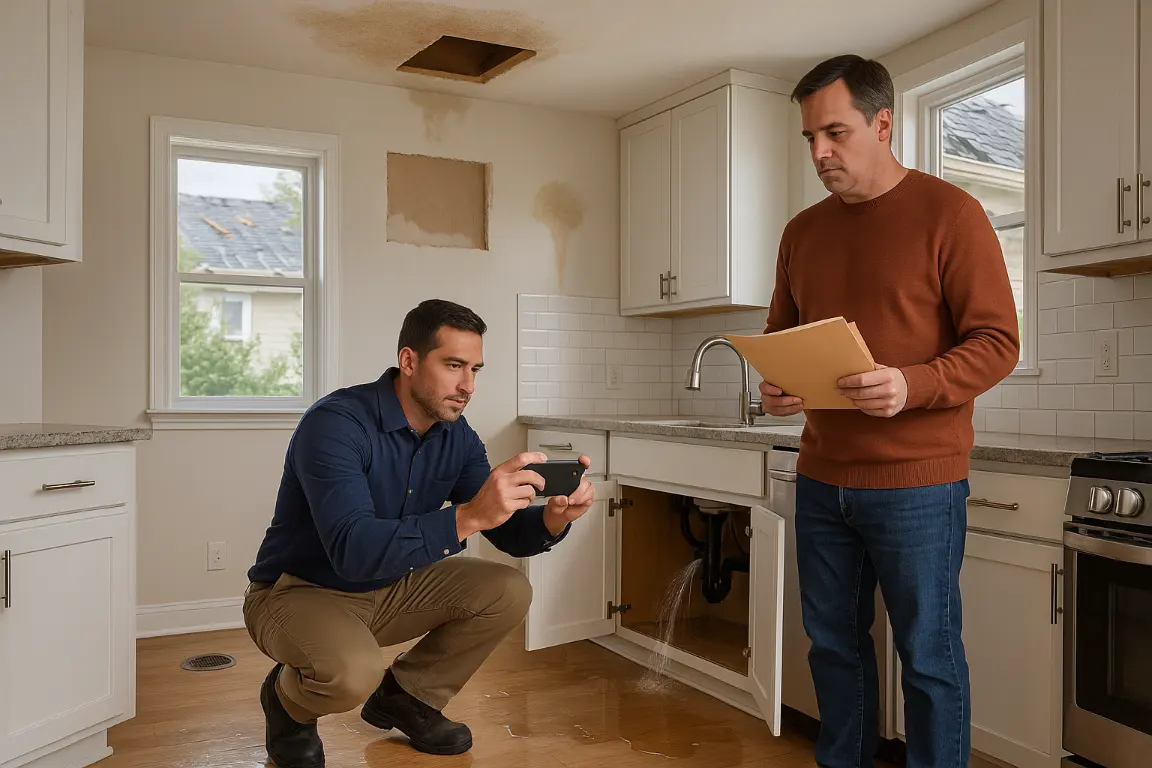
Renters insurance water damage coverage can help replace your belongings after a sudden leak, burst pipe, or overflowing appliance, but it usually does not pay to repair the building itself. The first hour matters: stop the water if it is safe, notify your landlord, document the damage, and protect your possessions from further loss. Here’s how coverage and responsibility typically work in a rental.
⚡ Key takeaways
- Renters insurance generally covers belongings and liability, not the building, walls, or installed fixtures.
- Sudden accidental leaks may be covered; gradual leaks, poor maintenance, and seepage are usually excluded.
- Water, sewer, and sump-pump backup often require separate coverage; standard policies typically exclude floods.
- Immediately notify your landlord, document damage, save receipts, and mitigate further loss safely.
- Never enter standing water near electrical equipment; call emergency maintenance for major leaks or sewage.
- Soft drywall, sagging ceilings, warped floors, or musty odors need professional moisture assessment and repair.
After an apartment leak, prioritize safety, notify your landlord, document damage, and take reasonable steps to prevent it from worsening. Renters insurance may cover personal belongings, liability, and temporary housing after certain sudden water events, but typically excludes floods, gradual leaks, and sewer or drain backups without added coverage. Address the moisture source first, then seek professional help for wet drywall, ceilings, or floors.
Renters Insurance Water Damage: What May Be Covered
Renters insurance water damage protection can help after a sudden, covered loss, but the details matter. A renter’s insurance policy protects your belongings and liability, not the building itself. Most renters insurance packages cover water damage from certain accidental events, subject to limits, exclusions, and deductibles.
Personal Property, Liability and Temporary Living Costs
When a covered water event damages your belongings, renter insurance may help replace or repair items such as furniture, clothing, electronics, rugs, and kitchenware. For example, a burst supply line, an overflowing appliance, or water released by a neighboring unit may support a claim when the loss was sudden and accidental. Photograph affected items, save receipts where possible, and report the damage promptly.
Your landlord’s policy generally covers the structure, walls, ceilings, flooring, and installed fixtures, while your policy addresses your personal property. If your negligence causes water damage in another apartment, personal liability coverage may also help with eligible claims. And if a covered loss makes your home temporarily unlivable, additional living expense coverage can contribute to reasonable hotel, meal, or relocation costs. The insurance company will review the cause, documentation, deductible, and policy limits before approving payment.

Water Backup, Sewer Backup and Flood Damage Are Treated Differently
Not all water damage is treated alike. Water backup from a drain, sump pump, or municipal line is commonly excluded unless you add backup coverage. Sewer backup or a sewer overflow can be especially destructive, affecting flooring, drywall, and personal belongings, so review the endorsement amount rather than assuming it is included.
Flood damage has a separate definition: water that rises or flows over normally dry land, often after heavy rain, overflowing waterways, or storm surge. Standard renters insurance does not cover floods, even when the water enters through a door, foundation, or low window. Flood insurance may be available through the National Flood Insurance Program or a private insurer.
There are a few instances where the source can be less obvious. Water entering through a roof after sudden wind damage may be covered, while long-term roof leaks, poor maintenance, and gradual seepage usually are not. Confirm whether your loss is water damage under your policy before starting repairs, and document conditions immediately.
How Common Water-Related Losses Are Typically Treated
| Water-related situation | How it is typically treated | What to review or confirm |
|---|---|---|
| Water backup from a drain, sump pump, or municipal line | Commonly excluded unless backup coverage is added. | Whether the policy includes a water backup endorsement and its coverage amount. |
| Sewer backup or sewer overflow | May cause extensive damage and should not be assumed to be included without applicable backup coverage. | The sewer or water backup endorsement, including the limit for flooring, drywall, and personal belongings. |
| Flood damage | Standard renters insurance does not cover flood damage, including water entering through a door, foundation, or low window. | Whether flood insurance is needed through the National Flood Insurance Program or a private insurer. |
| Water entering through a roof after sudden wind damage | May be covered when the roof damage results from sudden wind. | Whether the policy treats the event as covered water damage and whether the roof damage was sudden. |
| Long-term roof leaks, poor maintenance, or gradual seepage | Usually not covered. | Policy exclusions related to maintenance issues, long-term leaks, and gradual damage. |
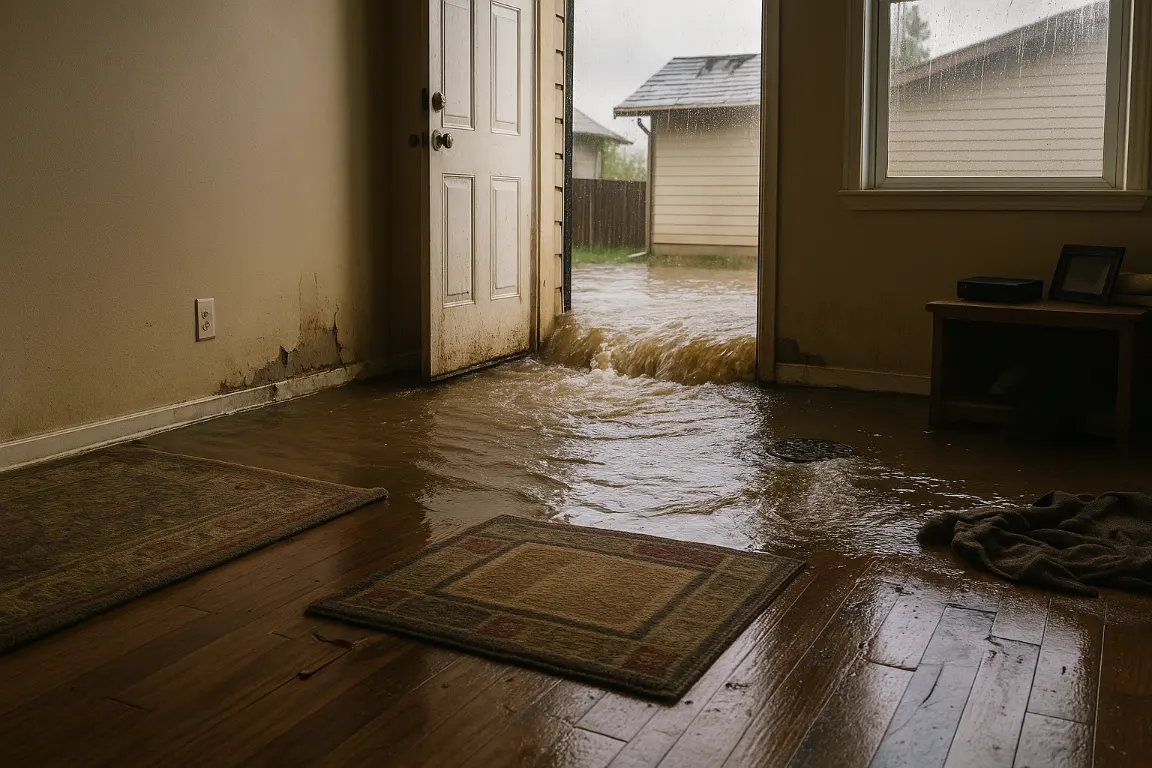
Who Is Responsible for Water Damage in a Rental?
Responsibility for water damage in a rental depends on where the water came from, who had control over the problem, and what the lease says. In many cases, the landlord is responsible for maintaining the property’s plumbing, roof, appliances supplied with the unit, and structural components. A burst pipe behind a wall, a leaking roof, or a failed water heater is usually a landlord maintenance issue, provided the tenant reports it promptly.
Tenants may be responsible when damage results from their actions or neglect, such as an overflowing bathtub, an unattended sink, a damaged appliance they own, or failure to notify the landlord about an active leak. Even when the landlord pays for repairs to the building, that does not automatically cover a renter’s furniture, clothing, electronics, or other personal belongings.
That is where renter’s insurance matters. Renters insurance water damage coverage can help replace damaged possessions and may cover temporary living expenses after a covered loss, subject to the policy’s limits and exclusions. The tenant should document the damage with photos, contact the landlord or property manager immediately, and open an insurance claim with their insurance company when personal property is affected. Fast reporting helps limit moisture damage and creates a clear record of what happened.
A Flooded Apartment: What to Do in the First Hour
When water got into your apartment, the first hour sets the tone for the entire recovery. Stay calm, move deliberately, and put safety ahead of saving belongings. If water is actively entering from a plumbing issue, locate the nearest water shut-off only if it is safe to reach; otherwise, call building management or emergency maintenance immediately. Never step into standing water near outlets, power cords, appliances, or a damaged ceiling.
Next, protect what you can. Move rugs, furniture, electronics, and personal items away from the wet area, starting with valuables and anything that can stain or trap moisture against walls. Take clear photos and short videos before cleaning up for your landlord, insurer, and restoration professional. Blot small, clean-water spills with towels, but do not try to handle a major leak, sewage backup, or water coming through a ceiling on your own.
Fast drying matters because water damage can travel behind baseboards, under flooring, and into drywall long before it is visible. Open interior doors, increase airflow when conditions allow, and arrange a professional assessment as soon as possible. Prompt extraction and drying help protect the apartment’s structure, limit further damage, and reduce the chance of mold taking hold. MrWalls Drywall & Painting can help identify compromised drywall and plan clean, lasting repairs once the area is dry.
First-hour flood response
- Stay calm and avoid standing water near outlets, cords, appliances, or damaged ceilings.
- Shut off the water source only if it is safe; otherwise contact building management or emergency maintenance.
- Move valuables, electronics, rugs, and furniture away from wet areas to limit further damage.
- Photograph and video all affected areas before cleanup for your landlord, insurer, and restoration records.
- Blot small clean-water spills with towels, but leave major leaks, ceiling water, and sewage backups to professionals.
- Open interior doors and improve airflow when safe to help moisture escape.
- Arrange a prompt professional assessment for hidden moisture behind walls, flooring, baseboards, and drywall.
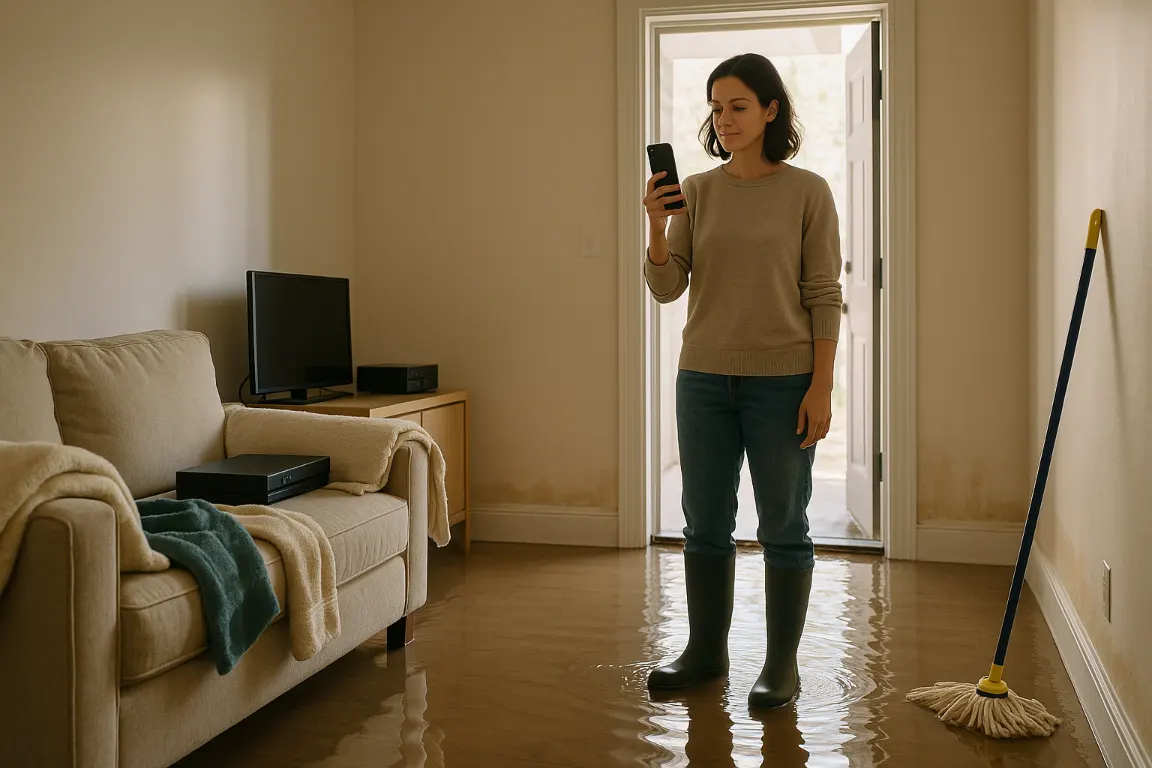
Document Damage and Decide Whether to File an Insurance Claim
Before cleanup begins, create a clear record of the water damage. Take wide photos of each affected room, then close-ups of stained drywall, warped flooring, damaged belongings, and the apparent source of the leak. A short video can help show the extent of the issue, especially where water has traveled beyond the original area. Note the date, time, weather conditions if relevant, and any steps you took to stop further damage.
Keep receipts for emergency plumbing, water extraction, dehumidifiers, temporary lodging, and other reasonable protective measures. Your insurance policy generally requires you to prevent additional damage where it is safe to do so; prompt mitigation can also make later repairs more straightforward.
Whether to file an insurance claim depends on the cause, the likely repair cost, and your deductible. Sudden, accidental events, such as a burst supply line, may be covered, while long-term leaks, deferred maintenance, or groundwater intrusion may be excluded. Review your policy or speak with your insurer before authorizing major work if coverage is uncertain. For smaller repairs that fall close to your deductible, paying directly may be the more practical choice. For extensive damage to drywall, ceilings, insulation, or other property, thorough documentation gives you a stronger starting point for claims and helps restoration professionals prepare an accurate scope of work.
Damage documentation checklist
- Photograph every affected room before cleanup, including wide shots and close-ups of damaged materials and belongings.
- Record a short video showing water spread, visible staining, warped surfaces, and the apparent leak source.
- Write down the date, time, weather conditions, suspected cause, and actions taken to stop further damage.
- Save receipts for emergency plumbing, extraction, dehumidifiers, temporary lodging, and other protective measures.
- Review your policy for coverage limits, exclusions, deductibles, and requirements for prompt damage mitigation.
- Contact your insurer before approving major restoration work when coverage or the cause of damage is uncertain.
- Compare estimated repair costs with your deductible; direct payment may make sense for minor damage.
When Wet Drywall, Ceilings and Floors Need Professional Attention
Not every spill calls for a full restoration, but water damage behind a wall, above a ceiling, or beneath finished flooring should never be treated as a cosmetic issue. Drywall can absorb moisture quickly, losing its strength and creating concealed conditions where mold may develop. A stained ceiling may point to a roof leak, plumbing failure, or condensation problem that continues long after the surface appears dry.
Professional attention is especially important when drywall feels soft, bubbles, or sags; when paint peels; when floors cup, lift, or remain damp; or when there is a musty odor. These signs can indicate moisture trapped in cavities, insulation, subfloors, or framing. Simply patching visible damage without finding and correcting the source risks a repeat problem, and a larger repair later.
MrWalls Drywall & Painting assesses the affected materials, identifies what can be saved, and removes compromised drywall or ceiling sections when needed. Proper drying, targeted repairs, and careful surface preparation restore a clean, stable finish while helping protect the rest of your home. If the issue began with a roof leak or active plumbing concern, address that source first; then the interior can be repaired with confidence.
Prevent the Next Leak and Review Your Coverage
Once the affected area is dry and repairs are underway, take a few practical steps to reduce the chance of another unexpected leak. Check under sinks, behind toilets, around appliances, and along exterior walls for slow drips, staining, loose caulk, or musty odors. Replace worn supply lines, ensure gutters and downspouts direct water away from the building, and report maintenance concerns to your landlord promptly. In apartments and condos, ask where shutoff valves are located before an emergency happens.
This is also a good time to read your policy rather than assuming every water event receives the same insurance cover. Renter insurance often helps with damaged personal belongings after certain sudden plumbing leaks, but it typically does not pay to repair the building itself. Water backup from a drain, sewer, or sump system may require separate backup coverage. Flood damage caused by rising groundwater or overflowing waterways is generally excluded from standard renter’s insurance and may call for a dedicated flood policy.
Document valuable belongings with photos, receipts, and a simple room-by-room inventory. Keep your insurer’s claim number and your landlord’s emergency contact accessible. These small preparations protect your household, clarify responsibilities, and make the next response far less stressful. MrWalls Drywall & Painting can restore damaged drywall and ceilings once the source of moisture has been addressed.
Frequently asked questions
Does renters insurance cover water damage?
Renters insurance may cover damage to your personal belongings when water damage comes from a sudden, accidental event, such as a burst pipe, failed supply line, or overflowing appliance. Coverage depends on the cause of the loss, your deductible, policy limits, and exclusions. It does not usually cover repairs to the building itself.
Does renters insurance cover water damage from a neighbor’s apartment?
It may. If water from an upstairs or neighboring unit suddenly damages your furniture, electronics, clothing, or other belongings, your renters policy may help with a covered claim. Document the damage, notify building management, and contact your insurer promptly.
Is water backup or sewer backup covered by renters insurance?
Standard renters policies often exclude water or sewage that backs up through drains, sewers, sump pumps, or municipal lines. You may need a separate water backup endorsement for this risk. Review the endorsement limit carefully, especially if you have valuable belongings stored near the floor.
Does renters insurance cover flood damage?
Standard renters insurance generally does not cover flooding caused by water rising over normally dry land, heavy rain runoff, storm surge, or overflowing waterways. Renters can explore flood insurance through the National Flood Insurance Program or a private flood insurer.
Who pays for water damage in a rental apartment?
The landlord is commonly responsible for the building, plumbing, roof, supplied appliances, and structural repairs. A tenant may be responsible for damage caused by their actions or neglect. Regardless of who repairs the apartment, renters insurance can help protect the tenant’s personal property after a covered loss.
What should I do immediately after my apartment floods?
Prioritize safety, avoid standing water near electricity, and call emergency maintenance or your landlord. Move belongings away from water if it is safe, photograph and video the affected areas, and save receipts for emergency expenses. Do not handle sewage, major leaks, or a sagging wet ceiling without professional help.
When should wet drywall or a stained ceiling be repaired?
Seek professional assessment when drywall feels soft, bubbles, sags, or develops stains, peeling paint, or musty odors. Moisture can remain behind walls, above ceilings, and under flooring even after surfaces look dry. The leak source should be corrected before drywall or ceiling repairs begin.