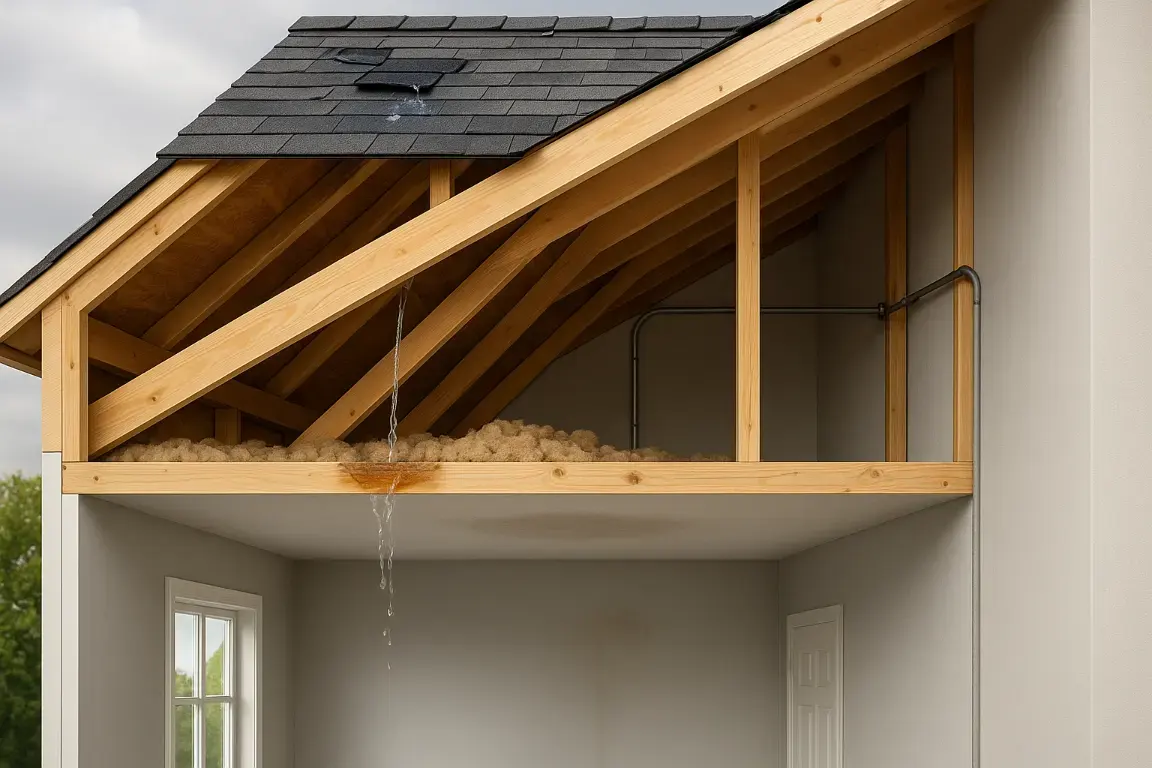
 When rain or a storm causes leaking water indoors, act quickly: cover important items, contain the leak, and limit water damage before repair work begins.
Learn what to do after water damage from a roof leak, when DIY is appropriate, and when to call a roofer or interior repair professional.
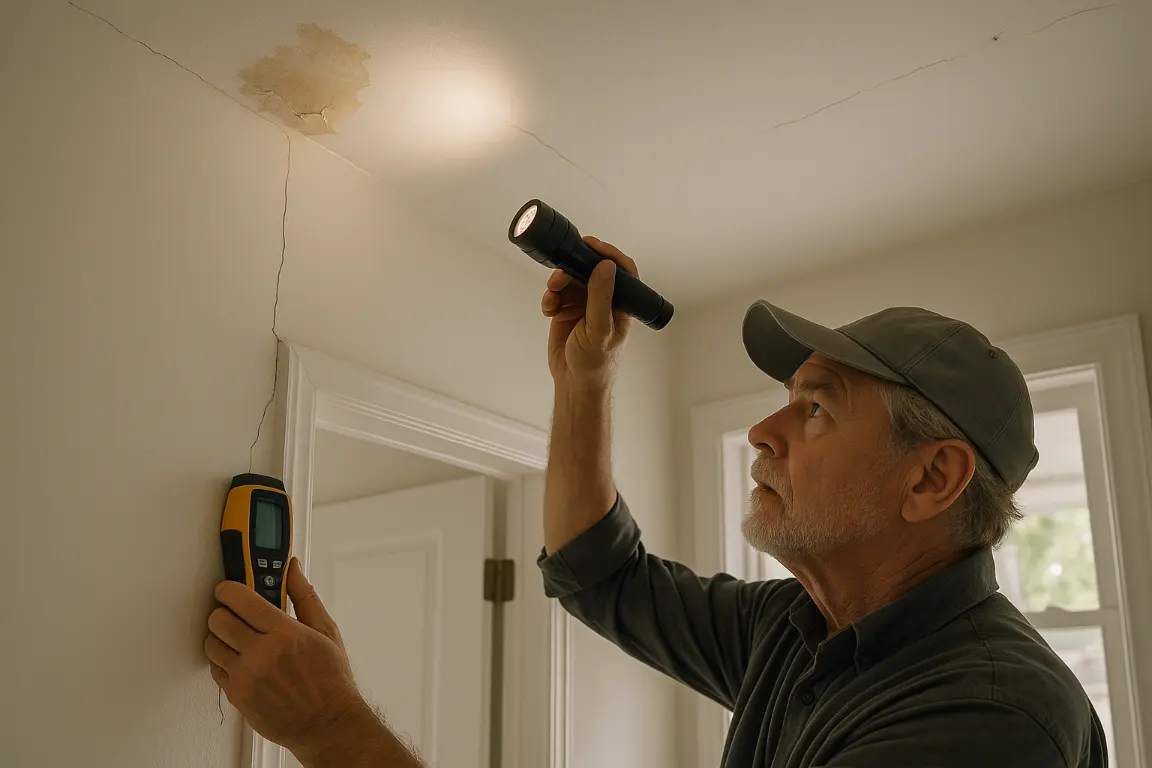
Water damage from a roof leak can spread quickly, affecting ceilings, insulation, walls, and belongings long after the rain stops. Learn how to spot the warning signs, protect your home right away, and decide when a qualified roofing contractor is needed.
Roof leaks can send water far beyond the entry point, damaging ceilings, drywall, insulation, and finishes while increasing mold risk. Protect people and belongings, contain the water, and avoid unsafe electrical or sagging-ceiling areas. Identify the source safely from indoors or the ground, then arrange professional roof repair. Once the leak is stopped, promptly dry, assess, repair, or replace affected materials.
Water damage from a roof leak rarely stays confined to the spot where water enters. It can travel along framing, soak attic insulation, stain ceilings, soften drywall, and create conditions that invite mold growth. In your home, the visible damage may be a brown ceiling ring, peeling paint, or a sagging wall, but the source can be several feet away on the roof. Acting quickly protects more than appearance: it helps preserve structural materials and limit the scope of restoration. MrWalls Drywall & Painting assesses the affected surfaces after the leak is addressed, then repairs damaged drywall, ceilings, and finishes with attention to a seamless result. The goal is a home that feels dry, sound, and properly cared for again.
A leaky roof can cause subtle interior damage before it becomes obvious. Homeowners should watch for water stains that expand, new water spots, damp interior water marks, and other signs of roof damage.
Roof leaks rarely follow a straight path. Once water enters through damaged shingles, flashing, vents, or a small opening near the roofline, it can travel along rafters, decking, insulation, electrical wiring, or drywall framing before it becomes visible. That is why a ceiling stain may form several feet from the actual leak, or even appear on a wall below it.
Water can also pool above a ceiling until the material becomes saturated, making the leaking area seem larger than it is. Prompt inspection helps identify the source and limits repairs to affected drywall and finishes.
When rain or a storm causes leaking water indoors, act quickly: cover important items, contain the leak, and limit water damage before repair work begins.
Move people, pets, electronics, artwork, and soft furnishings away from the affected area so they don't get wet. Place buckets or sturdy containers beneath the leak, then use towels to catch splashes and protect nearby flooring. If water is close to outlets, light fixtures, or a ceiling that is sagging, avoid the area and turn off power only if you can do so safely. Do not climb onto wet surfaces or puncture compromised drywall. Quick containment can reduce damage while a qualified restoration team assesses the source of the water.
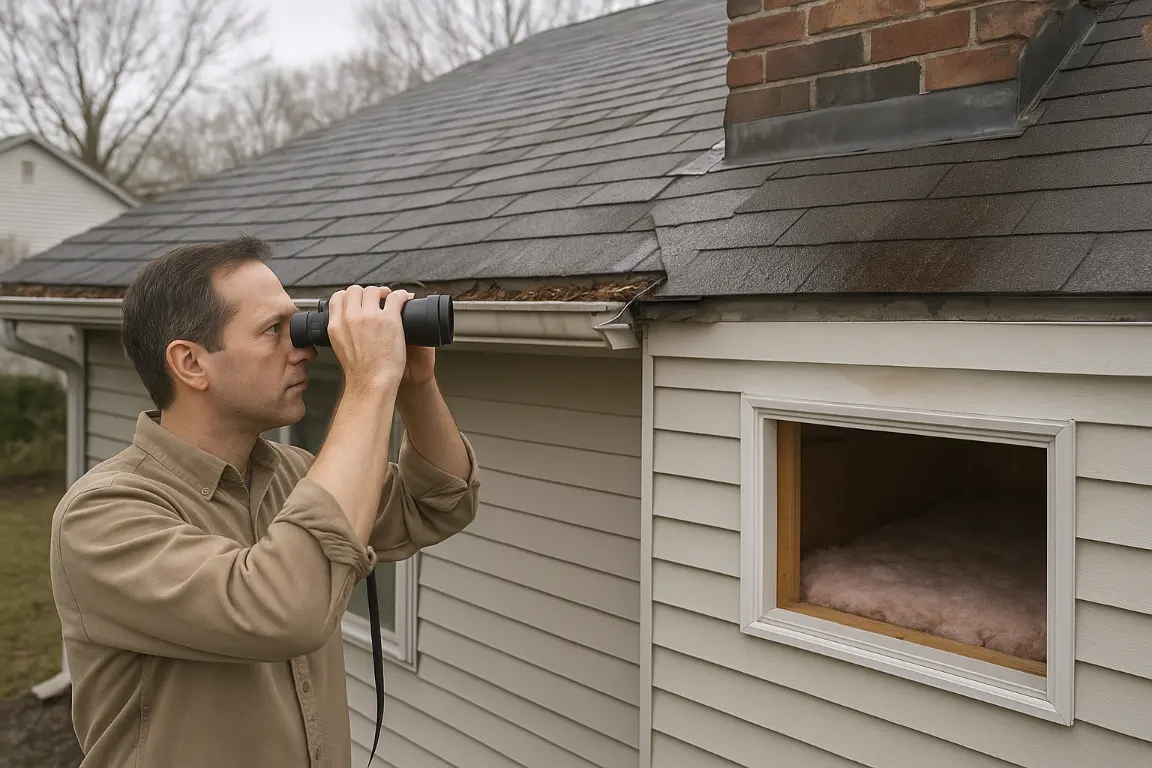
A leaking roof rarely announces itself directly above the ceiling stain. Water can travel along rafters, roofing underlayment, or framing before it reaches drywall, so begin indoors and from the ground. During or just after rain, note the stain’s location, whether it worsens around vents or chimneys, and any damp insulation visible from a safe attic access point. From outside, use binoculars to look for displaced shingles, damaged roof flashing, sagging gutters, or debris collecting in valleys, common places where leaks roof systems develop. Do not walk on wet or aging roofing. A professional roof inspection can identify the actual entry point and distinguish a roof repair from moisture caused by plumbing, condensation, or a construction detail. MrWalls Drywall & Painting can then address the resulting wall or ceiling damage once the source is corrected.
Prompt drying limits water damage from spreading through ceilings and walls. Address interior water quickly, then assess what can be safely dried, cleaned and repaired, and what requires removal.
Minor interior damage can often be repaired when the source is stopped quickly and drywall remains firm, flat and free of staining or odor after drying. A small leak from a leaky roof may affect only a contained ceiling area. In those cases, MrWalls Drywall & Painting can remove compromised finishes, dry the cavity and restore the surface cleanly. Replacement is the safer choice when drywall has softened, insulation is saturated, seams have swollen, or mold is suspected. Leaving damaged material in place can conceal ongoing moisture and turn a manageable repair into a larger restoration project.
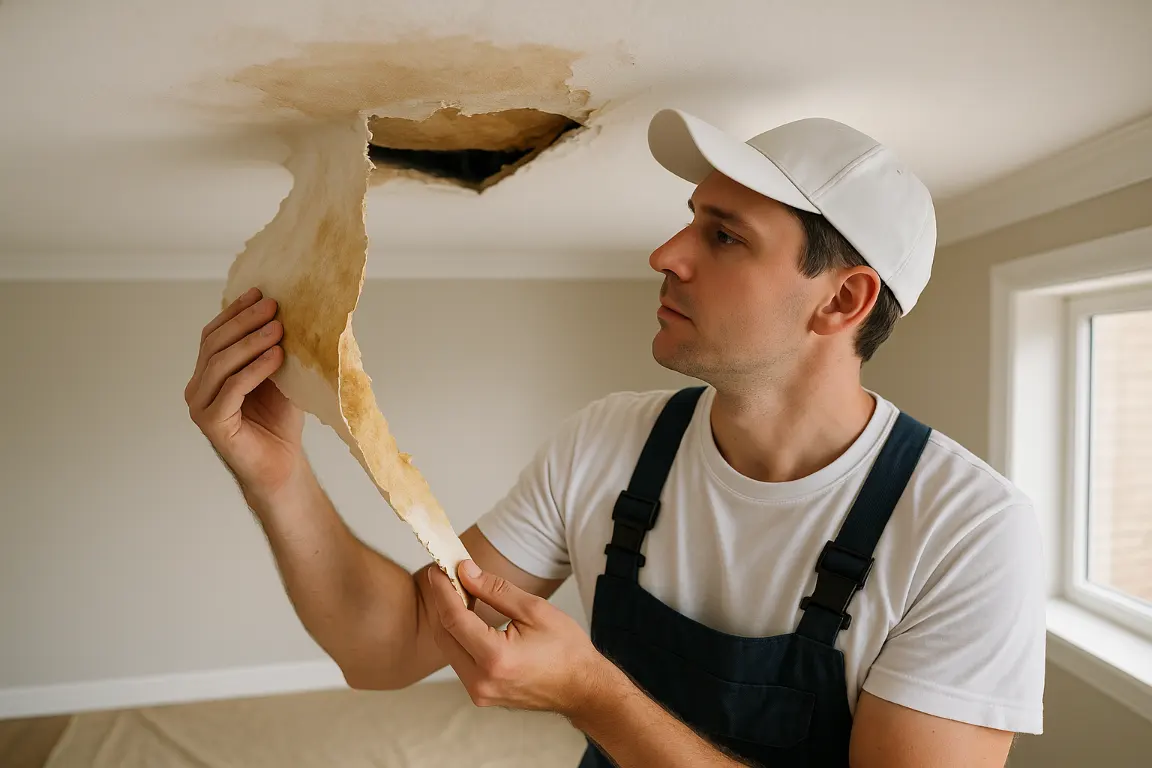
Once the roof repair is complete and the source of the leak has been resolved, the interior deserves more than a cosmetic patch. Water damage can leave drywall soft, stained, or prone to future cracking, while damp insulation and ceiling cavities may require careful assessment before finishes are restored. MrWalls Drywall & Painting coordinates the interior repair with the same attention given to the exterior fix: affected materials are evaluated, compromised drywall is removed where necessary, and replacement surfaces are finished to blend cleanly with the surrounding room. From ceiling repairs and stain-blocking preparation to seamless texture matching or popcorn ceiling removal, a properly restored interior returns the space to a finished, comfortable condition, and helps ensure hidden interior damage is not left behind.
A roof leak often creates two distinct problems: the source above and the visible damage below. Start with a qualified roofing contractor for a thorough roof inspection, particularly after a storm, aging-shingle failure, or persistent water intrusion. Their services should identify and correct the opening that allowed moisture inside; interior repairs should not begin until the roof is dry and secure. Then bring in a restoration specialist such as MrWalls Drywall & Painting to assess affected drywall, ceilings, trim, and paint. Proper water damage restoration may include drying, removing compromised materials, repairing drywall, and restoring the finish so the room looks finished again, not merely covered up. Choosing specialists for each stage protects both the structure and the final appearance.
| Professional | Primary role | What they should assess or address | When to involve them |
|---|---|---|---|
| Qualified roofing contractor | Identify and correct the roof opening that allowed moisture inside. | Roof condition, including storm damage, aging-shingle failure, and persistent water intrusion. | Start here, before interior repairs begin; ensure the roof is dry and secure. |
| Interior restoration specialist | Restore indoor areas affected by water damage. | Drywall, ceilings, trim, paint, compromised materials, drying needs, and finish restoration. | After the roof leak has been corrected and the roof is dry and secure. |
Before cleanup begins, create a clear record of the damage. Photograph every affected area in good light: stained ceilings, soft drywall, bubbling paint, wet flooring, damaged belongings, and the visible source of a water damage from roof leak. Take wide photos to establish location, then close-ups that show texture and extent. Keep notes on when you discovered the leak, recent weather, and any steps taken to prevent further damage. Save invoices for emergency mitigation and repairs. This documentation gives contractors a reliable scope of work and helps support insurance claims. Review your homeowners insurance policy carefully; insurance cover and coverage vary by cause, maintenance history, and the resulting damage. Prompt, detailed records make conversations with insurance adjusters more straightforward.
Yes. Water can travel along roof decking, rafters, insulation, wiring, and framing before reaching a ceiling or wall. The visible stain may be several feet from the actual roof entry point, so the source should be professionally inspected before interior repairs begin.
Move people, pets, electronics, furniture, and valuables away from the area. Place a bucket beneath dripping water and use towels to protect flooring. Stay clear of sagging ceilings, light fixtures, and outlets. Turn off power only when it is safe to do so, then arrange roof and interior damage assessments promptly.
Ceiling drywall may be repairable when it dries quickly and remains firm, flat, and odor-free. Replacement is often needed when drywall feels soft, sags, swells at seams, has extensive staining, or when insulation is saturated or mold is suspected. An inspection can determine the appropriate scope of work.
No. The roof leak or other moisture source should be corrected first. Repairing drywall before stopping the water intrusion can lead to repeat damage, trapped moisture, staining, and unnecessary expense. Once the area is dry and the source is resolved, damaged ceilings and walls can be restored.
Look for expanding brown or yellow ceiling stains, peeling paint, bubbling drywall, musty odors, damp insulation, swollen seams, warped trim, or a ceiling that feels soft or appears to sag. These signs may indicate water has entered behind finished surfaces.
Lightly affected insulation may sometimes dry if the leak is stopped immediately and airflow is sufficient. Saturated insulation usually needs removal because it can retain moisture, lose effectiveness, and contribute to odor or mold concerns. The surrounding ceiling cavity should also be checked for hidden moisture.
The best repair is the one you never need. To prevent roof leaks from reaching your ceilings and walls, schedule a professional roof inspection at least once a year and after any major storm. Look closely at roof flashing around chimneys, vents, skylights, and valleys, small gaps here are a common source of hidden roof damage. Keep gutters and downspouts clear so water moves away from the house, not beneath shingles or behind siding. Inside, watch for fresh stains, peeling paint, softened drywall, or a musty odor in upper rooms. These early signs deserve prompt attention. MrWalls Drywall & Painting’s practical tips: address exterior issues quickly, document storm-related damage, and repair affected interior surfaces only after the moisture source is fully resolved.
A roof leak can travel far from its entry point, leaving staining, softened drywall, and hidden moisture behind long after the rain stops. Start by containing leaking water with buckets and towels, then move furnishings, rugs, and electronics away from the affected area. Photograph visible water damage for your records, but do not puncture a sagging ceiling or climb onto a wet roof. If drywall feels soft, bulges, or shows spreading discoloration, arrange a professional inspection promptly. A timely repair protects your home from mold growth, damaged insulation, and larger structural concerns. MrWalls Drywall & Painting can assess affected ceilings and walls, remove compromised material where needed, and restore the room with a clean, properly finished repair.