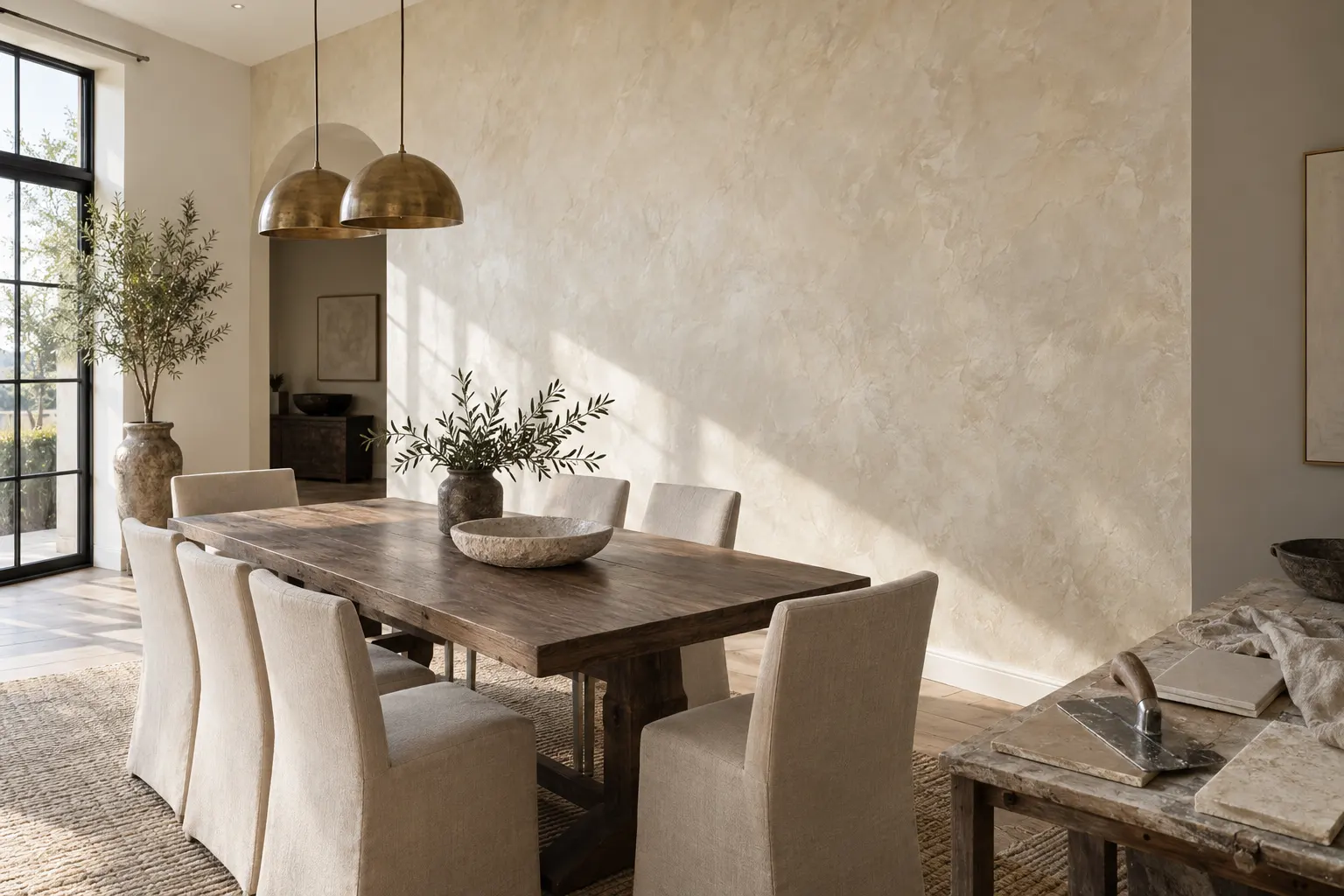
Venetian plaster brings depth, movement, and a softly polished surface that paint cannot replicate. This unique plaster finish, crafted from lime plaster and lime putty, is applied in fine layers to achieve a luminous, marble-like finish. Venetian plastering is a refined form of decorative painting, prized for a highly polished appearance that suits both a historic home and a contemporary interior design scheme.
This guide explains how to apply venetian plaster, how it compares with stucco and other faux finishes, and where it performs best. From selecting the right coat and plaster texture to weighing water resistance, upkeep, and cost, the right combination of materials and technique is essential. Whether choosing polished plaster or exploring other plaster finishes and finishes, consider how each treatment will serve a single wall or an entire set of walls.
Venetian plaster is a hand-applied, layered finish that brings mineral depth, soft movement, and stone-inspired character to interiors. Ideal for feature walls, entries, dining rooms, bedrooms, and select powder rooms, it requires careful surface preparation and skilled application. While durable and easy to maintain, wet areas need the proper protective system. Samples, lighting, sheen, and wall condition all help determine whether this refined finish suits your home.
⚡ Key takeaways
Venetian plaster creates layered, mineral-rich depth and subtle movement unlike flat paint or textured stucco.
It works especially well on feature walls, entries, dining rooms, bedrooms, powder rooms, and fireplace surrounds.
Sound wall repair, careful sanding, and proper primer are essential; refined plaster will reveal surface flaws.
View on-site samples first, since lighting and surrounding materials significantly affect colour, sheen, and visual depth.
Wet areas need purpose-designed protective systems; Venetian plaster is not automatically suitable for showers or splash zones.
Cost depends on preparation, materials, coat count, access, and desired polish, not square footage alone.
Venetian Plaster and Other Plaster Finishes: What Makes It Unique Beyond Stucco
At Mrwalls Drywall & Painting, we help homeowners distinguish among plaster finishes that may appear similar at first glance yet deliver distinctly different results. Venetian plaster is more than “fancy stucco” or decorative painting with sheen. This refined wall treatment brings depth, movement, and a stone-inspired character to the home.
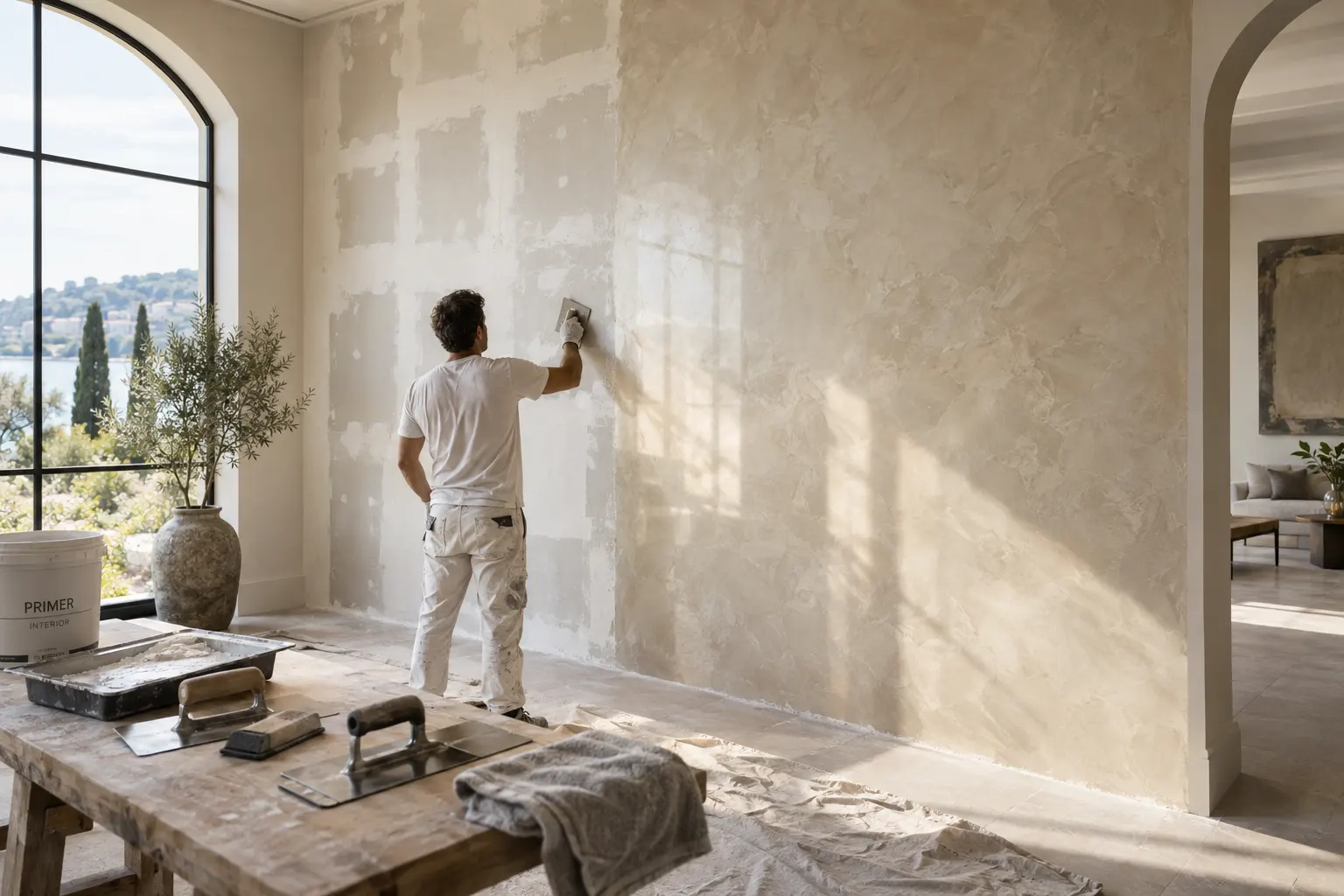
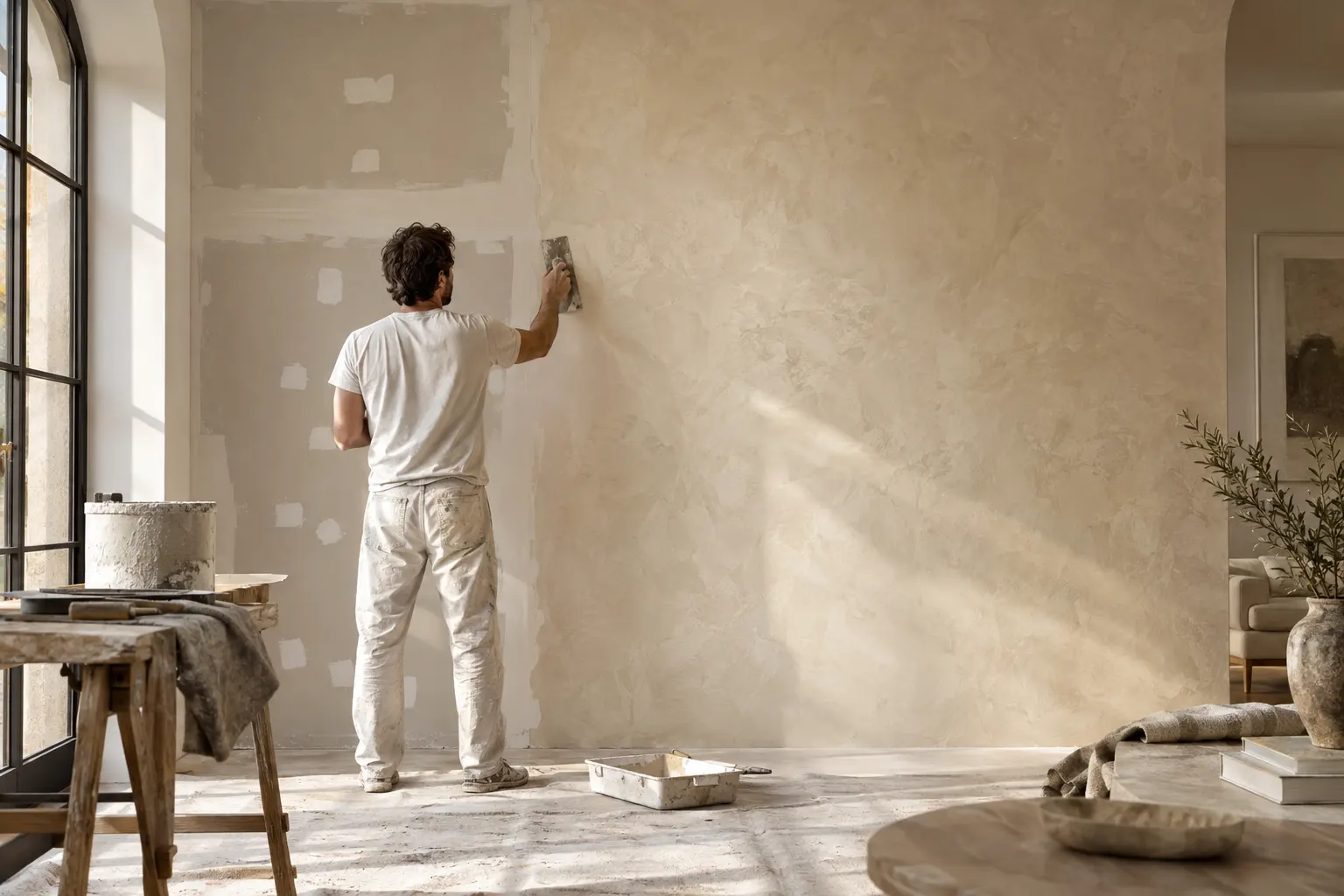
Traditionally, venetian plastering is a hand-applied process crafted from lime putty, finely ground marble dust, and pigments. To apply venetian plaster, a skilled artisan builds each coat in whisper-thin layers, then compresses and burnishes the surface with a trowel. The result is a highly polished finish with subtle tonal variation rather than a flat field of color. Depending on the material and burnishing technique, it may feel soft and velvety or reveal a luminous marble-like finish.
Stucco is generally a thicker, more textured coating, often used on exterior walls but equally suitable indoors. Its appeal lies in its plaster texture, whether sanded, rough, brushed, or hand-troweled. Venetian finishes are typically smoother, more nuanced, and more controlled. They can evoke natural stone, timeworn limewashed walls, or polished mineral surfaces without attempting to replicate every marble vein. Modern acrylic faux finishes may resemble venetian work, but they do not always deliver the mineral character, breathability, or nuanced variation of authentic lime plaster. A polished plaster surface can also help manage moisture and water vapor within the wall assembly when the right system is selected.
The right plaster finish depends on the room, your interior design goals, and the atmosphere you want to create. A polished Venetian treatment can give a dining room, entry, powder room, or fireplace wall a tailored presence without relying on busy wallpaper or dramatic decorative painting. A softer lime plaster may better suit a bedroom, kitchen, or whole-home palette where warmth and quiet movement matter most. We also use a thoughtful combination of sheen levels and textures for contrast, such as smooth Venetian plaster on a focal wall alongside conventionally painted drywall.
Preparation matters as much as finish selection. Walls should be sound, smooth, and properly repaired before specialty plaster is applied. Cracks, uneven patches, and failed coatings can show through a refined surface. As a plastering contractor, we evaluate the substrate, recommend the right system, and create sample boards for your actual light. This practical guide helps ensure your venetian plaster feels unique for the right reason: it gives the room a lasting, handcrafted finish.
Venetian Plaster vs. Other Plaster Finish Options
Finish type
Surface appearance
Typical texture and sheen
Material/application notes
Best suited to
Venetian plaster
Layered, stone-inspired depth with subtle tonal variation
Smooth and controlled; can range from soft and velvety to luminous and marble-like
Traditionally hand-applied in several thin coats using lime putty, marble dust, and pigments, then compressed and burnished
Dining rooms, entries, powder rooms, fireplace walls, and focal walls
Stucco
Textured plaster finish rather than a polished mineral surface
Often sanded, rough, brushed, or hand-troweled
Generally associated with a thicker exterior coating, though it can also be used indoors
Exterior surfaces and interiors where a more pronounced plaster texture is wanted
Softer lime plaster
Warm, quiet movement across the wall
Softer visual character than a highly polished Venetian treatment
Lime-plaster finish selected for a restrained, cohesive look
Bedrooms, kitchens, and whole-home palettes
Modern acrylic faux finishes
Can resemble Venetian-style work
Varies by product; may not provide the same nuanced variation as authentic lime plaster
Acrylic-based faux finish that may lack the mineral feel and breathability of authentic lime plaster
Projects seeking a Venetian-inspired appearance
Venetian plaster essentials
Choose Venetian plaster for layered depth, subtle tonal movement, and a refined stone-inspired appearance.
Expect multiple thin coats of lime putty, marble dust, and pigment applied and burnished by hand.
Use it on focal areas such as entries, dining rooms, powder rooms, and fireplace walls.
Select softer lime plaster for bedrooms, kitchens, or whole-home spaces needing warm, quiet texture.
Compare samples in your actual lighting; sheen and color can shift throughout the day.
Prepare walls carefully, since cracks, uneven patches, and failed coatings can show through polished finishes.
Pair smooth plaster with painted drywall nearby to add contrast without overwhelming the room.
Is Venetian Plaster Right for Your Home?
Venetian plaster is ideal for homeowners who appreciate nuanced plaster texture rather than a perfectly uniform surface. This guide explores where venetian plaster performs best, how we apply venetian plaster with care, and why water exposure and the final coat deserve close attention. Crafted from lime plaster and lime putty, this distinctive plaster finish brings exceptional depth, a unique surface, and a luminous marble-like finish to a wall or throughout multiple walls. Venetian plastering is a considered interior design choice, ranging from a highly polished wall to softer, tactile stucco-inspired finishes. Unlike standard decorative painting or faux finishes, polished plaster and other plaster finishes offer a lasting combination of character, material integrity, and craftsmanship for your home.
Preparation, Care, Cost and Venetian Plaster FAQ
At Mrwalls Drywall & Painting, every venetian plaster project begins with the existing surface, not a colour sample. venetian plastering is a refined finish, but it cannot conceal poor preparation. Cracks, loose drywall tape, uneven patches, previous repairs, and glossy paint all require attention first. We repair and level the wall, sand with care, and select the appropriate primer. This gives the plaster finish a clean, stable foundation, allowing its depth and plaster texture to develop with clarity and character.
Can we apply venetian plaster over painted drywall? Often, yes. The wall must be sound, dry, and properly prepared. These plaster finishes are particularly well suited to feature walls, entryways, dining rooms, powder rooms, fireplace surrounds, and bedrooms. Natural light and considered lighting reveal subtle movement across the surface throughout the day. We recommend viewing a sample in your home, since the same venetian finish may appear warmer, cooler, softer, or more dramatic depending on surrounding materials and interior design.
water is the principal practical consideration. A protected, breathable lime plaster or lime putty finish can perform beautifully in a powder room or a carefully ventilated bathroom. However, venetian plaster is not the right choice for every wet location. Shower enclosures, tub surrounds, and frequently splashed backsplashes require a system designed specifically for that use. This includes the correct protective coat and meticulous substrate preparation. We are always clear about these limits: decorative painting, faux finishes, stucco, and polished plaster are not interchangeable with tile or waterproof wallboard.
Once cured, care is straightforward. For most walls, use a soft dry cloth or a lightly damp microfiber cloth. Avoid abrasive pads, harsh degreasers, and aggressive scrubbing, which can dull the sheen or compromise the protective coat. For a marked area, test a discreet spot first. A unique quality of venetian plaster is its visual depth; gentle variation is integral to its appeal. Significant impact damage or movement cracks should be repaired professionally, so surrounding finishes can be blended with precision.
Cost depends on more than square footage. Wall condition, material selection, the number of coats, access, and the desired level of polish all shape the quote. A quiet matte surface generally requires less labour than a highly polished, reflective marble-like finish. Curved walls, tall stairwells, detailed repairs, and a custom combination of finishes also expand the scope. Before work begins, we provide a clear guide that distinguishes preparation from finishing. venetian plaster is a skilled finish system, not a quick paint upgrade, and it should feel considered for years rather than merely fashionable for a season.
Frequently asked questions
What is Venetian plaster?
Venetian plaster is a layered decorative wall finish traditionally made with lime putty, finely ground marble dust, and pigment. Applied in thin coats and burnished by hand, it creates soft movement, depth, and a polished mineral appearance that can range from velvety matte to marble-like sheen.
How is Venetian plaster different from stucco?
Stucco is usually a thicker, more textured coating commonly used on exterior surfaces. Venetian plaster is generally smoother, thinner, and more refined, with controlled tonal variation designed to reflect light and suggest natural stone or aged limewashed walls.
Can Venetian plaster be applied over painted drywall?
Yes, if the drywall is sound, dry, and properly prepared. Cracks, loose tape, uneven repairs, glossy paint, and failed coatings should be repaired, sanded, and primed first so the plaster bonds evenly and the finished surface looks consistent.
Where does Venetian plaster work best in a home?
It works especially well on feature walls, entryways, dining rooms, bedrooms, powder rooms, and fireplace surrounds. Rooms with daylight or layered interior lighting allow the subtle depth and changing character of the finish to stand out.
Is Venetian plaster suitable for bathrooms and showers?
It can work in powder rooms and well-ventilated bathrooms when the correct breathable protective finish is used. Shower enclosures, tub surrounds, and frequently splashed backsplashes need a system specifically designed for wet exposure; Venetian plaster is not a direct replacement for tile or waterproof wallboard.
How do you clean and maintain Venetian plaster?
After curing, most surfaces need only a soft dry cloth or lightly damp microfiber cloth. Avoid abrasive pads, harsh degreasers, and aggressive scrubbing. For stubborn marks, test a discreet area first, and have larger chips or cracks professionally blended.
What affects the cost of Venetian plaster?
Cost depends on wall condition, repairs, material selection, number of coats, access, wall shape, and the desired sheen. Highly polished finishes, tall stairwells, curved surfaces, and extensive preparation generally require more skilled labour than a softer matte finish.
Venetian plaster essentials
Assess walls first: repair cracks, loose tape, uneven patches, and glossy paint before applying plaster.
Use proper sanding and primer to create a clean, stable surface with consistent plaster adhesion.
View samples on site; natural light, surrounding finishes, and room colours change the final appearance.
Choose protected finishes for powder rooms or ventilated bathrooms, but specify waterproof systems for splash-prone areas.
Clean cured surfaces with a soft dry or lightly damp microfiber cloth; avoid abrasives and harsh cleaners.
Arrange professional repairs for impact damage or movement cracks to blend the layered finish effectively.
Expect pricing to reflect wall condition, material, coat count, access, details, and desired polish level.