How to Repair Sheetrock Walls
A damaged sheetrock wall does not need guesswork. The repair depends on the size of the damage, the condition of the drywall around it, and how smooth you want the wall to look after painting.
At MrWalls Drywall & Painting, we repair sheetrock walls with patches that hold, blend in, and leave the wall ready for primer and paint.
What Is Sheetrock Wall Repair
Sheetrock is a brand name many people use when they mean drywall. A sheetrock wall repair can be as small as filling a nail hole or as involved as cutting out damaged board and installing a new patch.
The main goal is simple. Get back to solid material. Build the repair flat. Finish it so the patch does not stand out after paint.
How to Repair a Small Sheetrock Wall Hole
Small holes from nails, screws, or anchors usually need filler or joint compound, light sanding, and spot primer. The key is not leaving a raised spot. If the filler sits proud of the wall, the patch shows once the paint dries.
Small dents and shallow chips also fall into this kind of repair. These are usually simple as long as the drywall paper is still sound.
How to Repair a Medium Sheetrock Wall Hole
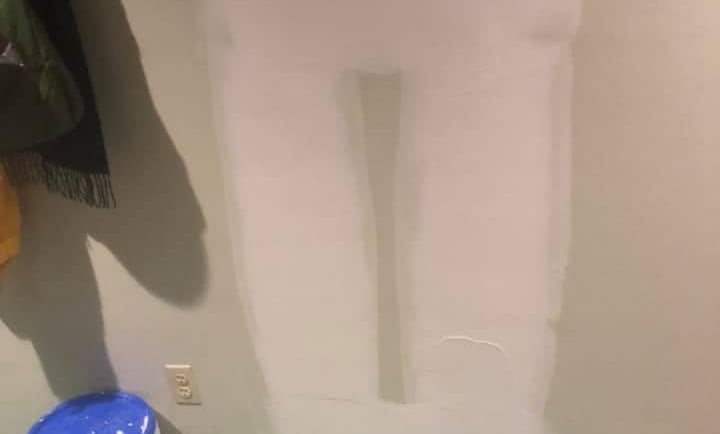
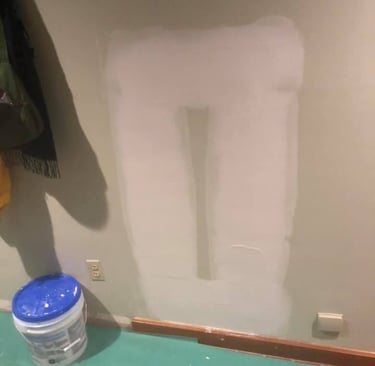
A medium hole often needs more than filler. If the opening is too big, the repair needs support behind it. That usually means adding backing, fitting a drywall patch, taping the seams, and coating the area in layers.
Each coat needs to dry before sanding and recoating. Rushing this step leads to shrinkage, cracking, and patch edges that show through the finish.
How to Repair a Large Sheetrock Wall Hole
A larger hole needs a stronger repair. First, the damaged area gets cut back to solid drywall. Then backing is added so the new piece has support. After the patch is installed, the seams get taped and coated with compound.
This is where many DIY repairs go wrong. The patch may feel solid, but if the finish work is rough, the wall still looks patched after paint.
What to Do if the Drywall Paper Is Torn
Torn drywall paper is common after wallpaper removal, bad patch removal, or an old repair that broke loose. You do not want to mud over loose paper and hope for the best. The weak paper needs to be cut back or sealed first, depending on the condition.
Once the surface is stable, the wall can be skimmed or patched as needed.
How to Repair Cracks in a Sheetrock Wall
Wall cracks are different from holes, but they still need the right repair. A hairline crack may need opening, retaping, and finish work if the joint underneath has failed. A simple wipe of compound over the top often cracks again.
If the crack keeps coming back, the cause may be movement, weak fastening, or a bad seam repair from before.
How to Repair Water Damaged Sheetrock Wall
If sheetrock got wet from a leak, the first step is fixing the leak. After that, the drywall has to be checked for swelling, softness, staining, and loose tape. Some water-damaged walls need a small section cut out and replaced. Others need a full sheet replaced.
Paint does not fix soft drywall. If the board has lost strength, it needs to come out and be replaced. You can tell by pushing on the area with a finger. If you notice the board has sagged or looks deformed, replace that section.
Smooth Wall and Textured Wall Repairs
A patch on a smooth wall has to be finished more carefully than most people expect. Side light from windows shows every ridge and sanding mark. On textured walls, the patch still needs to be flat before the texture goes on.
This is why a patch that looks fine before paint often stands out after the room is finished.
When a Wall Needs Skim Coating
Some sheetrock walls have too many patches, rough seams, torn paper spots, or old paint buildup for spot repair alone. In that case, skim coating the wall may be the better fix. A skim coat helps smooth the surface and blend repair areas before primer and paint.
We often recommend this after wallpaper removal or after several patch repairs on the same wall.
Common Repair Mistakes
We redo a lot of wall patches that failed for simple reasons. Filler used in a hole that was too large. No backing behind the patch. Tape lines left raised. Sanding marks not feathered out. Paint put over an unprimed patch.
Most bad repairs do not fail because the wall was too damaged. They fail because the steps were rushed.
Why Homeowners Call MrWalls Drywall & Painting
We repair sheetrock walls every week. Small holes. Larger patches. Cracks. Water damage. Torn drywall paper. Old repairs that still show through. We know when a quick patch makes sense and when the wall needs a stronger repair or skim coat.
The goal is a wall that looks right after paint, not a wall that looks repaired.
Need Help With How to Repair Sheetrock Wall
If you need help with how to repair a sheetrock wall, MrWalls Drywall & Painting can help. We patch drywall holes, repair cracks, replace damaged drywall, skim coat rough areas, and get walls ready for paint.
Send a few photos or contact us for an estimate. We will look at the damage and tell you the next step.