
The 15 Types Of Drywall And Where To Use Them
There is 15 different varieties of drywall you will encounter working as a drywall contractor. This article goes over the variety of thicknesses, types, and where they are used.
The 15 Types of Drywall and Where To Use Them
Drywall is one of the most common materials used for interior walls and ceilings in homes, apartments, and commercial buildings. It is made of gypsum sandwiched between two sheets of paper, which gives it a solid core with a smooth surface that is easy to finish and paint. When people talk about Sheetrock®, they are usually using the name brand for drywall made by USG, but many contractors use the term to describe drywall in general.
The truth is, there is no single drywall that works for every room or every job. Drywall comes in various types, sizes, and textures. It also comes in different thicknesses, and each one has a purpose. Some boards are better for curved walls. Some are better for bathrooms. Some are built for fire resistance, sound control, or high-traffic areas. Choosing the right panel matters whether you are building a new room, remodeling a house, or planning a drywall repair project.
Below are the 15 types of drywall and where to use them.
(1) 1/4-Inch Drywall
1/4-inch drywall is the thinnest common drywall panel. It is mainly used when you need the board to bend or when you want to laminate over an existing surface.
This board works well for:
Curved walls
Archways
Covering old plaster
Smoothing over existing wall surfaces
For curved walls or archways, contractors often wet down the drywall first. Wetting the board helps it bend around a curve without snapping. This makes it useful in custom homes or rooms with rounded details. It is also used to laminate over plaster when the goal is to cover worn surfaces without tearing the whole wall apart.
(2) 3/8-Inch Drywall
3/8-inch drywall is another thin panel that works well for repairs and overlay jobs. It is a practical option when a wall needs a fresh surface but the framing does not need a full tear-out.
This board is often used for:
Patching drywall holes
Laminating over plaster
Covering popcorn ceilings
A local drywall technician may use 3/8-inch drywall during a drywall repair project because it is lighter to handle and easier to fit over existing surfaces. It is also common when covering dated popcorn textures to create a new flat surface.
(3) 1/2-Inch Regular Drywall
1/2-inch regular drywall is the standard drywall used in most residential work. This is the board many people picture when they think about drywall.
It is commonly used for:
Standard interior walls and ceilings
Bedrooms
Living rooms
Dining rooms
Hallways
Offices
This thickness is the usual choice for wood-framed homes with standard stud spacing. If you are building or remodeling dry rooms in a house, 1/2-inch drywall is often the standard for drywall installation jobs.. It gives a good balance of strength, cost, and ease of installation.
(4) 5/8-Inch Drywall
5/8-inch drywall is thicker and stronger than 1/2-inch drywall. It is often chosen when better sound control, better stiffness, or code-driven performance is needed.
This board is often used for:
Soundproofing between rooms
Apartments
Commercial buildings
Ceilings with 24-inch framing
Walls where extra dampening is needed
Because it is thicker, it has better sound-dampening properties than thinner drywall. It is also often used when framing is spaced 24 inches on center, since it spans better and reduces sagging. In many apartments and commercial spaces, 5/8-inch drywall is preferred because it helps with both durability and sound separation
(5) Moisture-Resistant Drywall
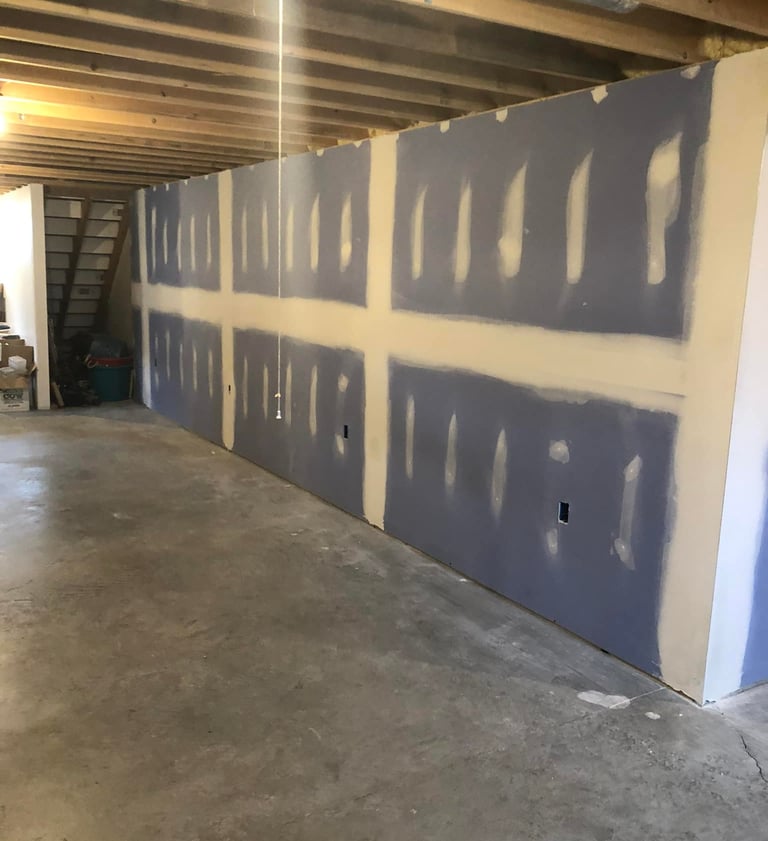
Moisture-resistant drywall is designed for damp areas where standard drywall may absorb moisture and break down over time. It usually comes in 1/2-inch or 5/8-inch thicknesses and is often identified by purple or green paper.
It is a good fit for:
Bathrooms
Kitchens
Basements
Attics
Utility rooms
This board is often called moisture-proof drywall in everyday conversation, though no drywall should be treated as fully waterproof unless it is made for that purpose. It performs better than standard drywall in humid spaces and helps reduce moisture problems on interior walls and ceilings
(6) Mold and Moisture Resistant Drywall
Mold and moisture-resistant drywall is made for rooms where humidity and dampness can create long-term problems. It gives better protection than a basic moisture-resistant board.
Kitchens
Bathrooms
Basements
Attics
Laundry rooms
This type of panel is a smart upgrade in areas where mold growth is a concern. If you are finishing a basement or remodeling a bathroom, this type of drywall can be a better choice than standard board.
(7) Green Board Drywall
Green board drywall is the original moisture-resistant drywall. It was widely used before newer mold-resistant products became more common.
It is typically used for:
Bathrooms
Kitchens
Other light-moisture areas
Green board resists moisture, but it is not mold-resistant. That is an important difference. It can still be useful in the right setting, but many contractors now choose newer products when extra protection is needed. Green board is better than regular drywall in damp areas, but it is not the strongest option for mold-prone spaces.
(8) Paperless Drywall
Paperless drywall is a newer type of drywall that replaces the traditional paper facing with a fiberglass mesh surface. Because it does not use paper facing, it offers better resistance to mold and moisture.
This board is well-suited for:
Moisture-prone areas
Basements
Bathrooms
Utility spaces
Areas with repeated humidity exposure
Paperless drywall is also known as fiberglass-coated drywall. To keep the moisture and mold resistance working as intended, contractors should use fiberglass tape and a special joint compound with mold preventive added. This is one of the more modern choices for areas where standard drywall is more likely to fail.
(9) Purple Board Drywall
Purple board drywall is another drywall product designed for mold and moisture resistance. It uses a mold and moisture-resistant paper facing and is often selected for areas where durability matters.
Common uses include:
Bathrooms
Basements
Kitchens
Laundry rooms
Purple board is often chosen over older green board products because it offers stronger resistance in damp conditions. For homeowners comparing various types, sizes, and textures of wallboard, purple board is one of the better upgrades for rooms with regular moisture exposure.
(10) Type X Drywall
Type X drywall is a fire-rated drywall designed to slow the spread of fire. It is rated for 1-hour fire resistance in many common wall assemblies.
It is often used in:
Garages
Commercial buildings
Apartments
Shared walls
Utility and mechanical areas
Type X is common where building codes require fire protection between spaces. For example, attached garages often need fire-rated separation from living areas. Apartment buildings and commercial properties also use Type X drywall for safer wall and ceiling systems.
(11) Type C Drywall
Type C drywall is a special fire-rated drywall with enhanced fire resistance compared to standard Type X. It is designed for 2-hour to 4-hour fire-rated assemblies.
This board is used in:
Commercial buildings
Mechanical rooms
Stairwells
Fire-rated shaft walls
Assemblies requiring stronger fire performance
When a project calls for more than basic fire resistance, Type C drywall may be required. This is usually not the first board used in a standard house, but it plays an important role in larger buildings and code-driven fire assemblies.
(12) Abuse-Resistant Drywall
Abuse-resistant drywall is built to handle more impact, dents, and surface damage than standard drywall. It is stronger on the surface and better suited for hard-use areas.
This board is often used in:
Hallways
Schools
Prisons
Institutional buildings
Busy commercial spaces
Some abuse-resistant drywall also includes purple mold and moisture-resistant paper. That means it can offer more than one benefit in certain buildings. In places where walls get hit, scraped, or bumped often, this board lasts longer and reduces maintenance.
The 15 Types of Drywall And Whe…
(13) Lead Core Drywall
Lead core drywall is a specialty product used to block radiation. It is not for normal residential rooms.
It is used in:
Medical buildings
Radiology rooms
X-ray equipment rooms
This drywall contains lead, so it can contain radiation and keep it inside the room. Because of its purpose, it is installed only in special environments where shielding is required. Most homeowners will never need it, but it is a critical product in hospitals and medical facilities.
The 15 Types of Drywall And Whe…
(14) Soundproof Drywall
Soundproof drywall is made to reduce noise transfer between rooms. It usually includes a rubber center layer and costs much more than standard drywall, often around $80 per 4-foot by 8-foot sheet.
It is used for:
Home theaters
Bedrooms
Offices
Apartments
Shared living walls
Music rooms
If sound control matters, this product can make a real difference. It is more expensive, so it is usually installed in targeted locations instead of throughout an entire house. In a remodel, a local drywall technician may pair soundproof drywall with insulation and thicker framing details for better results
(15) Cement Board, Not Technically Drywall
Cement board is not technically drywall, but it belongs in this conversation because many people compare it with drywall when planning bathrooms and tile work.
It is designed for:
Showers
Tub surrounds
Tile installation areas
Wet wall systems
Unlike standard drywall products, cement board is designed to install tile over it and is completely waterproof. That makes it the correct choice behind tile in shower areas where regular drywall and even moisture-resistant drywall should not be trusted.
How To Choose the Right Drywall for the Job
The right drywall depends on the room, the framing, and the demands of the space.
Here is a simple way to think about it:
Use standard drywall for dry living spaces
Regular 1/2-inch drywall works well in bedrooms, living rooms, dining rooms, and standard hallways.
Use thinner drywall for overlays and curves
1/4-inch and 3/8-inch drywall are useful when covering old plaster, patching walls, or working on curved surfaces.
Use thicker drywall when strength or sound control matters
5/8-inch drywall helps with soundproofing, ceiling sag resistance, and commercial work.
Use moisture-resistant products in damp rooms
Bathrooms, kitchens, basements, and attics often need moisture-resistant drywall, green board, purple board, or paperless drywall.
Use fire-rated drywall where code requires it
Type X and Type C drywall belong in fire-rated assemblies, garages, apartments, and many commercial projects.
Use specialty boards only when needed
Lead core drywall, abuse-resistant drywall, and soundproof drywall each solve a specific problem. They cost more, so they should be used where their performance is needed.
Drywall Comes In More Than One Type
Many people think drywall is a simple product, but there are many options. Drywall is made of gypsum and is available in different thicknesses for different uses. Some boards are made for speed and low cost. Others are built for moisture, mold, impact, sound, or fire resistance. That is why understanding the various types, sizes, and textures matters before starting any wall or ceiling job.
If you are planning a drywall repair project, remodeling a bathroom, covering old plaster, or building out new interior walls and ceilings, the right board can save time and prevent problems later. A skilled local drywall technician can help match the correct panel to the room so the job lasts. From regular Sheetrock® to moisture-proof drywall and specialty fire-rated boards, each product has a place when used the right way.
Home | Contact | Offices | Faq | Service Area | Blog | Drywall Finishing | Drywall Taping | Drywall Repair | Plaster Repair | Ceiling Repair | Wall Repair | Drywall Installation | Drywall Hanging | Popcorn Ceiling Repair | Hole in Ceiling | Fix Hole In The Wall | Interior Painting | Knockdown Texture | Water Damage Repair | Drywall Bathroom | Drywall Ceiling | Soundboard | Drywall Patch | Ice Dam Roof Leak | Drywall over Plaster | Drywall Over Popcorn | Skim Coat Level 5 | Popcorn Texture Removal | Drywall Finish Levels | | Refund Policy | Privacy Policy | Terms and Conditions


600 East Main St Chicopee, MA, 01020
203 Circuit Ave n39, West Springfield, MA 01089