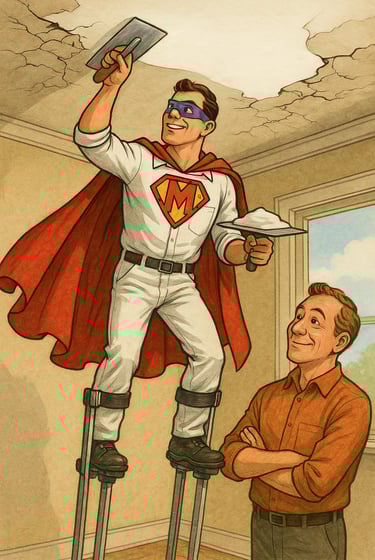
Hairline to stair‐step plaster cracks? Learn when to tape, when to skim coat
Hairline to stair‐step plaster cracks? Learn when to tape, when to skim coat, and how MrWalls restores historic walls in Holyoke and beyond.
PLASTERING WALLS & CEILINGSPLASTER REPAIRSKIM COATINGCRACKS


How We Fix Hairline Cracks in Your Plaster Ceiling
Plaster adds character—and cracks. Here’s how we repair without losing
the original look
Have unsightly hairline cracks marring your beautiful plaster ceiling? We can restore your plaster ceilings to a new condition. Eliminating plaster cracks for good.
Understanding Hairline Cracks in Plaster Ceilings
Hairline cracks in plaster ceilings are a common issue that many homeowners encounter. These fine lines can appear seemingly out of nowhere, disrupting the smooth, flawless appearance of a well-maintained ceiling. Understanding the root causes of these cracks is essential to properly addressing and preventing them in the future. Hairline cracks are usually narrow, less than a millimeter wide, and often run in irregular patterns across the surface of the plaster. While they might seem insignificant at first, ignoring these cracks can lead to more significant damage over time.
One of the primary causes of hairline cracks in plaster ceilings is the natural settling of a building. As a structure ages, it undergoes subtle shifts and movements due to changes in the ground, temperature fluctuations, and other environmental factors. These movements can put stress on the plaster, causing it to crack. Additionally, the materials used in the construction of older homes can also contribute to the formation of hairline cracks. Plaster, when applied over wooden lath, can be particularly susceptible to cracking as the wood expands and contracts with changes in humidity and temperature.
Another common cause of hairline cracks is poor initial application of the plaster. If the plaster mix is not correctly prepared or if it is applied too thickly, it can dry unevenly, leading to cracks. Incorrectly installed or damaged lath can also lead to plaster cracking. Furthermore, vibrations from heavy foot traffic, door slams, or nearby construction work can also contribute to the development of hairline cracks over time. Understanding these factors is crucial to not only fixing the existing cracks but also implementing preventative measures to maintain the integrity of your plaster ceiling in the long run.
How We Fix Hairline and Stairstep Cracks In Plaster
Fixing hairline cracks in plaster ceilings is a meticulous process that requires attention to detail and the right materials. The first step in addressing these cracks is to clean the affected area thoroughly. Dust, dirt, and loose plaster can prevent repair materials from adhering properly, so it is essential to use a vacuum or a soft brush to remove any debris from the crack. Once the area is clean, it is important to widen the crack slightly using a utility knife or a crack opener. This step might seem counterintuitive, but it creates a better surface for the filler to bond with, ensuring a more durable repair.
After preparing the crack, the next step is to apply a high-quality filler. There are several types of fillers available, including ready-mixed plaster fillers and powder-based fillers that need to be mixed with water. It is crucial to choose a filler that is specifically designed for plaster surfaces. Using a putty knife, carefully apply the filler into the crack, making sure to press it in firmly to eliminate any air pockets. Smooth the surface with the knife, feathering the edges to blend seamlessly with the surrounding plaster. Allow the filler to dry completely, as per the manufacturer's instructions, before moving on to the next step.
Once the filler is dry, it is time to sand the repaired area to achieve a smooth, even finish. Begin with a medium-grit sandpaper to remove any excess filler and then switch to a fine-grit sandpaper to blend the repair with the rest of the ceiling. Take care to sand gently to avoid damaging the surrounding plaster. After sanding, wipe the area with a damp cloth to remove any dust. The final step is to prime and paint the repaired area to match the rest of the ceiling. It is advisable to use a primer specifically designed for plaster surfaces to ensure proper adhesion of the paint. Once the primer is dry, apply a matching ceiling paint for a flawless finish. This careful, step-by-step approach ensures that hairline cracks are effectively repaired, restoring the pristine appearance of your plaster ceiling.
Fixing hairline cracks in plaster ceilings can seem like a daunting task, but with the right approach and materials, it is entirely manageable. The results are well worth the effort, as a smooth, crack-free ceiling can significantly enhance the overall appearance of a room. Regular inspection and maintenance are key to preventing future cracks. By understanding the causes and taking proactive measures, you can keep your plaster ceilings looking beautiful for years to come.
Skim Coat for a Uniform Surface
Skim coating plaster cracks should only come after the surface has been secured with mesh fabric(fibafuse) and any loose plaster has been glued back to the lath. After the fabric, we apply thin coats to restore the plane and retexture. For wallpaper damage,
We first seal the torn paper with specialty primer, then skim smooth.
See our plaster-repair Plaster & Skim Coating service,
and finish it right with painting for a seamless
match.
Contact MrWalls Drywall & Painting: Get a quote• (413) 302‐0640
Home | Contact | Offices | Faq | Service Area | Blog | Drywall Finishing | Drywall Taping | Drywall Repair | Plaster Repair | Ceiling Repair | Wall Repair | Drywall Installation | Drywall Hanging | Popcorn Ceiling Repair | Hole in Ceiling | Fix Hole In The Wall | Interior Painting | Knockdown Texture | Water Damage Repair | Drywall Bathroom | Drywall Ceiling | Soundboard | Drywall Patch | Ice Dam Roof Leak | Drywall over Plaster | Drywall Over Popcorn | Skim Coat Level 5 | Popcorn Texture Removal | Drywall Finish Levels | | Refund Policy | Privacy Policy | Terms and Conditions


600 East Main St Chicopee, MA, 01020
203 Circuit Ave n39, West Springfield, MA 01089