
Drywall Types and Sizes
Drywall Comes in a Various Types and Sizes
Common drywall
The most common type of drywall is standard or regular drywall.
The most common drywall length in new homes is 12 feet long. Other lengths are 8, 10, 14, and 16 feet long.
The standard common drywall width is 48". If doing walls that are 9 feet high 54" wide drywall is also available.
Common standard drywall is used on interior walls and ceilings in dry rooms. This would include the bedrooms, hallways, foyer, living room, dining room, family room and office.
The common thickness of drywall is 1/2 inch thick. Other thicknesses are 1/4", 3/8", and 5/8".
1/2" drywall is installed with 1-1/4" drywall screws. 5/8" drywall is installed with 1-5/8" drywall screws.
Ultralight Lightweight Drywall
Most drywall used today in new homes is also considered light weight drywall. In the last five years the manufactures changed their formula which to a lighter mix. This allows more sheets to fit per flat bed truck and saves on shipping cost.
It is also easier to lift and hang because it is around 25% lighter than the old formula.
Good for large jobs and ceilings where weight matters.
Moisture-resistant drywall (often called “green board”)
Better in humid areas.
Use for bathroom walls outside the shower area, laundry rooms, and some basements.
Not a waterproof product. Moisture resistant drywall was the standard for bathrooms and basements. Today most contractors use Mold and moisture resistant drywall in the bathrooms and basements because it has an additional treatment which prevents mold growth on the drywall paper.
Mold and moisture resistant drywall (often “purple” board, varies by brand)
Adds mold and moisture resistance compared to standard.
Is the standard commonly used drywall in bathrooms, basements, and areas where humidity is common.
Paperless drywall (fiberglass-faced)
The board contains a fiberglass mat instead of paper.
Great for high humidity areas.
Often used in damp-prone areas, basements, and commercial work.
Because it does not contain paper, mold is not as likely to grow on it.
Cement board
Not technically drywall, but often is installed by the drywall contractor when the drywall is installed.
Use in steam showers and wet areas where tile will be installed.
Handles water far better than any gypsum boards.
If used without a tile finish it would require skim coating with joint compound to make it smooth.
Glass-mat gypsum / tile backer panels
Made for wet-area tile systems.
Common behind tile when a gypsum-based backer is allowed by the system.
Not as good as cement board.
5/8" Fire-rated drywall (Type X, Type C)
5/8" Type X is a Heavier Drywall that is designed for fire-resistance assemblies.
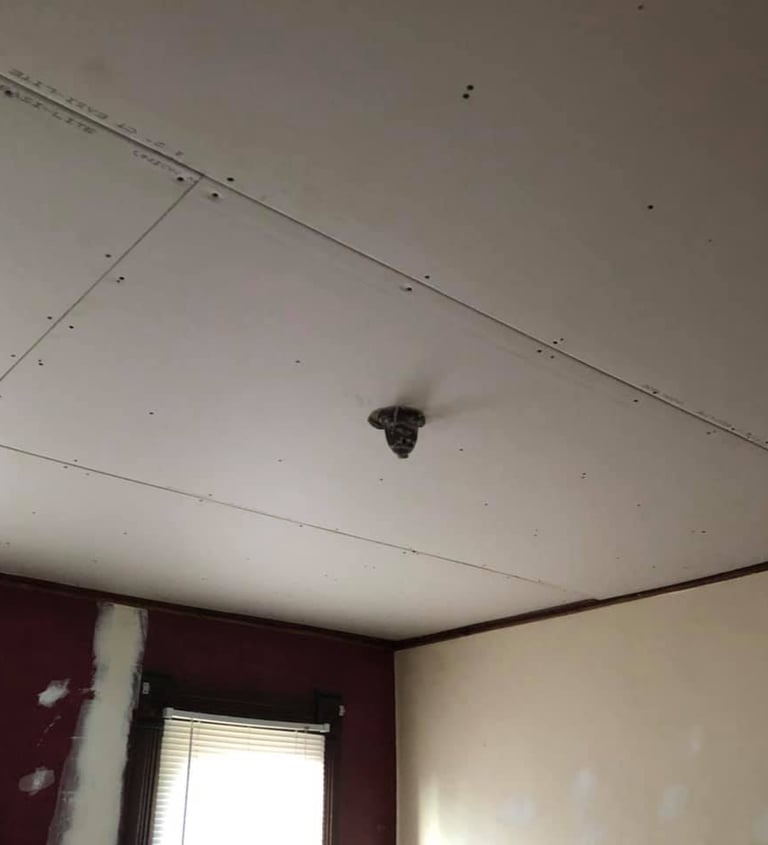
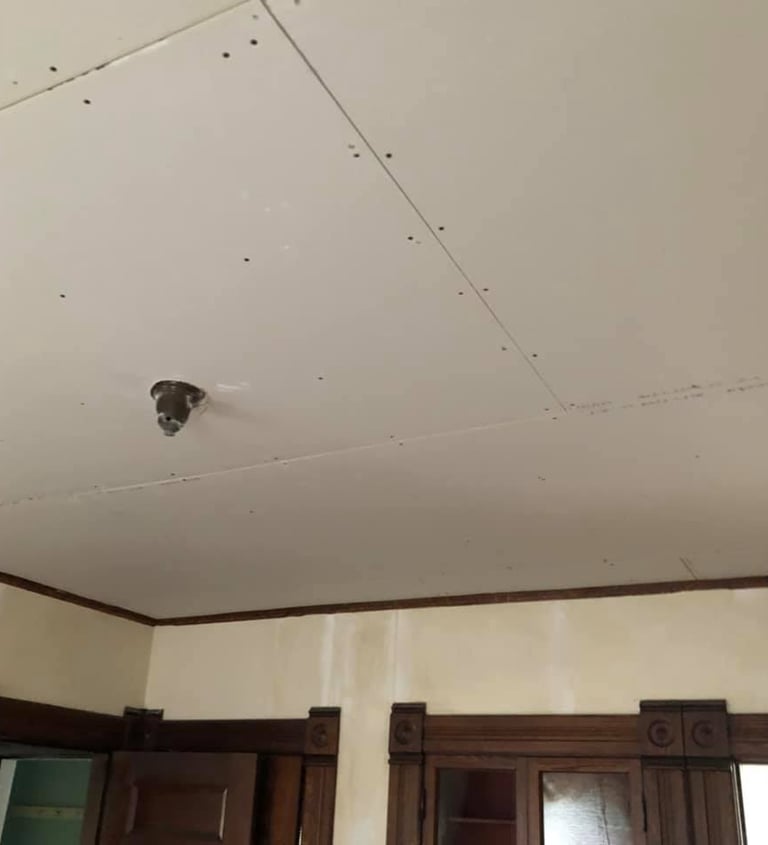
Commonly used in homes on ceilings where the framing is 24" on center.
Type X is rated for 1 hour of fire resistance and used in commercial buildings, garages, and for separation walls between condominiums and townhomes.
Used in multi-family buildings for separation walls and ceilings between units.
Requires 1-5/8" drywall screws
Type C is a special fire rated drywall that is rated for 2-3 hours and is not common in residential homes. It is used only when specified by the engineer on commercial buildings in areas such as a mechanical room or for stairwells.
Sound-rated and impact-resistant boards
Sound boards and specialty panels that are used to reduce noise transfer when paired with the right assembly.
Abuse-resistant and impact-resistant boards hold up better in hallways, rentals, and commercial spaces.
Shaftliner and specialty core boards
Used for elevator shafts and vertical chases.
Not typical for standard home remodel work.
Drywall Sizes
Common drywall thicknesses
1/4 inch: (for walls only) Curves, wrapping surfaces, or covering an existing wall to smooth it out.
3/8 inch: Light-duty, sometimes used for repairs or specific layering needs.
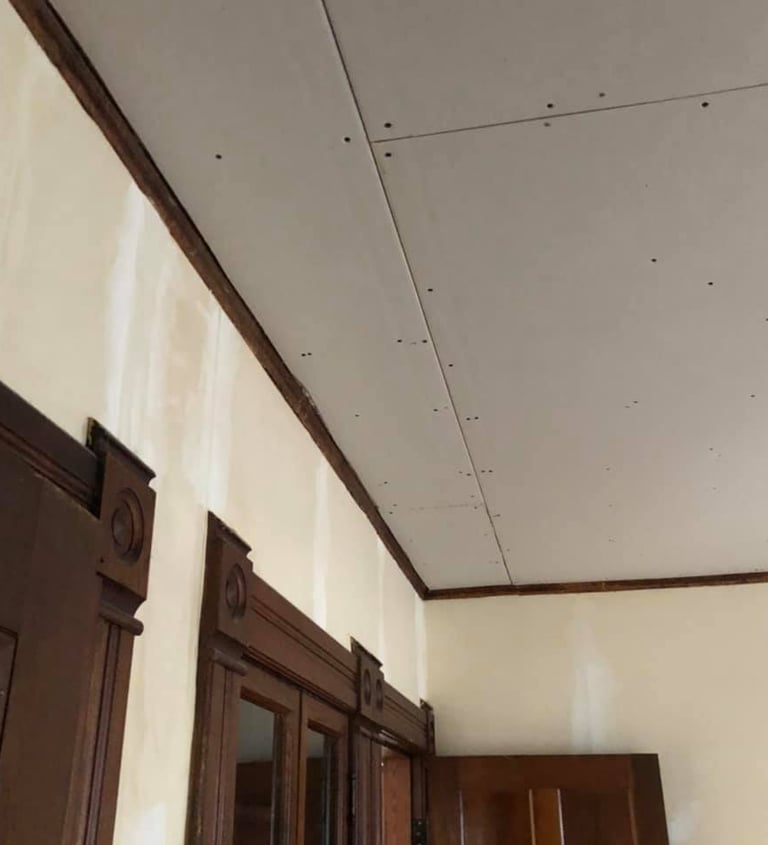
1/2 inch: Standard for most interior walls.(minimum thickness to be used on a ceiling)
5/8 inch: Standard for many ceilings and fire-rated assemblies.
Common drywall sheet widths
4 feet wide (48 inches): Standard.
54 inches (4.5 feet): Used on walls that are 9' feet in residential homes to minimise drywall seams.
Common drywall sheet lengths
8 feet
10 feet
12 feet
14 feet (less common)
16 feet (less common)
Longer sheets reduce butt joints but they are harder to handle when hanging drywall and easier to damage during carrying.
Quick choosing tips
For walls
Residential Drywall Installation Job: 1/2 inch standard or lightweight
High-traffic rentals: consider impact-resistant
Basements and humid areas: mold-resistant or paperless, based on the moisture risk
For ceilings
Many ceilings: 5/8 inch helps reduce sag and feels stiffer
Short spans can use 1/2 inch, but 5/8 inch often finishes flatter
For bathrooms
Outside shower: mold-resistant can make sense
Inside shower: cement board or approved tile backer system, not standard drywall
If you tell me what room you’re working on (bath, basement, garage, ceiling height, framing spacing), I’ll recommend the best drywall type and size for that exact situation.
If you need help with a drywall project in Massachusetts or Connecticut contact us at (413)302-0640 MrWalls Drywall & Painting
Home | Contact | Offices | Faq | Service Area | Blog | Drywall Finishing | Drywall Taping | Drywall Repair | Plaster Repair | Ceiling Repair | Wall Repair | Drywall Installation | Drywall Hanging | Popcorn Ceiling Repair | Hole in Ceiling | Fix Hole In The Wall | Interior Painting | Knockdown Texture | Water Damage Repair | Drywall Bathroom | Drywall Ceiling | Soundboard | Drywall Patch | Ice Dam Roof Leak | Drywall over Plaster | Drywall Over Popcorn | Skim Coat Level 5 | Popcorn Texture Removal | Drywall Finish Levels | Springfield | Chicopee | Ludlow | Wilbraham | Longmeadow | East Longmeadow | Monson | Belchertown | Granby | Amherst | Hadley | Northampton | Easthampton | Westhampton | Holyoke | Palmer | South Hadley | West Springfield | Hampden | Agawam | Westfield | Southampton | Southwick | Granville | Hatfield | Lenox | Beckett | Lee | Great Barrington | Stockbridge | Huntington | Middlefield | Pelham | Plainfield | Ware | Williamsburg | Worthington | Brimfield | Blanford | Holland | Montgomery | Tolland | Wales | Refund Policy | Privacy Policy | Terms and Conditions


600 East Main St Chicopee, MA, 01020
203 Circuit Ave n39, West Springfield, MA 01089